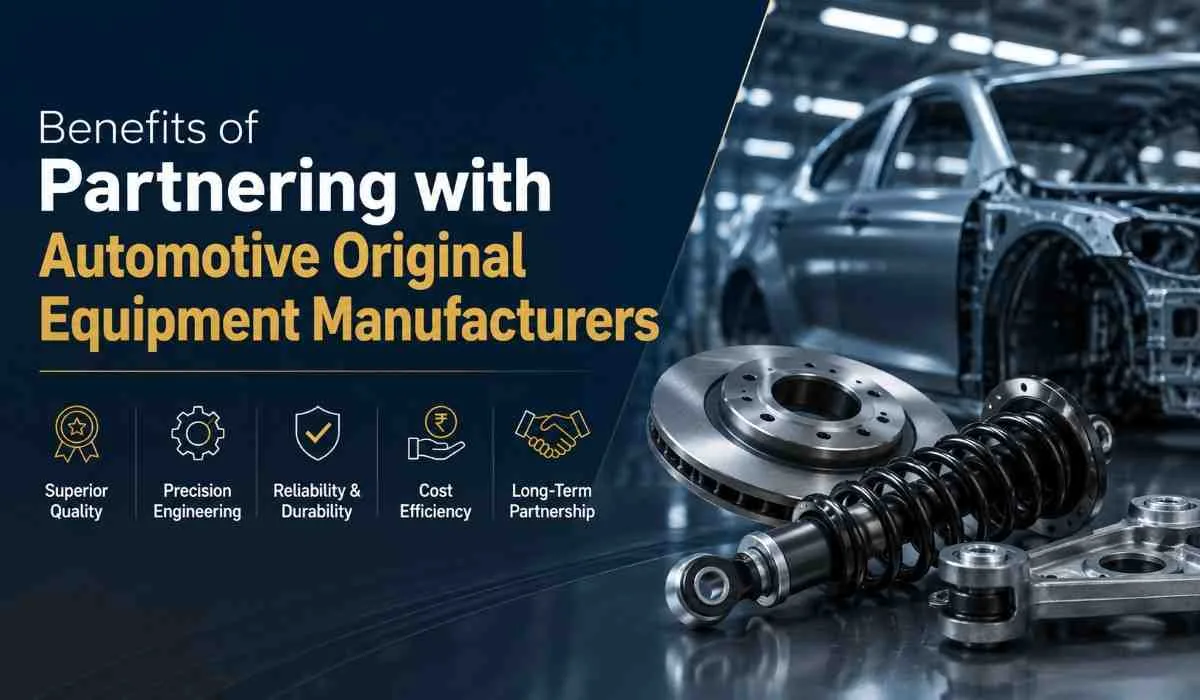
The automotive industry depends on a strong network of manufacturers, suppliers, and technology partners to deliver reliable vehicles. Behind every successful vehicle brand is a trusted Original Equipment Manufacturer (OEM) that supplies high-quality components built to meet strict engineering and safety standards.
As the OEM auto industry continues to grow, businesses are looking for manufacturing partners that can provide consistent quality, timely delivery, and scalable production. Whether you're an automotive brand, Tier-1 supplier, distributor, or procurement manager, partnering with an experienced automotive OEM manufacturer can improve product quality, reduce operational risks, and strengthen your supply chain.
In this article, we'll explore the key benefits of working with automotive Original Equipment Manufacturers and why they play such an important role in the OEM car industry.
What Is an Automotive Original Equipment Manufacturer?
An automotive Original Equipment Manufacturer (OEM) is a company that manufactures parts or components according to the exact specifications provided by vehicle manufacturers. These components are installed in vehicles during production and are designed to meet strict quality, safety, and performance requirements.
OEM manufacturers produce a wide range of automotive components, including:
- Structural metal parts
- Interior and exterior components
- Engine and transmission parts
- Electrical and electronic assemblies
- Stainless steel components
- Precision fabricated products
- Custom-engineered assemblies
These manufacturers work closely with automotive brands to ensure every component meets international quality standards.
Why Automotive OEM Partnerships Matter
The automotive industry has become increasingly competitive. Vehicle manufacturers need suppliers that can consistently deliver high-quality components while meeting production schedules and regulatory requirements.
A reliable OEM partner helps manufacturers achieve these goals by providing dependable manufacturing capabilities and technical expertise.
Below are some of the biggest advantages of partnering with automotive Original Equipment Manufacturers.
1. Consistent Product Quality
Quality is one of the biggest reasons companies choose OEM manufacturers.
Automotive components must perform under demanding conditions. Even a small defect can affect vehicle performance, safety, or reliability.
OEM manufacturers follow strict production procedures, quality inspections, and testing processes to ensure every component meets required specifications.
This consistency helps reduce product failures, warranty claims, and maintenance costs.
2. Precision Engineering
Modern vehicles require highly accurate components that fit perfectly during assembly.
OEM manufacturers use advanced production technologies such as:
- CNC machining
- Precision fabrication
- Robotic welding
- Laser cutting
- Automated inspection systems
These technologies help produce components with tight tolerances and consistent dimensions, improving assembly efficiency and vehicle performance.
3. Compliance with Industry Standards
The OEM auto industry operates under strict quality and safety regulations.
Experienced OEM manufacturers follow recognized quality management systems and industry certifications to ensure their products meet customer expectations.
Compliance with international standards helps automotive companies maintain product quality while meeting regulatory requirements across different markets.
4. Reliable Supply Chain Support
Production delays can have a significant impact on vehicle manufacturing.
A dependable OEM manufacturing partner helps businesses maintain a stable supply of components through:
- Efficient production planning
- Inventory management
- On-time deliveries
- Strong supplier networks
- Scalable manufacturing capacity
This improves supply chain efficiency and minimizes production interruptions.
5. Cost Savings Through Efficient Manufacturing
While OEM components are known for their quality, they also help businesses reduce costs over the long term.
High-quality parts reduce:
- Product defects
- Rework
- Warranty claims
- Maintenance expenses
- Production downtime
Efficient manufacturing processes also improve productivity and reduce waste, making operations more cost-effective.
6. Custom Manufacturing Solutions
Not every automotive project has the same requirements.
Many OEM manufacturers offer customized manufacturing services based on customer specifications.
These services may include:
- Custom dimensions
- Material selection
- Surface finishing
- Product design support
- Prototype development
- Volume production
Customization allows automotive companies to develop products that meet specific technical and performance requirements.
7. Advanced Manufacturing Technology
The OEM car industry is constantly evolving with new manufacturing technologies.
Leading OEM manufacturers invest in:
- Smart manufacturing systems
- Automation
- Digital quality monitoring
- Robotics
- Advanced fabrication equipment
- Data-driven production management
These technologies improve product consistency while increasing manufacturing efficiency.
8. Better Product Reliability
OEM components are designed to perform throughout the expected life of the vehicle.
Because they follow original engineering specifications, they offer:
- Better durability
- Improved performance
- Higher reliability
- Reduced maintenance
- Longer service life
Reliable products also improve customer satisfaction and strengthen brand reputation.
9. Faster Product Development
Launching a new automotive product requires close coordination between design and manufacturing teams.
Experienced OEM manufacturers support faster development by offering:
- Design assistance
- Engineering expertise
- Prototype manufacturing
- Material recommendations
- Production planning
Early collaboration helps reduce development time and speeds up product launches.
10. Strong Technical Expertise
Automotive manufacturing involves complex engineering processes.
OEM manufacturers employ experienced engineers and production specialists who understand automotive requirements and manufacturing best practices.
Their expertise helps customers solve technical challenges while improving product performance and manufacturing efficiency.
11. Scalable Production Capacity
As businesses grow, production requirements also increase.
Automotive OEM manufacturers are equipped to handle:
- Small production batches
- Medium-scale manufacturing
- High-volume production
- Global supply requirements
Scalable manufacturing ensures businesses can meet growing market demand without compromising quality.
12. Sustainable Manufacturing Practices
Sustainability has become an important focus across the OEM auto industry.
Many OEM manufacturers are investing in environmentally responsible manufacturing by:
- Reducing material waste
- Improving energy efficiency
- Increasing recycling efforts
- Using sustainable production methods
- Optimizing resource utilization
These initiatives help businesses achieve their environmental goals while improving operational efficiency.
The Growing Role of India in the OEM Car Industry
India has become one of the fastest-growing manufacturing destinations for automotive components.
Several factors contribute to this growth, including:
- Skilled engineering talent
- Modern manufacturing facilities
- Competitive production costs
- Strong supplier ecosystem
- Growing exports
- Government support for manufacturing
As a result, global automotive brands increasingly partner with Indian OEM manufacturers to strengthen their supply chains and improve production efficiency.
What to Look for in an Automotive OEM Manufacturing Partner
Choosing the right manufacturing partner is essential for long-term success.
Before selecting an OEM manufacturer, businesses should evaluate:
- Industry experience
- Manufacturing capabilities
- Quality certifications
- Engineering expertise
- Production capacity
- Technology adoption
- Delivery performance
- Product testing processes
- Customer support
- Ability to handle customized projects
A reliable OEM partner should be able to consistently deliver high-quality components while supporting future business growth.
Why Stainless Steel Matters in Automotive OEM Manufacturing
Stainless steel plays an important role in modern automotive manufacturing due to its durability, strength, and corrosion resistance.
It is commonly used in:
- Structural components
- Exhaust systems
- Decorative trims
- Fasteners
- Interior applications
- Commercial vehicle components
OEM manufacturers with expertise in stainless steel fabrication can deliver precision-engineered components that meet demanding automotive requirements.
Conclusion
Partnering with experienced automotive Original Equipment Manufacturers offers much more than component production. It provides businesses with access to advanced manufacturing capabilities, engineering expertise, reliable quality, and a stable supply chain.
As the OEM auto industry continues to evolve with automation, electric vehicles, and smart manufacturing technologies, choosing the right OEM partner has become a strategic business decision.
Companies operating in the OEM car industry need manufacturing partners that can deliver precision, consistency, scalability, and innovation. By working with experienced OEM manufacturers, businesses can improve product quality, reduce operational risks, accelerate product development, and remain competitive in an increasingly demanding automotive market.
A strong OEM partnership is not just about supplying parts—it's about building long-term value, improving efficiency, and supporting sustainable growth across the automotive industry.