
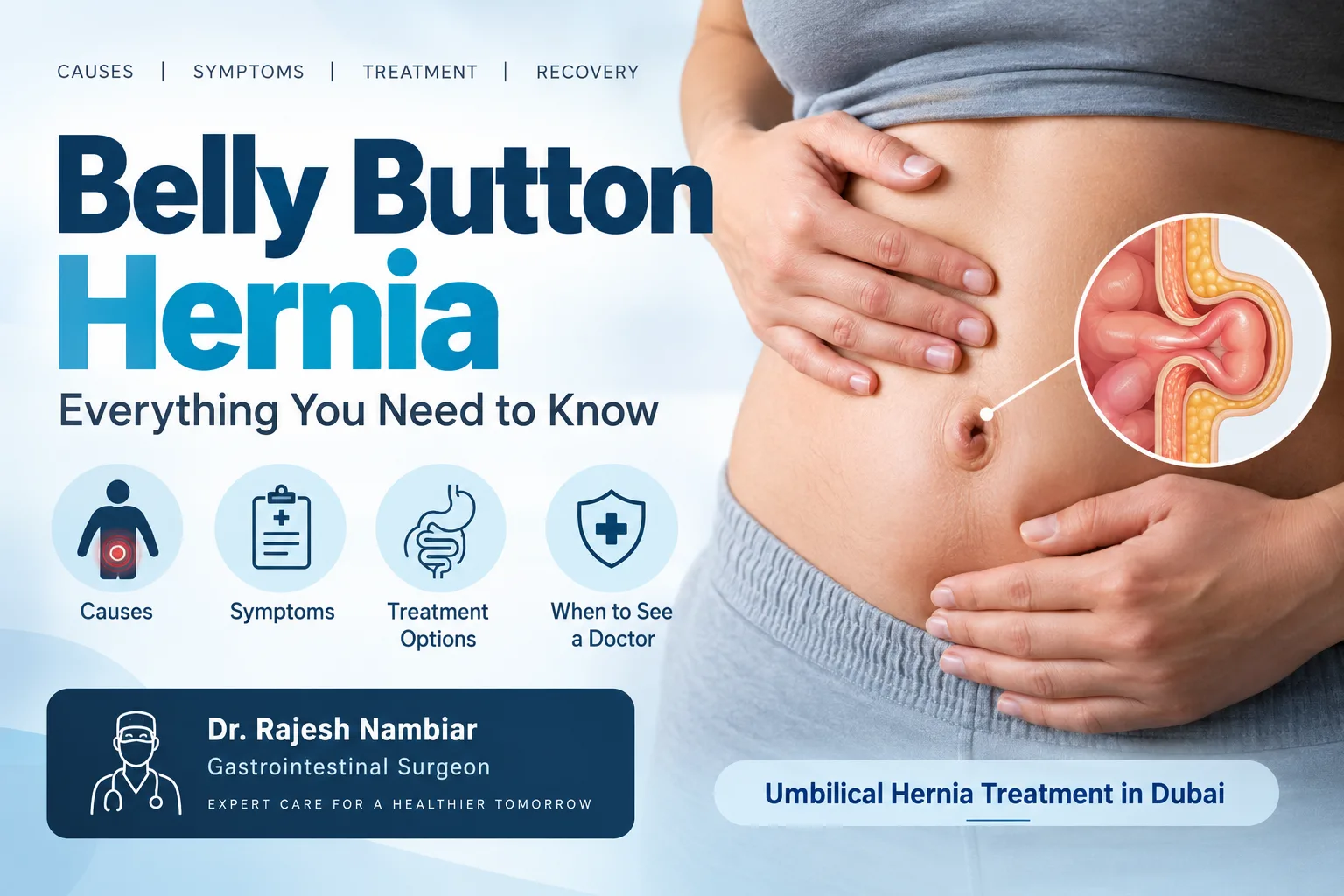
A belly button hernia, medically known as an umbilical hernia, occurs when part of the intestine, fatty tissue, or other abdominal tissue pushes through a weakened area around the belly button. It can appear as a soft lump or bulge in or around the navel and may become more noticeable when coughing, lifting heavy objects, standing, or straining.
Umbilical hernias can affect both children and adults. While some are small and may not cause symptoms, others can become painful or increase in size over time. Understanding the causes, symptoms, treatment options, and warning signs can help you determine when medical evaluation is necessary.
For people experiencing a persistent or painful belly button hernia, consultation with an experienced gastrointestinal surgeon can help determine whether observation or surgical treatment is appropriate.
What Is a Belly Button Hernia?
A belly button hernia develops when abdominal tissue pushes through a weak point in the muscles surrounding the navel. The belly button is naturally an area of weakness in the abdominal wall because it is where the umbilical cord passed before birth.
In adults, a belly button hernia may develop gradually. You may first notice a small bulge that becomes visible when standing or coughing and disappears or becomes less noticeable when lying down.
Some hernias remain small and relatively painless, while others can gradually enlarge and cause discomfort.
A belly button hernia may contain:
- Fatty tissue
- Part of the intestine
- Abdominal lining
- Other tissue within the abdominal cavity
The contents of the hernia and the size of the opening can influence symptoms and treatment recommendations.
What Causes a Belly Button Hernia?
Several factors can contribute to the development of an umbilical hernia. In adults, increased pressure inside the abdomen combined with weakness in the abdominal wall can increase the likelihood of developing one.
Common contributing factors include:
1. Pregnancy
Pregnancy stretches the abdominal muscles and increases pressure within the abdomen. Multiple pregnancies may further increase the risk of developing an umbilical hernia.
2. Obesity
Excess body weight can place additional pressure on the abdominal wall and may contribute to the formation or enlargement of a belly button hernia.
3. Previous Abdominal Surgery
An abdominal operation can sometimes weaken the abdominal wall, although a hernia occurring specifically at a surgical incision is generally classified as an incisional hernia rather than an umbilical hernia.
4. Chronic Coughing
Repeated coughing increases pressure within the abdomen. Over time, this may contribute to weakness in an already vulnerable area around the navel.
5. Constipation and Straining
Frequent straining during bowel movements can increase intra-abdominal pressure and may contribute to the development or worsening of a hernia.
6. Heavy Lifting
Repeated heavy lifting or strenuous physical activity can increase pressure on the abdominal wall. It does not necessarily cause a hernia on its own, but it can make an existing weakness more noticeable.
7. Abdominal Fluid
Conditions that cause increased abdominal fluid, such as ascites, can place significant pressure on the abdominal wall and increase the risk of an umbilical hernia.
What Does a Belly Button Hernia Look and Feel Like?
The most common sign of a belly button hernia is a visible lump or bulge around the navel.
The bulge may:
- Appear when standing
- Become more prominent when coughing or sneezing
- Increase during physical activity or straining
- Reduce when lying down
- Feel soft to the touch
- Cause mild discomfort or pressure
Some people may have an umbilical hernia without significant pain. Others may experience aching, tenderness, pressure, or discomfort around the belly button.
The size of the bulge does not always determine how serious the hernia is. A small hernia can sometimes cause significant symptoms, while a larger hernia may initially cause little discomfort.
Symptoms of an Umbilical Hernia in Adults
Symptoms can vary depending on the size and contents of the hernia.
Common symptoms include:
- A noticeable bulge at or around the belly button
- Pain or tenderness around the navel
- A feeling of pressure in the abdomen
- Discomfort when coughing or lifting
- A bulge that becomes larger when standing
- Sensitivity around the hernia
- Difficulty with certain physical activities
If the hernia becomes trapped or its blood supply is compromised, symptoms can become much more serious.
When Should You Worry About a Belly Button Hernia?
A belly button hernia should be evaluated by a healthcare professional if it is becoming larger, painful, persistent, or increasingly difficult to push back.
Seek urgent medical attention if you experience symptoms such as:
- Sudden or severe abdominal pain
- Severe pain around the belly button
- Nausea or repeated vomiting
- Abdominal swelling
- A hernia bulge that becomes hard or extremely tender
- A bulge that cannot be pushed back when it previously could
- Red, purple, dark, or discolored skin over the hernia
- Difficulty passing stool or gas
These symptoms can indicate complications such as incarceration or strangulation, where the tissue trapped within the hernia becomes compromised.
A strangulated hernia can be a medical emergency and may require urgent surgery.
Can a Belly Button Hernia Heal on Its Own?
Whether an umbilical hernia requires treatment depends on several factors, including its size, symptoms, contents, and overall health.
In some adults, a small and symptom-free hernia may be monitored by a doctor. However, an established abdominal wall defect generally does not close by itself in adults.
If a hernia is causing pain, increasing in size, interfering with daily activities, or associated with complications, surgical repair may be recommended.
The appropriate approach should be determined after a physical examination and, when necessary, diagnostic imaging.
How Is a Belly Button Hernia Diagnosed?
An umbilical hernia can often be diagnosed through a physical examination.
During the consultation, the doctor may:
- Examine the abdomen and belly button.
- Check the size and location of the hernia.
- Assess whether the bulge changes with coughing or straining.
- Determine whether the hernia can be gently reduced.
- Ask about pain, digestive symptoms, and changes in the bulge.
- Review previous surgeries and relevant medical history.
An ultrasound or other imaging test may be recommended when the diagnosis is uncertain or when additional information about the abdominal wall or hernia contents is needed.
Umbilical Hernia Treatment in Dubai
The appropriate Umbilical Hernia Treatment in Dubai depends on the individual patient. Treatment may range from monitoring a small, asymptomatic hernia to surgical repair for symptomatic or complicated cases.
Watchful Waiting
If an adult has a small umbilical hernia that causes no symptoms, the doctor may recommend monitoring it rather than performing immediate surgery.
Regular follow-up can help determine whether the hernia is changing in size or beginning to cause symptoms.
Surgical Hernia Repair
Surgery is the definitive treatment for an abdominal wall hernia when repair is indicated.
During an umbilical hernia repair, the surgeon returns the protruding tissue to the abdominal cavity and closes the weakened area in the abdominal wall.
Depending on the size and characteristics of the hernia, the repair may involve stitches alone or reinforcement with surgical mesh.
Open Hernia Repair
In open repair, the surgeon makes an incision near the belly button to access and repair the hernia.
This approach may be suitable for certain small or larger hernias depending on the patient's individual circumstances.
Laparoscopic or Minimally Invasive Repair
In selected patients, minimally invasive surgery may be considered. Laparoscopic techniques use small incisions and specialized surgical instruments to repair the abdominal wall.
The most appropriate surgical technique depends on factors such as hernia size, previous abdominal surgery, overall health, and the surgeon's assessment.
What Happens After Umbilical Hernia Surgery?
Recovery varies depending on the type of repair and the individual's health.
After surgery, patients may experience temporary:
- Mild abdominal discomfort
- Swelling around the surgical area
- Bruising
- Tightness around the repaired area
- Temporary limitations on strenuous activity
Your surgeon will provide specific instructions regarding wound care, physical activity, lifting, diet, and follow-up appointments.
Following postoperative instructions can support recovery and reduce the risk of complications.
Can a Belly Button Hernia Be Prevented?
Not every umbilical hernia can be prevented because some people have an underlying weakness in the abdominal wall.
However, certain measures may help reduce abdominal strain or the risk of worsening an existing hernia.
These may include:
- Maintaining a healthy body weight
- Treating chronic cough
- Avoiding unnecessary straining
- Managing constipation
- Using proper lifting techniques
- Following medical advice during pregnancy
- Addressing conditions that increase abdominal pressure
If you already have a hernia, avoiding activities that cause significant pain or discomfort is advisable until you have discussed them with a healthcare professional.
Why Consult a Gastrointestinal Surgeon?
An abdominal wall hernia should be assessed by a clinician who can determine whether conservative management or surgical repair is appropriate.
Dr. Rajesh Nambiar – Gastrointestinal Surgeon provides evaluation and surgical management for gastrointestinal and abdominal conditions, including hernia-related concerns. A consultation can help assess the type and severity of a hernia and determine the most appropriate treatment approach based on the individual's condition.
Rather than relying solely on the appearance of the belly button bulge, professional assessment is important because the size, location, symptoms, and contents of a hernia can all influence treatment decisions.
Frequently Asked Questions About Belly Button Hernia
Is a belly button hernia dangerous?
Many belly button hernias are not emergencies, particularly when they are small and do not cause symptoms. However, complications can occur. Severe pain, vomiting, a hard or discolored bulge, or a hernia that becomes stuck and cannot be reduced requires prompt medical assessment.
Can exercise make an umbilical hernia worse?
Activities that significantly increase abdominal pressure may make a hernia bulge more noticeable or aggravate symptoms. If you have an umbilical hernia, discuss exercise and lifting restrictions with your doctor.
Does losing weight help an umbilical hernia?
Weight management may reduce pressure on the abdominal wall and can be beneficial for overall health. However, losing weight does not necessarily close an existing hernia defect.
Do all belly button hernias require surgery?
No. Some small, symptom-free hernias may be monitored. Surgery may be considered when a hernia causes symptoms, grows, affects daily activities, or presents a risk of complications.
How quickly should I see a doctor for a belly button hernia?
If you notice a new bulge around your belly button, arranging a medical assessment is sensible, particularly if it persists or increases in size. Seek urgent care if you develop severe pain, vomiting, significant swelling, discoloration, or a firm bulge that cannot be pushed back.
Conclusion
A belly button hernia, or umbilical hernia, occurs when tissue pushes through a weakened area around the navel. It may cause nothing more than a visible bulge, but symptoms such as increasing pain, tenderness, enlargement, or difficulty reducing the hernia should not be ignored.
While some adult umbilical hernias can be monitored, others may require surgical repair. The right treatment depends on the individual patient's symptoms, hernia characteristics, overall health, and risk of complications.
If you are looking for Umbilical Hernia Treatment in Dubai, consulting an experienced gastrointestinal surgeon can help you understand your condition and available treatment options. Dr. Rajesh Nambiar – Gastrointestinal Surgeon can assess your symptoms and discuss an appropriate management plan based on your individual needs.