
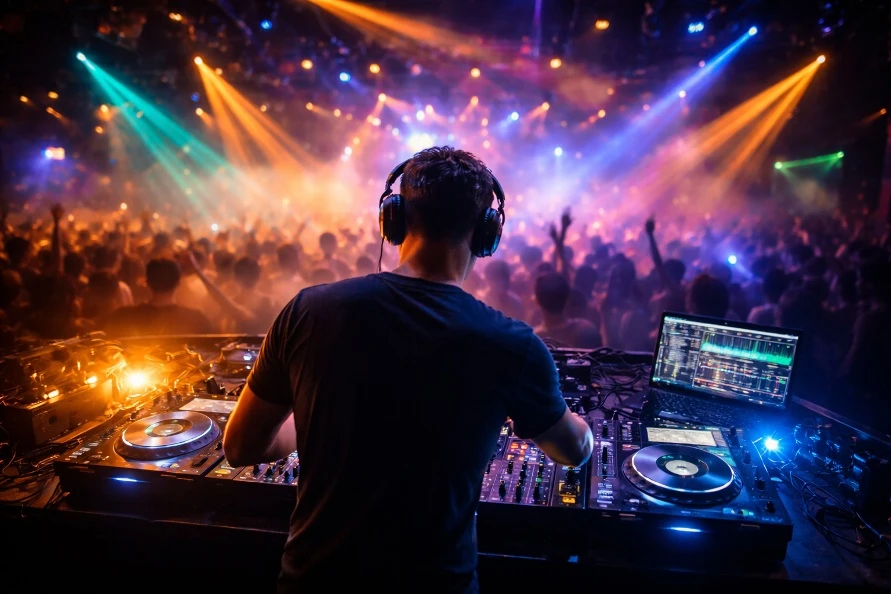
Music has always reflected the spirit of its time. Every era finds its own sound, its own rhythm, and its own way of expressing emotion. In today’s world, the DJ stands at the center of this cultural expression. More than just a performer, a DJ is a translator of feeling, turning individual tracks into a collective experience that brings people together on dance floors, in clubs, and at festivals around the world.
The journey of DJ culture began long before digital software and streaming platforms. Early DJs worked with vinyl records, mastering the art of beat matching by ear and developing a deep understanding of tempo and rhythm. This required patience, discipline, and an intimate relationship with music. Each record carried weight, both physically and emotionally, and selecting the next track was a deliberate act. These foundations still influence DJ culture today, even as technology has transformed the tools of the trade.
What truly sets DJs apart from other musical artists is their relationship with the audience. A DJ does not perform at people, but with them. The crowd’s reaction guides every decision, from track selection to pacing. When energy dips, the DJ responds. When excitement builds, the DJ amplifies it. This constant feedback loop creates a sense of unity, where the line between performer and listener begins to blur.
Electronic music accelerated the rise of DJs into global prominence. As synthesizers, drum machines, and production software became more accessible, new genres emerged at a rapid pace. House music introduced groove and warmth. Techno explored repetition and minimalism. Trance focused on emotion and uplift. Each genre offered DJs a unique palette to paint their sets, allowing them to craft distinctive identities through sound.
Among these genres, progressive house holds a special position. It is not designed for instant gratification. Instead, it unfolds slowly, rewarding attention and patience. Progressive house sets often feel cinematic, gradually building atmosphere before reaching moments of emotional release. This style demands careful track selection and precise mixing, as even small changes can shift the mood dramatically. It is music that values journey over destination.
In the middle of this evolving landscape, regional scenes continue to play a vital role in keeping DJ culture grounded and authentic. An Idaho House Music DJ, for instance, may draw inspiration from international artists while remaining deeply connected to local audiences. Smaller venues and close knit communities often allow for more experimentation and deeper musical exploration. In these settings, DJs are free to take risks and develop their sound without the pressure of mainstream expectations.
Local DJs also serve as educators and tastemakers. They introduce audiences to new sounds, unfamiliar artists, and evolving trends. Over time, this shapes the musical identity of a community. A single DJ night can spark interest in an entire genre, influencing other artists and inspiring future DJs to step behind the booth. In this way, DJ culture grows organically, fueled by passion rather than hype.
Technology has undeniably reshaped the DJ profession. Digital controllers, laptops, and streaming libraries have replaced heavy record crates. These tools have made DJing more accessible than ever before. However, accessibility does not diminish artistry. While technology can assist with technical tasks, it cannot replace intuition, taste, or emotional awareness. A playlist alone does not move a crowd. It is the human element that transforms music into an experience.
The modern DJ must also navigate a rapidly changing digital environment. Social media platforms allow DJs to share mixes, promote events, and connect with listeners across the globe. Livestreams have turned bedrooms into stages and expanded audiences beyond physical spaces. While this exposure creates new opportunities, it also demands authenticity. Audiences are quick to recognize when passion is genuine and when it is manufactured.
Despite these changes, the core purpose of DJing remains unchanged. It is about storytelling through sound. A well crafted set has a beginning, a middle, and an end. It introduces themes, builds tension, and delivers release. The best DJs understand that silence, restraint, and timing are just as important as powerful drops and high energy moments. They know when to let a track breathe and when to push the crowd forward.
DJ culture also plays a significant role in emotional well being and social connection. Dance floors offer a space where people can release stress, express themselves freely, and feel part of something larger. Music becomes a shared language that transcends background, age, and belief. For a few hours, differences fade, replaced by rhythm and movement. DJs are the architects of this space, guiding energy while allowing freedom.
As music continues to evolve, DJs will remain central to its transformation. New genres will emerge, technology will advance, and audiences will change. Yet the essence of DJing will endure. It is the art of listening as much as playing, of feeling as much as performing. Whether in a packed club, an open air festival, or a small local venue, the DJ’s role is to connect sound with soul.
In a world increasingly dominated by screens and speed, the DJ offers something timeless. A moment to pause, to move, and to feel together. Behind the booth, surrounded by lights and speakers, a DJ does more than play music. They create memories, shape culture, and remind us why music has always mattered.