
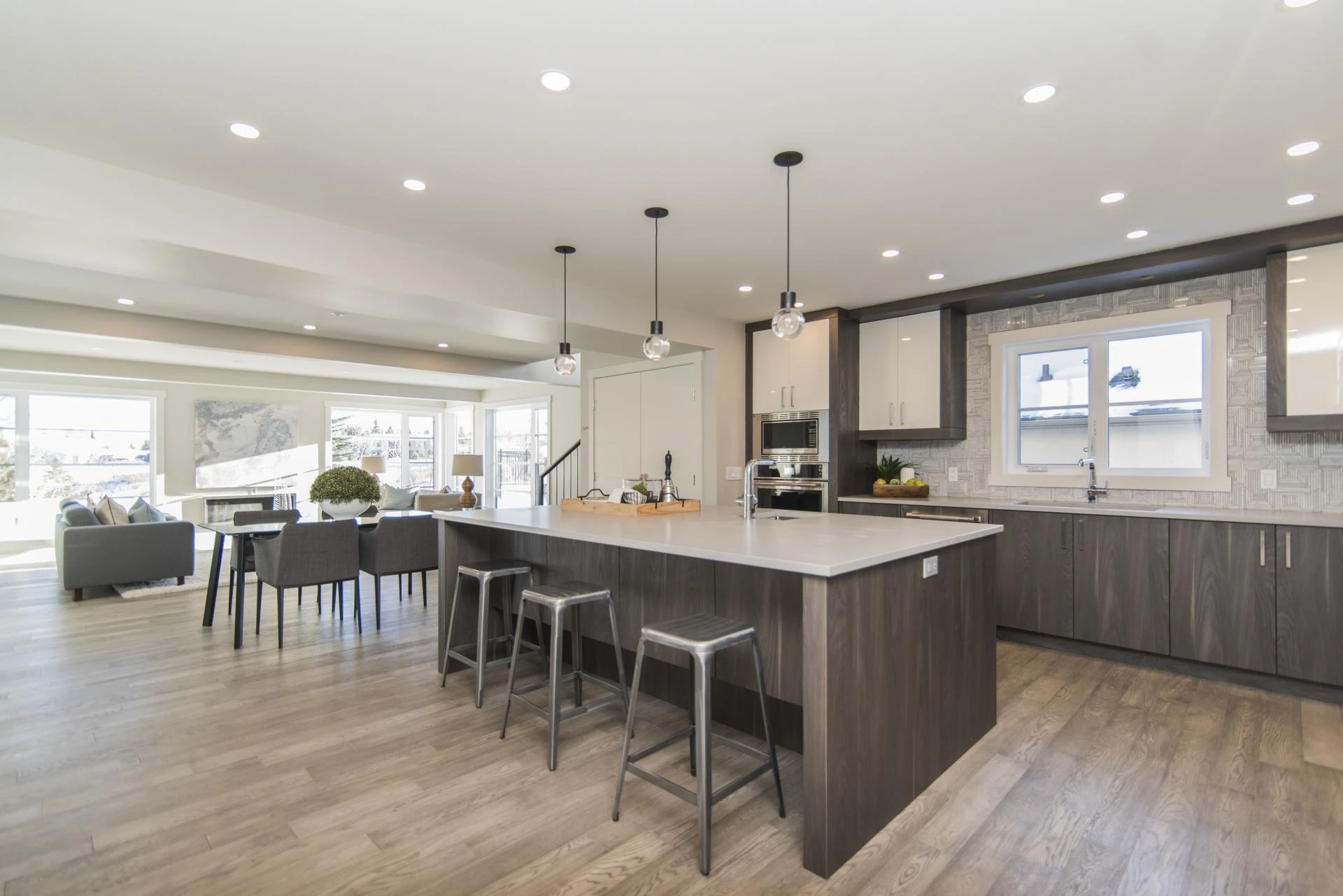
Open kitchens are modern, stylish, and a favorite in many newly designed homes. But behind their clean look and seamless flow lies a few kitchen design challenges that can affect how practical they are in everyday use. Before you jump on the trend, here’s what you should consider.
What Is an Open Kitchen?
An open kitchen shares space with the living or dining area, without any separating wall or door. It’s designed to promote openness and connection in the home, especially in apartments or compact layouts.
Why Open Kitchens Are So Popular
This style offers a contemporary, elegant feel and makes the kitchen look like a natural part of the home. It helps small homes feel more spacious, modern, and welcoming, perfect for those who love entertaining or hosting guests.
Visual Space and Lighting Benefits
Without walls dividing the kitchen, natural light from the living area floods in, making the space brighter and airier. This reduces the need for artificial lighting during the day and enhances the mood of the space.
Social Interaction While Cooking
One of the biggest perks of an open kitchen is the ability to interact while cooking. Whether it’s chatting with guests, keeping an eye on kids, or sharing a family moment, this layout allows you to stay connected.
Cooking Smells and Ventilation Challenges
In Indian homes, cooking often involves spices, frying, and strong aromas. In a semi-modular kitchen, those smells can travel throughout the house quickly. Good ventilation is not optional—it’s essential.
✅ Tip: Invest in a high-suction chimney or consider a semi-open layout with a glass partition.
Noise Pollution from Kitchen Appliances
From blenders to dishwashers, kitchen sounds can be disruptive, especially in homes where living, dining, and kitchen areas are all in one space.
✅ Tip: Choose quieter appliances and use materials that absorb sound in the surrounding areas.
Constant Cleanliness and Maintenance
When your open kitchen is always visible, so are your messes. This can become stressful if you’re not someone who enjoys constant tidying.
✅ Tip: Plan plenty of concealed storage, and design your kitchen so that cleaning is quick and easy.
Design Consistency Across Open Spaces
Since your kitchen shares space with other rooms, its finishes, materials, and colors must complement the rest of your home.
✅ Tip: Use a consistent color palette, matching flooring, or a central kitchen island to create design harmony.
Privacy Concerns in Open Kitchen Layouts
Not everyone wants their cooking process or dishes visible all the time. Sometimes, you just want your own space while preparing meals.
✅ Tip: A semi-open kitchen can give you the best of both worlds—openness with occasional privacy.
Semi-Open Kitchen: A Practical Alternative
Semi-open kitchens include sliding doors, partial walls, or glass dividers. These offer a visual connection and light without all the drawbacks of a completely open space.
Questions to Ask Before Choosing an Open Layout
- Do you often cook oily or aromatic food?
- Are you okay with keeping the kitchen always clean?
- Will noise from the kitchen bother anyone?
- Do you enjoy cooking in a social setting?
Your answers will guide your decision.
Final Thoughts: Should You Choose an Open Kitchen?
Open kitchens are elegant and social, but they’re not for everyone. Before finalizing your design, think practically about your daily routine, cooking habits, and how you use your space.
If you're unsure, consult a modular kitchen designer expert who can recommend whether a fully open, semi-open, or closed kitchen suits your lifestyle best.
Need help customizing the perfect kitchen layout for your home? Reach out to the experts at KreateCube for smart, innovative, and affordable kitchen design solutions.