
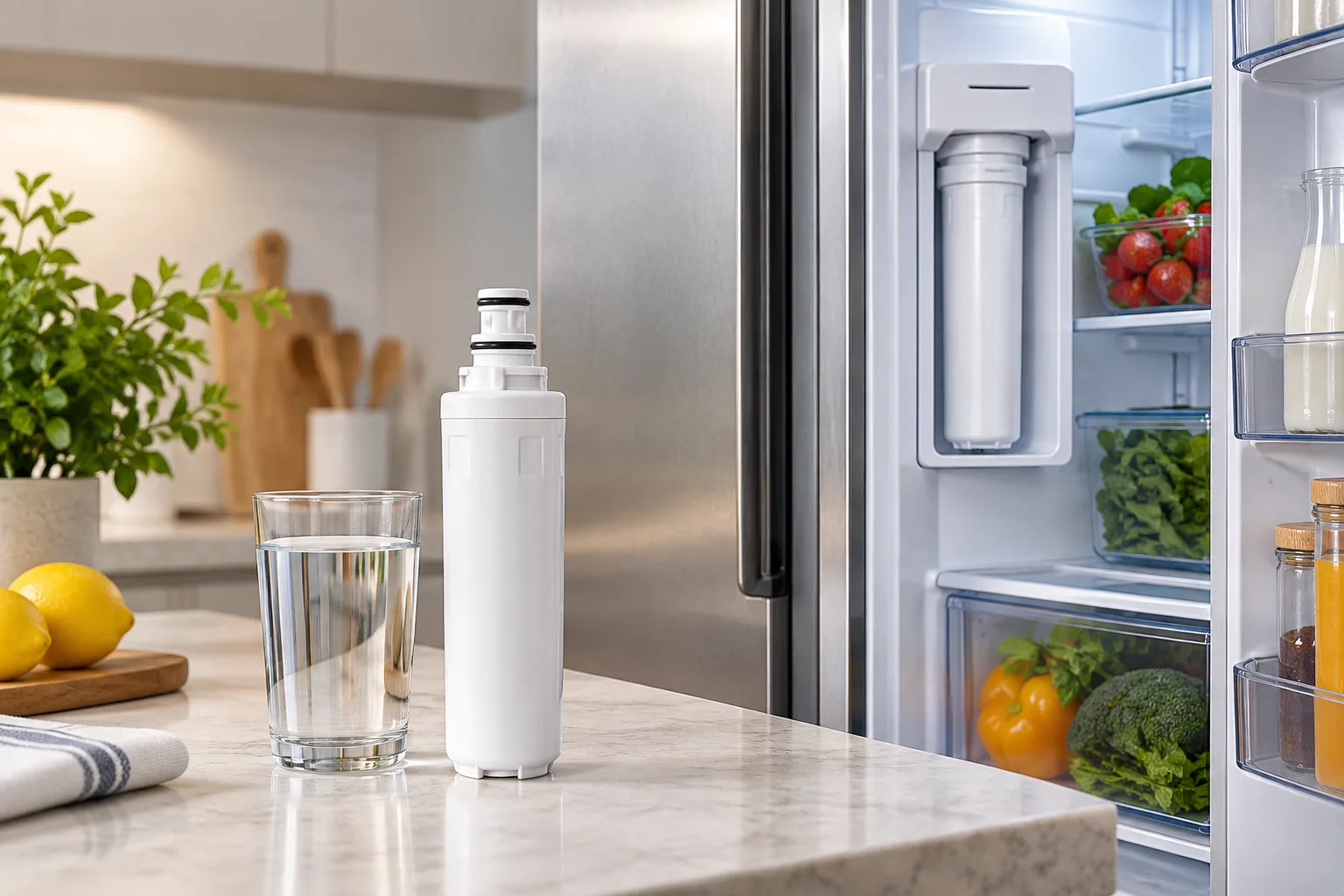
Replacing a refrigerator water filter sounds simple. Remove the old cartridge, buy a new one, install it, and continue using the dispenser.
But choosing the replacement is where many people run into trouble.
Two filters can look almost identical while using different connectors, locking tabs, capacities, or refrigerator compatibility. Even refrigerators from the same manufacturer may require different filter numbers.
Before ordering a replacement, these seven checks can help you narrow down the right option and avoid unnecessary returns.
1. Find Your Refrigerator Model Number First
Do not start by searching only for the refrigerator brand.
A manufacturer may produce many refrigerator models that use different filter systems. Searching for something broad like GE refrigerator filter or Frigidaire water filter can produce several options that look appropriate.
Instead, locate the complete refrigerator model number.
Depending on the appliance, the model label may be found:
- Inside the refrigerator compartment
- Along an interior side wall
- Near the crisper drawers
- Around the door frame
- Behind or near the lower kick plate
Take a clear photo of the model label before shopping. That gives you something accurate to compare against product compatibility information.
2. Check the Number on the Existing Filter
Your current filter is another valuable reference.
Remove or inspect the existing cartridge and look for the filter number, replacement number, or manufacturer part number printed on the housing.
Use that number when searching instead of relying on appearance.
Quick Parts Depot's selection of refrigerator water filters includes filters identified by their specific manufacturer and part numbers, which makes number-based comparison more practical. The current category includes options associated with Fisher & Paykel, GE, and Frigidaire.
3. Don't Assume Similar-Looking Filters Are Interchangeable
This is one of the easiest mistakes to make when ordering replacement filters online.
Two cartridges may have similar:
- Shapes
- Colours
- Lengths
- Labels
- Installation positions
But small differences in the locking mechanism or connection point can prevent one from fitting correctly.
Compare the existing filter number and refrigerator model rather than making the decision from the product photo alone.
Quick Parts Depot also covers this issue in its guide on how to find and replace the right refrigerator water filter, which recommends checking both the existing filter number and refrigerator model before ordering.
4. Look at What the Filter Is Certified to Reduce
A water filter should not be selected simply because the packaging says "filtered water" or "premium filtration."
Check whether the manufacturer provides recognized filtration certifications and exactly what those certifications apply to.
For example, different NSF/ANSI standards cover different types of filtration claims. Some relate to aesthetic effects such as chlorine taste and odour, while others address specified contaminant-reduction claims.
The key is not to assume that every certified refrigerator filter provides exactly the same filtration performance.
Check the specifications for the individual filter you are considering.
5. Understand "Compatible" Before Ordering
You will often see replacement cartridges described as "compatible with" a particular refrigerator or original filter number.
Compatible does not necessarily mean identical.
Before selecting an alternative filter, compare:
- Refrigerator model compatibility
- Original filter number
- Replacement references
- Connector design
- Filter specifications
- Rated capacity
- Manufacturer recommendations
A replacement should be selected because its specifications match your appliance requirements, not simply because it has roughly the same dimensions.
6. Don't Ignore Replacement Intervals
A refrigerator filter is a consumable part.
How frequently it needs replacement can vary according to the filter, refrigerator, household water use, water conditions, and manufacturer recommendations.
Rather than relying on one universal replacement schedule, check the instructions supplied with your refrigerator and filter.
It can also help to record the date whenever you install a new filter.
A simple calendar reminder prevents the installation date from becoming another forgotten household-maintenance detail.
And refrigerator filters are not the only household filters that require periodic attention. Homeowners maintaining several appliances can browse the broader replacement filter selection to identify furnace, refrigerator, humidifier, air, range hood, and other filter categories.
7. Compare the Old and New Filters Before Installation
When the replacement arrives, keep the original filter nearby.
Before installation, compare the two cartridges side by side.
Check:
- Connector position
- Locking tabs
- Cartridge length
- Overall shape
- Part numbers
- Protective caps
- Installation markings
If something appears substantially different, verify compatibility before trying to force the new filter into the refrigerator.
Once you confirm the replacement, follow the manufacturer's installation instructions carefully.
Some refrigerator systems may also require flushing after installation or resetting a filter-status indicator.
A Few Minutes of Checking Can Prevent the Wrong Purchase
Finding a refrigerator water filter does not have to be complicated.
Before placing an order, concentrate on three pieces of information:
The refrigerator model number.
The existing filter number.
The replacement filter specifications.
Those details are considerably more useful than choosing a cartridge based on appearance alone.
Keeping the old filter number saved on your phone can also make future replacements easier. When the next replacement date arrives, you will already know what information to search for.