What Basketball Uniforms and Jerseys Really Are
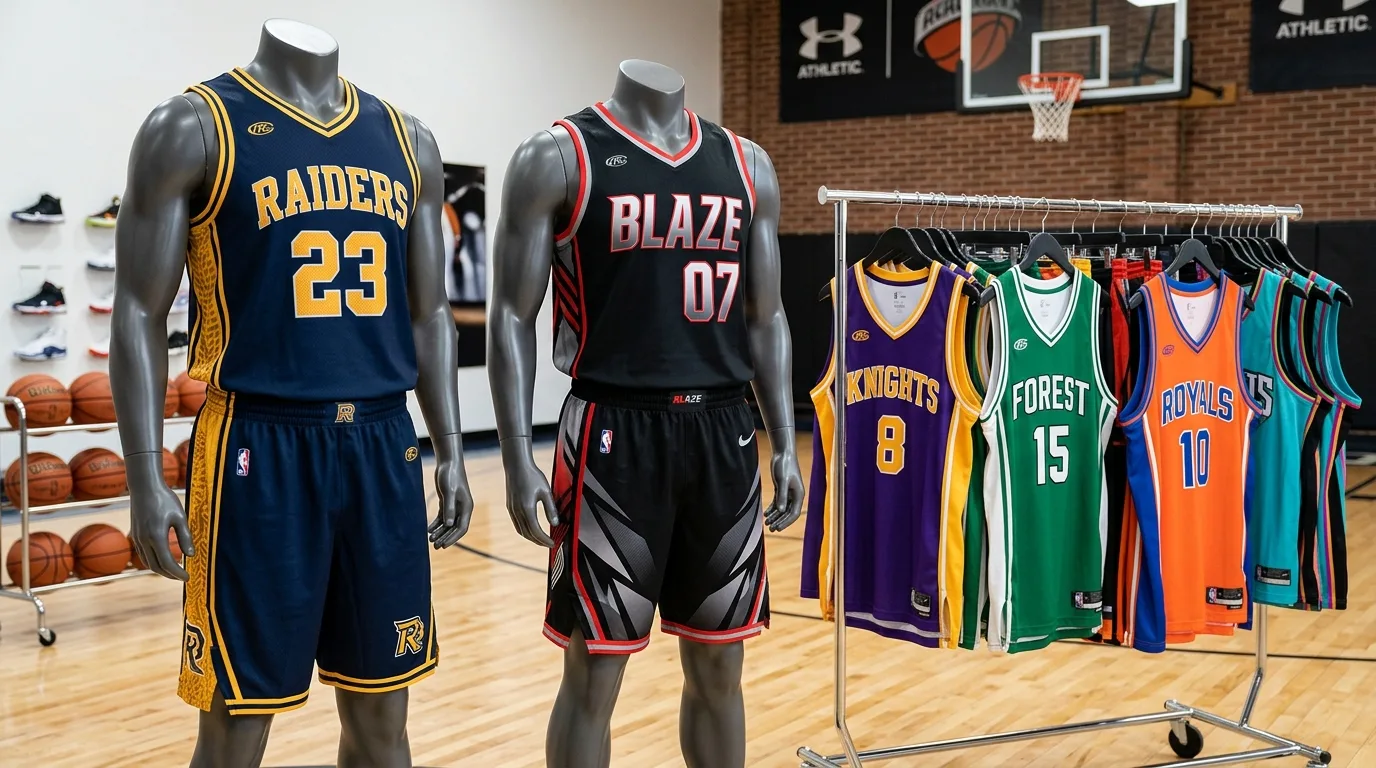
I've spent years on the floor of a Pakistan-based apparel factory, and basketball uniforms and jerseys are a different animal from soccer kits or training wear. They're built for a sport that stops and starts, jumps, pivots, and absorbs contact. A jersey has to move with the shoulders when a player raises both arms for a shot, and it has to stay put when they land. The shorts need to stay up without digging in. That's a specific set of demands, and it changes how we choose fabric, cut panels, and finish seams.
Why should buyers care about these details?
Because players feel everything. A jersey that rides up during a jump shot gets noticed immediately. Shorts that don't stretch with the hips limit movement and draw complaints. Teams that order once and get it right come back the next season. Teams that get burned by cheap construction move on. If you're sourcing basketball uniforms and jerseys for a club, a school, or your own label, the production choices decide whether you build a long-term account or a one-time sale.
How do you choose well? Start with the fabric and the fit, then get the stitching right. Everything else follows.
Fabric Choices for Basketball Uniforms and Jerseys
Most basketball jerseys use polyester, and for good reason. It wicks sweat, dries fast, and holds color after repeated washing. The weight matters more than most buyers realize. A lightweight knit around 140 to 160 GSM feels cool and moves easily, which suits indoor courts and warm gyms. Heavier fabric around 180 to 220 GSM gives a more substantial feel and holds shape better under contact, but it can run warm. For shorts, I'd push buyers toward a slightly heavier knit with a bit of mechanical stretch, usually from a polyester-spandex blend. The stretch lets players squat and pivot without the fabric fighting them. Don't let a supplier use the same fabric for jerseys and shorts just to simplify the order. Those are two different garments with two different jobs.
Stitching and Construction That Survive Contact
Basketball puts stress on the shoulders and the short hem more than any other part of the kit. Flatlock stitching is standard on quality basketball uniforms and jerseys because it lies flat and won't chafe during movement. Reinforcement at the shoulder seam and the side vents matters. I've seen jerseys come back from one season with split shoulders because the factory skipped bar tacks to save a few seconds per unit. Armholes need clean binding, because that's where the fabric gets pulled every time a player reaches up. For shorts, the waistband is where quality shows. An elastic waistband with an internal drawcord holds better than elastic alone, and a flat-lock finished hem won't curl after a few washes. If your supplier is using basic overlock seams on the visible edges, expect complaints by mid-season.
Sublimation, Tackle Twill, and What Lasts
Most custom basketball uniforms and jerseys today use sublimation printing, where the design is baked into the fabric instead of sitting on top of it. It won't crack or peel, and it lets you print full-color graphics, gradients, and sponsor logos without extra cost per color. That's a real advantage over screen printing for complex team designs. Sublimation only works on polyester, so if you want cotton-feel fabric, you'll need to switch methods. Tackle twill is the classic option for numbers and names on the back. It gives a raised, stitched look that reads as premium, and it lasts as long as the jersey itself. Heat-transfer vinyl is cheaper but can lift at the edges over time. For the main kit design, sublimation is the sensible default. For numbers and player names, tackle twill is worth the extra cost if your budget allows.
Sampling, MOQs, and What Rushing Costs You
Minimum order quantities on basketball uniforms and jerseys usually start around fifty pieces per design, though some factories will go lower for samples. Sampling takes time. Plan on one to two weeks for a pre-production sample, and I'd never let a buyer skip that step. A sample tells you whether the fit matches the size chart, whether the colors look right in person, and whether the stitching holds up. Skipping the sample to save a week often costs a month in rework. If a factory won't let you approve a sample before bulk production, walk away. That's not a red flag, it's a stop sign.
Five Things Buyers Get From Getting It Right
When basketball uniforms and jerseys are produced properly, buyers get real benefits. Players stay cooler and move better because the fabric breathes and stretches where it should. Teams save money over time because the kits survive multiple seasons. Brands build credibility with clubs that reorder year after year. Sponsors get clean, vibrant logos that don't peel after a few washes. And buyers sleep better knowing the size curve is consistent across reorders, which cuts returns and complaints.
Mistakes I See Buyers Make All the Time
The most common mistake is ordering by price alone. Cheap jerseys look fine in photos and fall apart by February. The second is ignoring size charts and assuming standard sizing works across regions. It doesn't. Asian, European, and North American fits differ, and you need to specify which one you want. The third is approving a digital mockup instead of a physical sample. Screens lie about color, especially with sublimation. The fourth is underestimating how many larger sizes a basketball team needs. Bigger players need bigger kits, and running out of XL and XXL mid-season is a problem you can't fix quickly. The fifth is forgetting to specify the care label and packaging. Small details like these decide whether your kit arrives ready to sell or ready to repack.
Frequently Asked Questions
What fabric is best for basketball jerseys?
Polyester knit in the 140 to 180 GSM range works for most gyms, with a bit of spandex in shorts for stretch.
Why does sublimation beat screen printing for basketball kits?
Sublimation bakes the design into the fabric, so it won't crack or peel, and it costs the same no matter how many colors you use.
How long does sampling take for custom basketball kits?
Plan on one to two weeks for a pre-production sample, and never skip this step before approving bulk production.
What's the usual minimum order for basketball uniforms and jerseys?
Most factories start at around fifty pieces per design, though some accept smaller runs for samples or trial orders.
How do I avoid sizing problems with team orders?
Approve a physical sample, confirm the size chart, and specify whether you want Asian, European, or North American fit.