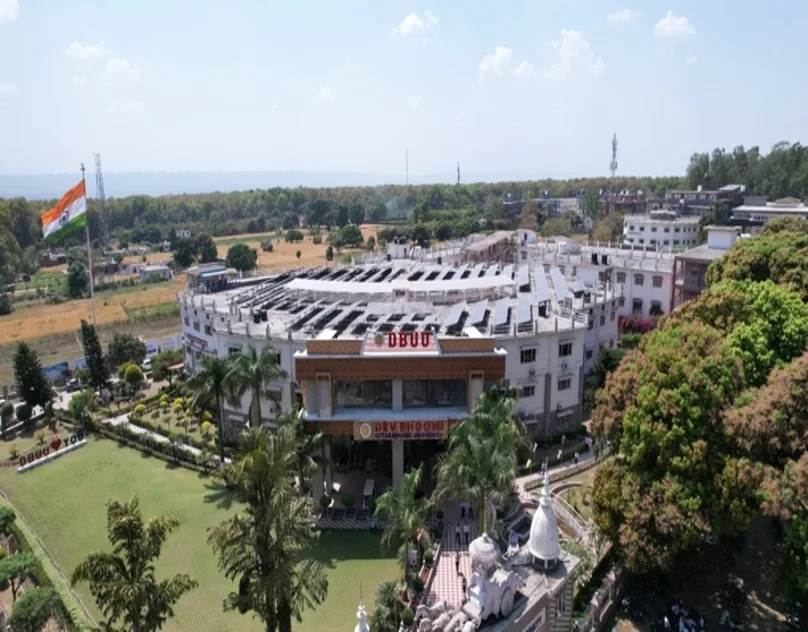
B.Sc Forestry is a four-year undergraduate degree program designed for students interested in forest conservation, environmental sustainability, wildlife management, and natural resource development. As environmental concerns continue to grow worldwide, the demand for qualified forestry professionals has increased significantly. B.Sc Forestry equips students with scientific knowledge, practical skills, and field experience required to manage forests, protect biodiversity, and promote sustainable use of natural resources. The course combines classroom learning with field training, laboratory work, and research activities, preparing graduates for rewarding careers in government organizations, private companies, research institutions, and environmental agencies.
What is B.Sc Forestry?
B.Sc Forestry is an undergraduate program that focuses on the science and management of forests, wildlife, ecology, soil conservation, and environmental protection. Students learn about forest ecosystems, tree improvement, forest economics, biodiversity conservation, watershed management, and climate change mitigation.
The course emphasizes both theoretical knowledge and practical applications, allowing students to understand how forests contribute to ecological balance, economic development, and environmental sustainability.
Eligibility Criteria for B.Sc Forestry
Students interested in pursuing B.Sc Forestry generally need to fulfill the following eligibility requirements:
- Completion of 10+2 from a recognized board.
- Science stream with Physics, Chemistry, and Biology or Mathematics.
- Minimum qualifying marks as prescribed by the respective university.
Some universities may conduct entrance examinations or provide admission based on merit.
Eligibility requirements may vary depending on the institution.
Duration of B.Sc Forestry
The B.Sc Forestry program is completed over four years and consists of eight semesters. Each semester includes classroom lectures, practical sessions, laboratory experiments, field visits, internships, and project work to provide students with comprehensive knowledge and practical exposure.
Subjects Covered in B.Sc Forestry
The curriculum of B.Sc Forestry includes a wide range of subjects that prepare students for professional careers in forestry and environmental management.
Some important subjects include:
- Forest Ecology
- Silviculture
- Forest Management
- Forest Protection
- Agroforestry
- Wildlife Management
- Forest Engineering
- Tree Improvement
- Soil Science
- Environmental Science
- Biodiversity Conservation
- Forest Economics
- Remote Sensing and GIS
- Watershed Management
- Forest Policy and Law
These subjects help students develop scientific understanding along with practical problem-solving skills.
Skills Required for B.Sc Forestry
Students pursuing B.Sc Forestry should develop several essential skills to succeed in the field, including:
- Analytical thinking
- Environmental awareness
- Observation skills
- Communication abilities
- Research aptitude
- Leadership qualities
- Teamwork
- Decision-making skills
- Physical fitness for fieldwork
- Problem-solving capability
These skills contribute significantly to professional success in forestry and environmental sciences.
Career Opportunities After B.Sc Forestry
Graduates of B.Sc Forestry have numerous career opportunities in both public and private sectors. Increasing awareness about environmental conservation has created strong demand for forestry professionals.
Popular job profiles include:
- Forest Officer
- Forestry Consultant
- Wildlife Manager
- Forest Ranger
- Environmental Officer
- Plantation Manager
- Conservation Scientist
- Ecologist
- Forest Survey Officer
- Research Assistant
- GIS Analyst
- Natural Resource Manager
- Environmental Consultant
Graduates can also work with NGOs, environmental organizations, research institutes, and international conservation agencies.
Higher Education Options After B.Sc Forestry
Students wishing to specialize further after B.Sc Forestry can pursue higher education such as:
- M.Sc Forestry
- M.Sc Environmental Science
- M.Sc Wildlife Science
- MBA in Environmental Management
- M.Tech in Environmental Engineering
- Ph.D. in Forestry
- Research Fellowships
Higher education enhances expertise and opens opportunities in research, teaching, policymaking, and advanced management positions.
Salary After B.Sc Forestry
The salary after completing B.Sc Forestry depends on job role, organization, experience, and location.
Fresh graduates may earn competitive entry-level salaries, while experienced professionals working in government departments, research organizations, multinational environmental firms, or consultancy agencies can achieve significantly higher salary packages. Professionals with advanced degrees and specialized skills often enjoy excellent career growth and long-term financial stability.
Why Choose B.Sc Forestry?
There are several reasons why students choose B.Sc Forestry as their career path:
- Growing demand for environmental professionals
- Diverse career opportunities
- Government and private sector employment
- Contribution to environmental conservation
- Opportunities in research and innovation
- Field-based practical learning
- Excellent higher education prospects
- Scope for international careers
- Meaningful work supporting sustainable development
- Long-term career growth
As environmental sustainability becomes a global priority, forestry professionals play an increasingly important role in protecting natural resources.
Future Scope of B.Sc Forestry
The future scope of B.Sc Forestry continues to expand due to increasing focus on climate change, biodiversity conservation, afforestation, sustainable development, and environmental policies.
Government initiatives promoting forest conservation, wildlife protection, carbon management, and ecological restoration are generating numerous employment opportunities. Additionally, international organizations, environmental consultancies, research institutes, and private industries are actively recruiting forestry graduates to support sustainable resource management and environmental planning.
With technological advancements such as Geographic Information Systems (GIS), drone mapping, remote sensing, and environmental data analysis becoming integral to forestry, graduates equipped with modern technical skills will remain highly valuable in the evolving job market.
Conclusion
B.Sc Forestry is an excellent undergraduate program for students passionate about forests, wildlife, biodiversity, and environmental conservation. The course provides strong scientific knowledge, practical training, and valuable field experience while preparing graduates for rewarding careers across government departments, private organizations, research institutions, and environmental agencies. With increasing global emphasis on sustainability and natural resource management, B.Sc Forestry offers outstanding career prospects, higher education opportunities, and the chance to make a meaningful contribution toward protecting the environment. Choosing B.Sc Forestry is a step toward a stable, impactful, and future-ready professional career.