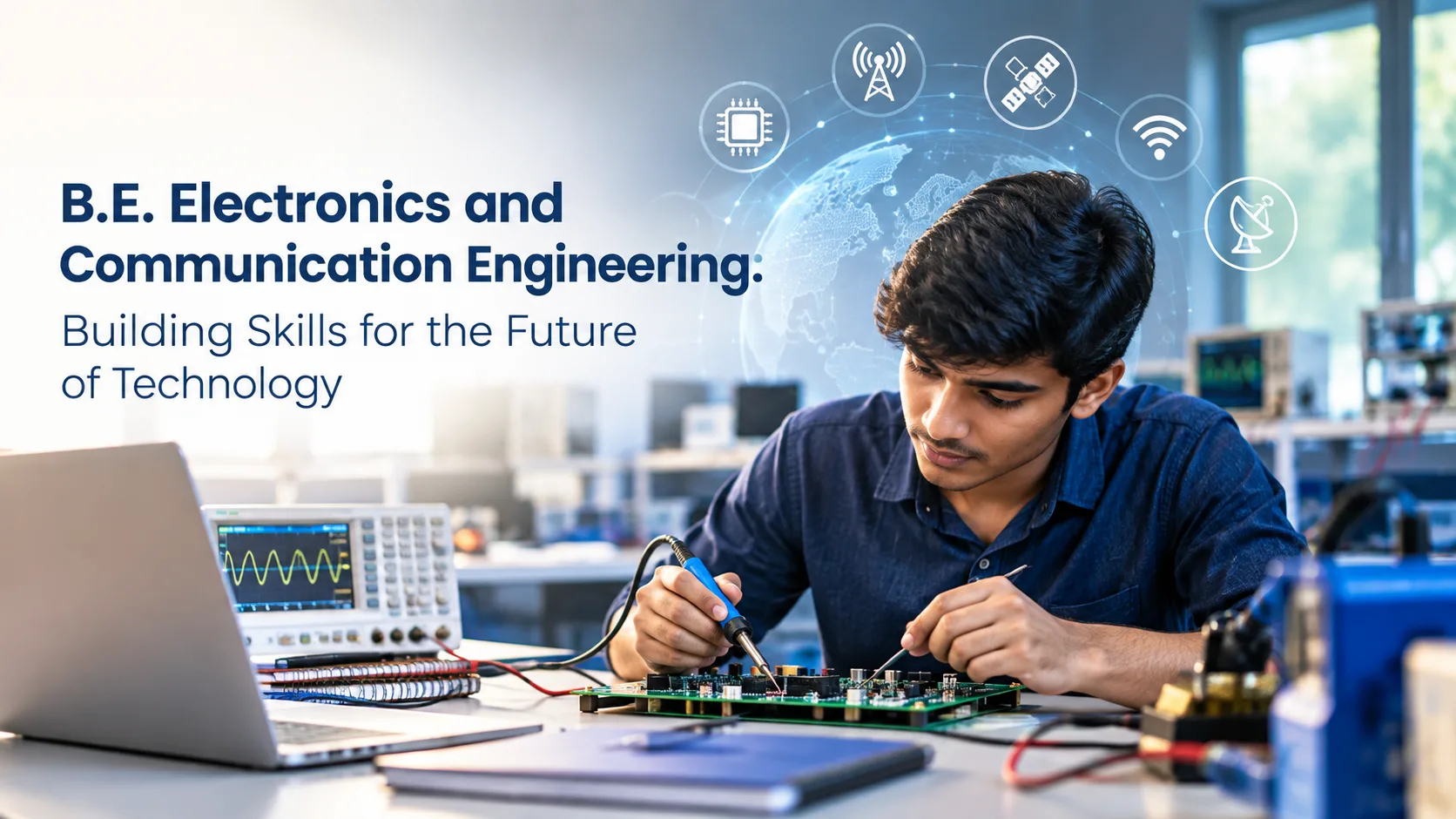
Electronics and communication technologies are an important part of modern life. From smartphones and wireless networks to embedded systems, intelligent devices, automation, and advanced communication technologies, electronics continue to influence how people live and work.
For students interested in understanding how electronic systems work and how technology can be used to solve real-world problems, B.E. Electronics and Communication Engineering offers a broad foundation in electronics, communication, computing, and emerging technologies.
At Kumaraguru College of Technology (KCT), Coimbatore, the Department of Electronics and Communication Engineering focuses on developing technical knowledge, practical skills, innovation, and research capabilities. The department has been part of KCT since 1986 and provides students with opportunities to explore different areas of electronics and communication engineering.
What Is Electronics and Communication Engineering?
Electronics and Communication Engineering combines the principles of electronics, electrical systems, communication technologies, signal processing, computing, and information systems.
The field covers both fundamental concepts and advanced applications. Students can develop an understanding of how electronic circuits process information, how communication systems transmit data, and how intelligent devices interact with their surroundings.
The discipline also connects with emerging areas such as:
- Embedded systems
- Wireless communication
- Machine learning
- Signal and image processing
- VLSI design
- Internet of Things
- Antenna and microwave engineering
- Information security
- Communication networks
This combination makes ECE a multidisciplinary engineering field with applications across several technology-driven industries.
B.E. Electronics and Communication Engineering at KCT
KCT offers UG – B.E. Electronics and Communication Engineering, structured as a 4-year programme consisting of 8 semesters. The programme is designed to help students build engineering fundamentals while developing specialised knowledge in electronics and communication.
The department's curriculum is periodically updated through different regulations and syllabus revisions. The current programme information includes the R24 curriculum for recent batches.
Key Areas Students Can Explore
1. Electronics and Circuit Design
A strong understanding of electronic circuits forms an important part of ECE. Students can learn how electronic components and circuits are designed, analysed, and applied to practical systems.
These concepts provide a foundation for developing electronic devices and intelligent systems.
2. Communication Systems
Communication engineering focuses on how information is transmitted and received through different systems.
Students can explore areas such as wireless communication, communication networks, modulation techniques, and modern communication technologies.
The KCT ECE faculty includes expertise in areas such as communication systems, wireless communication, MIMO, OFDM, and wireless networks.
3. Signal and Image Processing
Signals and images contain information that can be processed using mathematical and computational techniques.
Students can explore applications involving:
- Digital signal processing
- Image processing
- Pattern recognition
- Machine learning
- Biomedical applications
- Communication systems
These concepts have applications in areas ranging from healthcare and telecommunications to artificial intelligence and computer vision.
4. VLSI and Embedded Systems
VLSI and embedded systems connect electronics with computing.
VLSI deals with designing integrated circuits containing large numbers of electronic components, while embedded systems combine hardware and software to perform specific functions.
These areas are relevant to products such as consumer electronics, automotive systems, industrial equipment, medical devices, and smart devices.
5. Wireless and IoT Technologies
Wireless technologies have become an essential part of connected devices.
ECE students can explore wireless communication, sensor networks, IoT concepts, and related technologies that enable devices to communicate and exchange information.
These skills can be applied to smart homes, industrial automation, connected vehicles, healthcare systems, and other technology applications.
Practical Learning Through Advanced Laboratories
Engineering education becomes more meaningful when theoretical concepts are supported by practical experience.
The Department of Electronics and Communication Engineering at KCT has laboratories covering areas such as Digital Signal Processing (DSP), VLSI, Optical and Microwave Engineering, and RF/Communication.
Laboratory-based learning can help students understand how engineering concepts work beyond textbooks. It can also provide opportunities to experiment with electronic systems, analyse signals, work with communication technologies, and develop technical problem-solving skills.
Research and Innovation in ECE
Research is another important part of electronics and communication engineering.
The KCT ECE department has faculty members working across areas including signal processing, communication, wireless systems, antennas, information security, machine learning, embedded systems, biomedical image processing, and wireless sensor networks.
This wide range of research areas gives students opportunities to understand how engineering knowledge can be applied to emerging technological challenges.
Research-oriented learning can also encourage students to develop projects, experiment with new ideas, analyse technical problems, and explore innovative solutions.
Skills Students Can Develop
A B.E. Electronics and Communication Engineering programme can help students develop a combination of technical and professional skills.
Some important skills include:
- Electronic circuit analysis
- Communication system fundamentals
- Signal and image processing
- Embedded system development
- VLSI concepts
- Wireless communication
- Programming and simulation
- Technical problem-solving
- Research and experimentation
- Teamwork and communication
- Engineering design and analysis
The programme's stated educational objectives also focus on preparing graduates for professional, research, and entrepreneurial roles in electronics, information, and communication engineering disciplines.
Career Areas After ECE
Electronics and Communication Engineering can lead to opportunities across different technology sectors.
Depending on their interests and skills, graduates can explore areas such as:
- Electronics product development
- Embedded systems
- VLSI and semiconductor technology
- Telecommunications
- Wireless communication
- Automotive electronics
- IoT and connected devices
- Signal and image processing
- Software and technology services
- Automation and industrial electronics
- Research and development
Students can also pursue higher education and specialise in areas such as VLSI design, communication systems, embedded technology, signal processing, artificial intelligence, or other related disciplines.
Why Choose Electronics and Communication Engineering?
ECE can be suitable for students who enjoy understanding how technology works and are interested in combining hardware, software, communication, and problem-solving.
Unlike a narrowly focused field, ECE provides exposure to several areas of engineering. This allows students to identify their interests during their academic journey and develop specialised skills accordingly.
At KCT, the ECE department combines academic learning, laboratory facilities, research activities, and an evolving curriculum to support students in developing engineering knowledge and practical capabilities.
Building the Future Through Electronics and Communication
The technologies used in smartphones, connected devices, communication networks, intelligent systems, and many modern products depend on advances in electronics and communication engineering.
A B.E. Electronics and Communication Engineering programme can provide students with the fundamental knowledge and technical exposure needed to understand these technologies and contribute to their development.
With a combination of classroom learning, laboratory practice, projects, research, and continuous skill development, students can build a strong foundation for exploring the evolving world of electronics and communication engineering.
For students looking to understand technology from both the hardware and communication perspectives, B.E. Electronics and Communication Engineering at Kumaraguru College of Technology, Coimbatore provides a multidisciplinary engineering learning environment focused on academics, practical skills, research, and innovation.