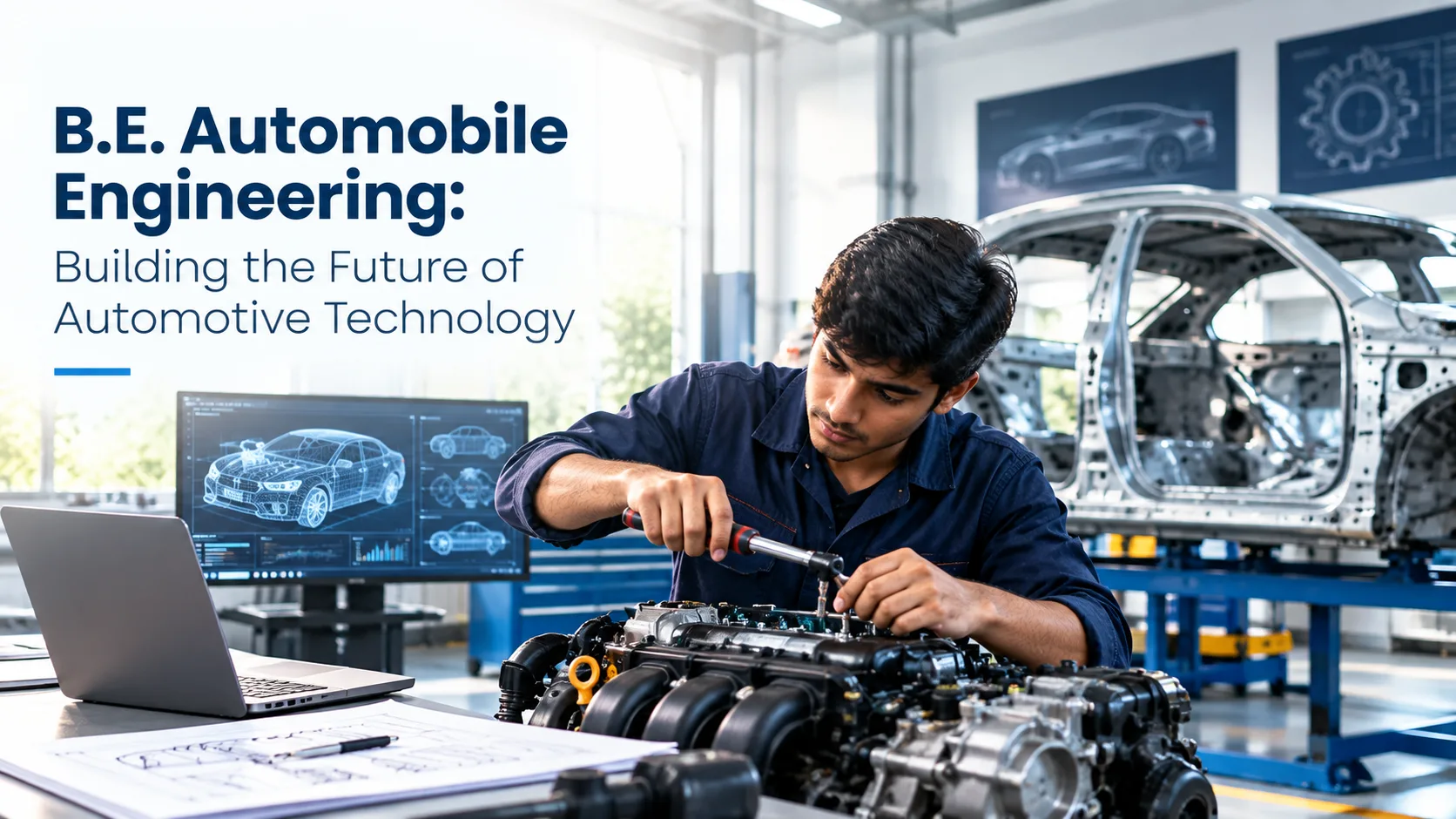
The automobile industry is continuously evolving with developments in electric mobility, connected vehicles, advanced safety systems, intelligent electronics, vehicle design, and sustainable transportation. Behind these technologies are engineers who understand how vehicles are designed, developed, tested, maintained, and improved.
For students interested in vehicles, automotive technology, engineering design, and emerging mobility solutions, B.E. Automobile Engineering provides an opportunity to build knowledge across mechanical systems, automotive electronics, vehicle dynamics, design, manufacturing, and maintenance.
At Kumaraguru College of Technology (KCT), Coimbatore, the Department of Automobile Engineering focuses on technical knowledge, practical learning, industry exposure, innovation, and application-oriented engineering education. The department was established in 2011 and focuses on areas such as automotive design, automotive electronics, and automotive service.
What Is Automobile Engineering?
Automobile Engineering is a specialised branch of engineering concerned with the design, development, manufacturing, testing, operation, and maintenance of vehicles.
The field combines concepts from mechanical engineering, electrical engineering, electronics, materials, computer applications, and control systems.
Students can explore different automotive systems, including:
- Engines and powertrains
- Transmission systems
- Vehicle chassis
- Steering and suspension
- Braking systems
- Automotive electronics
- Embedded systems
- Vehicle dynamics
- Automotive safety
- Electric and hybrid vehicles
- Vehicle testing and maintenance
- Automotive design and simulation
As vehicles become increasingly connected and electronically controlled, automobile engineering is also expanding into areas such as electric mobility, embedded systems, sensors, automation, and intelligent vehicle technologies.
B.E. Automobile Engineering at KCT
KCT offers UG – B.E. Automobile Engineering, structured as a 4-year programme covering 8 semesters. The programme is designed to develop engineering knowledge, problem-solving capabilities, practical skills, and an understanding of automotive technologies.
The department's curriculum includes professional electives, industry-oriented one-credit courses, and open electives, allowing students to gain interdisciplinary knowledge alongside core automobile engineering concepts. The curriculum is also periodically updated in consultation with industry experts to reflect technological developments.
Major Areas of Automobile Engineering
1. Automotive Design
Vehicle design involves understanding how different components and systems work together to create safe, efficient, and functional vehicles.
Students can develop knowledge related to vehicle architecture, component design, vehicle dynamics, computer-aided engineering, and design optimisation.
KCT's Vehicle Design and Dynamics Laboratory provides exposure to engineering software and tools used for areas such as finite element analysis, vehicle dynamics, and simulation.
2. Automotive Electronics
Modern vehicles depend heavily on electronic systems for monitoring, control, safety, comfort, and communication.
Automotive electronics can involve:
- Sensors and actuators
- Electronic control units
- Vehicle communication systems
- Ignition systems
- Automotive diagnostics
- Control systems
- Embedded electronics
KCT has an Automotive Electrical and Electronics Laboratory with equipment for areas including ignition systems, alternators, starter motors, batteries, microprocessors, and related automotive electrical systems.
3. Electric and Hybrid Vehicles
The development of electric and hybrid vehicles is changing the automotive engineering landscape.
Automobile engineering students can explore technologies associated with electric mobility, energy management, battery systems, vehicle control, and hybrid powertrains.
KCT's Automobile Engineering department identifies Hybrid and Electric Vehicle Technologies as one of its major research areas.
4. Vehicle Performance and Testing
Understanding vehicle performance requires testing different systems under controlled conditions.
Engine performance, emissions, fuel efficiency, braking, suspension, handling, and other characteristics can be evaluated using specialised testing equipment.
KCT's Engine Performance and Emission Testing Laboratory includes equipment such as engine dynamometers, gas analysers, smoke meters, and different engine test systems.
5. Automotive Embedded Systems
Electronic control and embedded computing have become important parts of modern vehicles.
Embedded systems can be used to monitor sensors, control vehicle functions, process information, and support intelligent automotive applications.
KCT's Automotive Embedded Systems Laboratory includes sensors, microcontroller platforms, communication modules, data acquisition equipment, and development tools for hands-on learning.
Practical Learning Through Automotive Laboratories
Automobile engineering requires more than theoretical understanding. Practical exposure allows students to understand how vehicle components and systems operate in real applications.
KCT provides specialised laboratories covering different areas of automobile engineering, including:
- Automotive Chassis Laboratory
- Automotive Electrical and Electronics Laboratory
- Automotive Embedded Systems Laboratory
- Engine Components Laboratory
- Engine Performance and Emission Testing Laboratory
- Fuels and Lubricants Laboratory
- Two Wheeler and Three Wheeler Laboratory
- Vehicle Design and Dynamics Laboratory
- Vehicle Maintenance Laboratory
These facilities include working models, testing equipment, vehicle components, diagnostic systems, simulation software, and other resources used for practical learning.
Learning Vehicle Systems Through Hands-On Practice
Hands-on learning can help students understand the connection between engineering theory and actual vehicle systems.
The department's facilities include cut-section models of engines, transmissions, braking systems, steering systems, suspension systems, clutches, fuel systems, and other automotive components.
Students can also work with vehicle maintenance and diagnostic equipment, giving them practical exposure to activities associated with automotive service and maintenance.
Automotive Design, Simulation and Digital Learning
Computer-aided engineering and simulation are increasingly important in vehicle development.
Students can use engineering software to understand concepts related to:
- Vehicle dynamics
- Finite element analysis
- Motion analysis
- Product design
- Engineering simulation
- Vehicle performance
KCT's Vehicle Design and Dynamics Laboratory lists tools including MSC Nastran, MSC Adams, Adams Car, CarSim, Autodesk Inventor, and ANSYS for design and simulation-related learning.
The department also has an Automotive Learning Centre that connects engineering concepts with real-world products through interactive learning resources and product applications.
Industry-Oriented Learning
The automobile industry requires engineers who can understand both engineering fundamentals and practical applications.
KCT's Automobile Engineering department focuses on industry interaction, industry-oriented courses, practical training, and industry projects. Students can gain exposure to specialised areas based on their interests and develop skills related to automotive engineering applications.
The department also has interaction with industry professionals and organisations through its advisory and academic activities, supporting connections between engineering education and automotive industry requirements.
Automotive Innovation and Student Projects
Automobile engineering provides opportunities for students to apply their technical knowledge through projects and vehicle-building activities.
KCT has facilities supporting student teams working on vehicles such as:
- All-Terrain Vehicles
- Go-Karts
- Formula Cars
- Electric Karts
- Solar Karts
- Quad Bikes
The department also has a dedicated facility for fabrication and assembly of student-built vehicles. A vehicle testing dirt track is used for testing off-road ATVs, quad bikes, and dirt bikes.
Such project-based activities can help students develop skills in vehicle design, fabrication, testing, teamwork, project planning, and engineering problem-solving.
Research Areas in Automobile Engineering
Automotive technology continues to develop through research and innovation.
The KCT Automobile Engineering department identifies research interests in areas including:
- Hybrid and electric vehicle technologies
- Vehicle design
- Performance optimisation
- Vehicle maintenance
- Automotive embedded systems
- Automotive safety
- Thermal engineering
- Energy engineering
- Computational fluid dynamics
These areas connect automobile engineering with emerging developments in sustainable mobility, intelligent vehicles, energy efficiency, and advanced automotive systems.
Skills Students Can Develop
A B.E. Automobile Engineering programme can help students develop a combination of technical, analytical, and practical skills.
Some important areas include:
- Automotive system analysis
- Vehicle design
- CAD and engineering simulation
- Vehicle dynamics
- Engine testing
- Automotive electronics
- Embedded systems
- Vehicle diagnostics
- Maintenance and troubleshooting
- Electric and hybrid vehicle technologies
- Manufacturing fundamentals
- Technical problem-solving
- Project management
- Teamwork and communication
These skills can help students understand both conventional automotive systems and emerging mobility technologies.
Career Areas After Automobile Engineering
Automobile engineering graduates can explore different areas within the automotive and mobility ecosystem based on their interests and technical specialisation.
Potential career areas include:
- Automotive design and development
- Vehicle testing
- Automotive manufacturing
- Automotive electronics
- Embedded systems
- Electric vehicle technology
- Vehicle maintenance
- Automotive diagnostics
- Research and development
- Vehicle performance analysis
- Automotive component development
- Automotive service engineering
Graduates can also pursue higher studies and research in automobile engineering, mechanical engineering, electric mobility, automotive electronics, energy systems, design, and other related disciplines.
Why Study Automobile Engineering?
Automobile Engineering can be a suitable field for students who are interested in vehicles and want to understand the engineering behind their design, operation, testing, and development.
The field combines mechanical systems with electronics, embedded technology, simulation, manufacturing, and emerging mobility technologies. This provides students with opportunities to explore different areas of automotive engineering during their academic journey.
At KCT, the Automobile Engineering programme combines classroom learning with laboratory work, industry-oriented courses, projects, design activities, research, and hands-on automotive experiences.
Preparing for the Future of Mobility
The automotive industry is moving beyond conventional internal-combustion vehicles toward electric mobility, connected systems, advanced electronics, intelligent safety technologies, and data-driven vehicle development.
This transformation creates new areas of engineering that require professionals with knowledge across mechanical, electrical, electronic, and digital technologies.
A B.E. Automobile Engineering programme can provide students with the fundamentals needed to understand these technologies while developing practical skills through laboratory work, projects, simulation, vehicle testing, and industry-oriented learning.
At Kumaraguru College of Technology, Coimbatore, students can build their understanding of automotive engineering through academic learning, specialised laboratories, hands-on projects, research activities, and exposure to evolving automotive technologies.