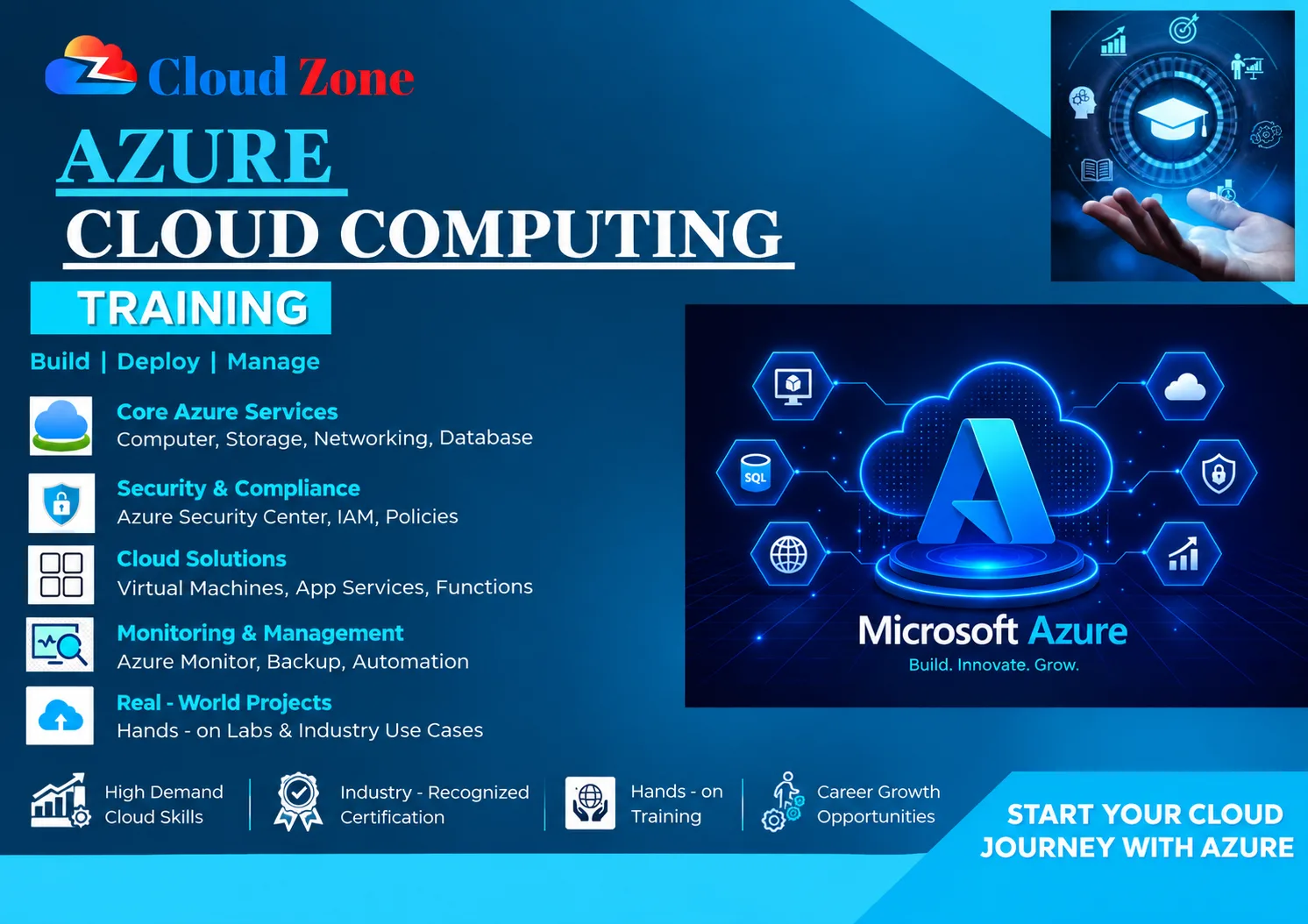
Modern businesses increasingly depend on cloud infrastructure to run applications, store data, support remote teams, and scale their operations. As cloud adoption continues to grow, professionals with infrastructure management skills can find opportunities across different areas of IT. An Azure course for building modern infrastructure management skills can help learners understand Microsoft Azure and develop practical knowledge for managing cloud environments. Gain hands-on cloud computing and infrastructure management skills with professional Azure Training in Chandigarh, designed to help learners build practical expertise for a successful cloud career.
Understanding Microsoft Azure
Microsoft Azure is a cloud computing platform that provides services for computing, storage, networking, databases, security, analytics, and application deployment. Learning Azure helps students understand how organizations build and manage IT infrastructure using cloud technologies.
A structured course introduces learners to important Azure services and cloud concepts while providing a foundation for practical infrastructure management.
Learning Azure Infrastructure
Cloud infrastructure involves managing computing resources, storage, networks, identities, and applications. An Azure course can help learners understand how these components work together.
Students can explore services such as virtual machines, storage accounts, resource groups, virtual networks, and other Azure resources. This knowledge can help them understand how cloud environments are organized and managed in professional settings.
Developing Virtual Machine Skills
Virtual machines allow organizations to run applications and workloads without maintaining physical servers. Azure provides flexible options for creating and managing virtual machines according to business requirements.
Through hands-on training, learners can practice deploying, configuring, monitoring, and managing virtual machines. These activities can help develop practical skills that are useful for cloud administration and infrastructure support.
Understanding Cloud Networking
Networking is a critical part of infrastructure management. Azure provides various networking services that help connect cloud resources securely and efficiently.
Learners can study virtual networks, subnets, network security groups, IP addressing, and connectivity concepts. Understanding these areas helps aspiring cloud professionals manage communication between different resources within a cloud environment.
Managing Storage and Resources
Efficient resource management is essential for maintaining an organized cloud infrastructure. Azure training can introduce learners to different storage solutions and resource management practices.
Students can learn how to manage storage resources, organize services using resource groups, and monitor cloud resources. These skills can help professionals maintain efficient and manageable cloud environments.
Identity and Security Management
Cloud infrastructure requires appropriate security controls to protect resources and data. Azure offers tools for managing identities, permissions, authentication, and access.
An Azure course can help learners understand role-based access control, identity management, and basic cloud security practices. This knowledge is valuable for professionals responsible for maintaining secure infrastructure.
Practical Infrastructure Training
Hands-on learning can make cloud concepts easier to understand. A practical Azure course may include cloud labs, infrastructure configuration exercises, deployment activities, troubleshooting scenarios, and real-world case studies.
By working with Azure resources directly, learners can develop confidence in performing common infrastructure management tasks and understanding how cloud services operate.
Career Opportunities
Azure infrastructure skills can support several IT career paths. Depending on their experience and additional qualifications, learners can explore roles such as Azure administrator, cloud support specialist, system administrator, cloud engineer, or infrastructure professional.
Azure knowledge can also provide a foundation for developing advanced skills in cloud security, DevOps, networking, automation, and cloud architecture.
Conclusion
An Azure course for building modern infrastructure management skills can help learners develop practical knowledge of cloud computing, virtual machines, networking, storage, security, and resource management. With hands-on experience and continuous learning, students can strengthen their technical capabilities and prepare for career opportunities in modern cloud infrastructure and IT.