Introduction
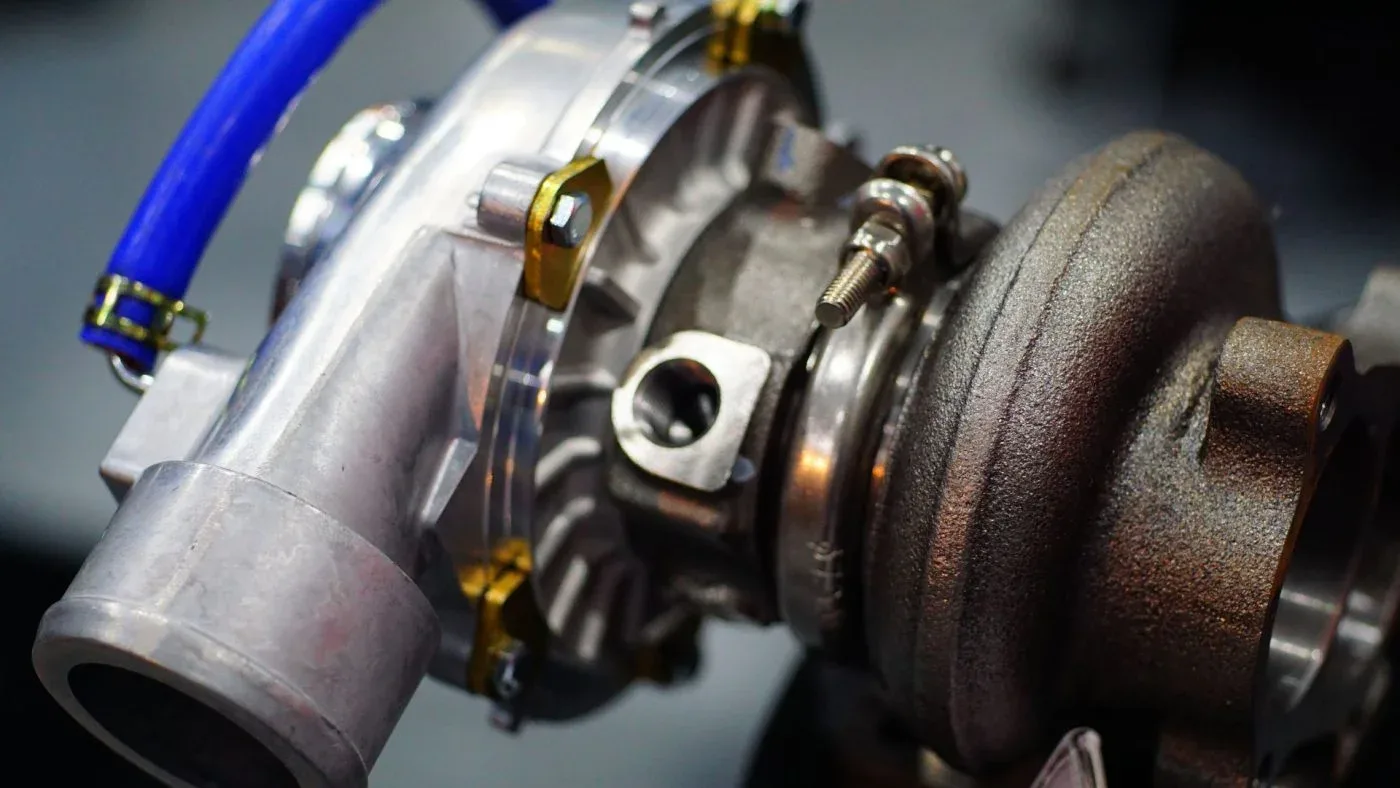
The Automotive Turbocharger Market Impacting Factors reflect the technological, economic, environmental, and industrial forces shaping the development of modern automotive powertrains. Turbochargers have become important components in passenger cars, commercial vehicles, and performance automobiles because they help improve engine power output while supporting fuel efficiency. By using exhaust gases to drive a turbine that compresses incoming air, turbochargers enable smaller engines to deliver performance comparable to that of larger naturally aspirated engines.
As automakers respond to increasingly stringent emission standards, changing consumer expectations, and evolving vehicle technologies, demand for advanced turbocharging solutions continues to develop. The Automotive Turbocharger Market is influenced by several interconnected factors, including engine downsizing, fuel economy requirements, material innovations, vehicle production volumes, and the growing adoption of hybrid powertrains.
Engine Downsizing and Fuel Efficiency Requirements
One of the most significant factors influencing the Automotive Turbocharger Market is the growing emphasis on engine downsizing. Automakers are increasingly designing smaller displacement engines that deliver competitive power and torque without consuming excessive fuel. Turbochargers make this possible by increasing the amount of air entering the combustion chamber, enabling more efficient combustion under suitable operating conditions.
Consumers also expect vehicles to provide a balance between performance and running costs. Turbocharged engines can support this objective by delivering strong acceleration when needed while maintaining efficiency during moderate-load driving.
However, real-world fuel savings depend on vehicle weight, driving behavior, engine calibration, and operating conditions. Aggressive acceleration or sustained high engine loads can reduce the efficiency advantages associated with turbocharging.
Emission Regulations and Environmental Policies
Environmental regulations represent another major influence on market development. Governments across different regions continue to establish emission standards designed to reduce pollutants and improve vehicle efficiency. Automakers must therefore invest in technologies that help their engines meet applicable requirements without compromising drivability.
Turbochargers can contribute to these efforts by improving engine performance and supporting downsized powertrain configurations. When combined with advanced fuel injection, exhaust gas recirculation, optimized combustion, and sophisticated engine management systems, turbocharging can help manufacturers achieve their emissions and efficiency objectives.
Nevertheless, turbocharging alone does not guarantee lower emissions. Its effectiveness depends on the complete powertrain design, exhaust after-treatment systems, and compliance with real-world testing requirements. Changes in environmental legislation can consequently influence product specifications, development costs, and purchasing decisions across the industry.
Growth of Hybrid Vehicles and Electrified Turbocharging
The transition toward vehicle electrification is reshaping the traditional turbocharger business. Although battery-electric vehicles do not require engine turbochargers, hybrid electric vehicles can continue to use turbocharged internal combustion engines. This creates opportunities for manufacturers developing compact, efficient, and responsive turbocharging systems.
Electrically assisted turbochargers and related technologies are attracting attention because they can help reduce turbo lag and improve response at low engine speeds. Electrification can also provide additional flexibility in managing engine operating conditions, particularly in advanced hybrid powertrains.
However, these technologies introduce engineering challenges involving electrical integration, thermal management, control software, and component costs. Their adoption depends on the performance benefits they deliver relative to their additional complexity.
The long-term impact of electrification will vary by vehicle segment and region. Markets with sustained demand for combustion-engine vehicles and hybrids may continue to provide opportunities, while the expansion of battery-electric vehicles can gradually reduce turbocharger demand in certain applications.
Raw Material Prices and Manufacturing Costs
Material costs have a direct effect on turbocharger production economics. Components such as turbine housings, compressor wheels, shafts, bearings, and supporting assemblies must withstand high rotational speeds, vibration, pressure, and extreme temperatures.
Manufacturers often rely on specialized alloys, precision-machined metals, and heat-resistant materials to achieve durability and reliable performance. Fluctuations in the prices of these materials can increase production expenses and place pressure on supplier margins.
Manufacturing costs are also affected by energy consumption, transportation, labor availability, and investments in automated production systems. Companies that improve material utilization, streamline assembly processes, and strengthen supplier relationships may be better positioned to manage cost fluctuations.
At the same time, automakers generally require suppliers to meet strict cost targets. Balancing affordability with reliability and technical performance remains an important competitive consideration.
Technological Advancements and Product Innovation
Continuous technological development is another important factor shaping the Automotive Turbocharger Market. Manufacturers are working to improve compressor efficiency, turbine aerodynamics, bearing systems, electronic controls, and thermal resistance. These improvements can help turbochargers respond more quickly, operate efficiently across broader engine-speed ranges, and maintain performance under demanding conditions.
Variable geometry turbochargers are particularly useful in applications where improved performance across different operating conditions is required. By adjusting the effective geometry of the turbine, these systems can help optimize exhaust energy utilization at different engine speeds.
Advanced simulation, precision manufacturing, and improved quality-control processes also support product development. Manufacturers increasingly need to integrate turbochargers with sophisticated engine management systems and hybrid architectures.
The challenge is that innovation requires significant investment in engineering, testing, validation, and production equipment. Companies must demonstrate measurable benefits while maintaining long service life and competitive pricing.
Global Vehicle Production and Consumer Demand
Automotive production volumes strongly influence turbocharger demand. Growth in passenger vehicle manufacturing, commercial transportation, and performance vehicle segments can increase demand for original equipment turbochargers. Conversely, economic uncertainty, higher borrowing costs, supply chain disruptions, or declining vehicle sales can delay purchases and reduce production schedules.
Consumer preferences also vary across regions. Buyers may prioritize fuel economy in compact passenger cars, durability in commercial vehicles, or acceleration and power in performance models. These differences encourage suppliers to develop products tailored to specific applications.
The replacement market provides an additional source of demand as turbochargers require servicing or replacement during a vehicle's operating life. Demand in this segment depends on the size and age of the vehicle fleet, maintenance practices, repair costs, and availability of compatible components.
Supply Chain Resilience and Competitive Pressure
The automotive supply chain is increasingly interconnected, making component availability and supplier reliability important market factors. Disruptions affecting specialized materials, precision components, logistics, or manufacturing capacity can delay deliveries and increase operating costs.
Automakers also maintain demanding quality, reliability, and delivery requirements. Turbocharger suppliers must consistently meet these expectations while competing with established manufacturers and emerging technology providers.
To reduce operational risks, companies may diversify sourcing, strengthen regional production capabilities, improve inventory planning, and invest in supplier collaboration. These measures can improve resilience, although they may require additional capital and coordination.
Competitive pressure also encourages manufacturers to differentiate products through efficiency, durability, customization, and technical support rather than relying exclusively on pricing.
Future Outlook for the Automotive Turbocharger Market
The future direction of the Automotive Turbocharger Market will depend on the balance between continued internal combustion engine development and the expansion of electrified transportation. Turbocharging is likely to remain relevant in many combustion-engine and hybrid applications, particularly where manufacturers seek higher power density and improved engine efficiency.
At the same time, regional differences in emission regulations, vehicle electrification rates, and consumer demand will influence market opportunities. Suppliers that develop adaptable technologies, manage production costs, and respond effectively to changing powertrain architectures may be better positioned to maintain competitiveness.
The phrase Automotive Turbocharger Market Impacting Factors convexly encompasses these interconnected influences, from regulatory changes and material prices to product innovation and vehicle electrification. Understanding these forces enables manufacturers, suppliers, and automotive stakeholders to identify risks, evaluate emerging opportunities, and make informed strategic decisions.
Conclusion
The Automotive Turbocharger Market is shaped by a combination of efficiency requirements, environmental policies, technological advancements, manufacturing economics, and changing vehicle preferences. While turbochargers continue to offer advantages in many combustion-engine and hybrid applications, electrification and evolving regulations are transforming long-term demand patterns.
Success will depend on the ability of manufacturers to deliver reliable, cost-effective, and technologically advanced solutions while adapting to regional market conditions. Companies that combine engineering innovation with resilient supply chains and flexible product strategies can strengthen their position in this changing automotive landscape.