
Market Overview
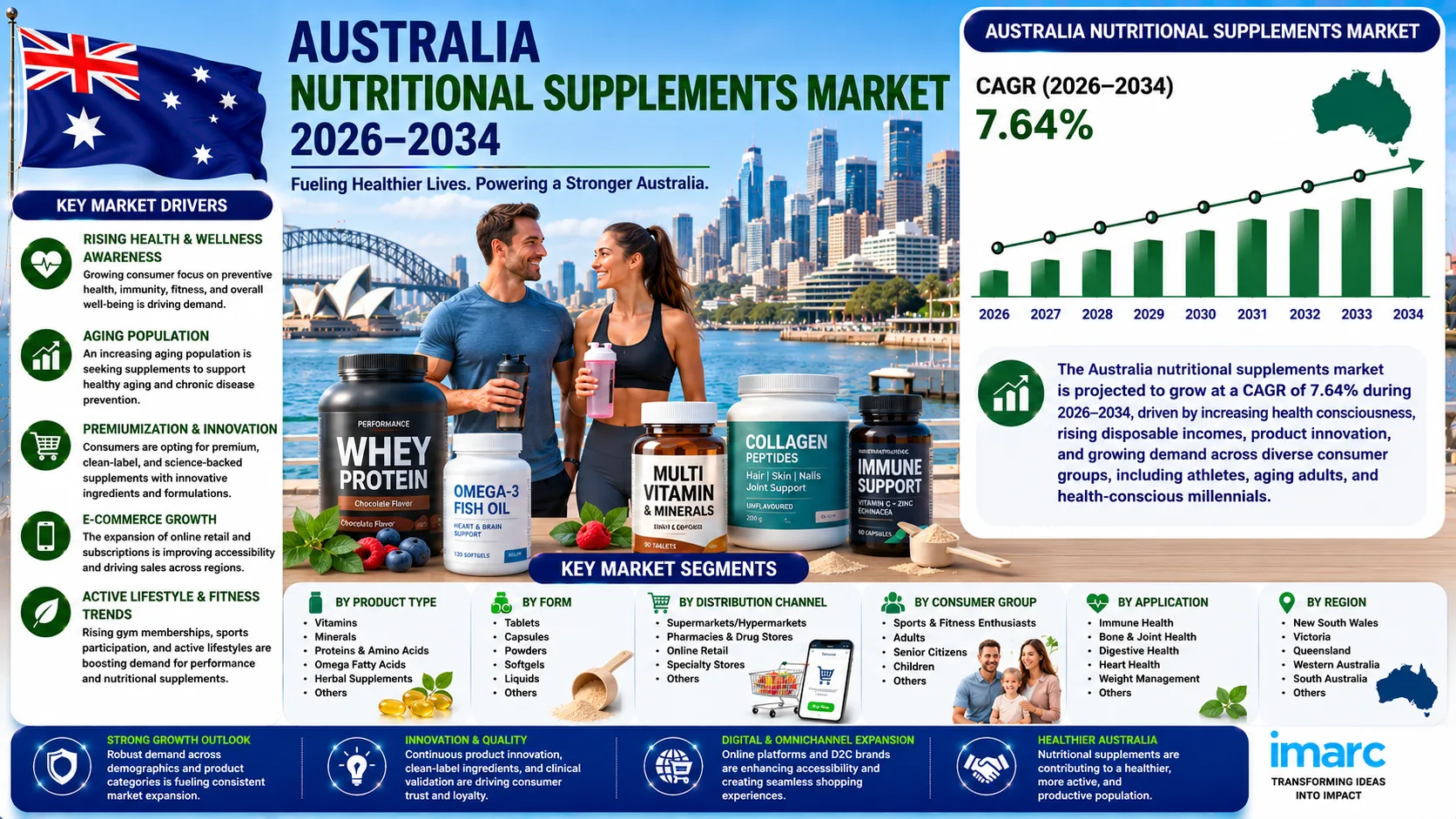
The Australia nutritional supplements market size reached USD 14.5 Billion in 2025 and is projected to reach USD 28.8 Billion by 2034, growing at a compound annual growth rate (CAGR) of 7.64% from 2026 to 2034. The market is witnessing steady expansion, driven by growing consumer focus on preventive healthcare, fitness, and immunity enhancement. A shift toward plant-based and clean-label products, coupled with increased e-commerce adoption, is reshaping purchasing behavior. The market is also supported by evolving regulatory frameworks that encourage transparency and safety. This dynamic environment continues to boost Australia nutritional supplements market share. The market is strategically important to Australia's health and wellness sector as it enables the nation to support preventive healthcare, address nutritional deficiencies, and promote healthy aging across diverse population groups.
Request a Sample Report for In-Depth Market Insights: https://www.imarcgroup.com/australia-nutritional-supplements-market/requestsample
Australia Nutritional Supplements Market Summary
- The Australia nutritional supplements market encompasses a broad range of products, including sports nutrition, dietary supplements, fat burners, functional foods, and other specialty formulations designed to support health, fitness, and wellness objectives.
- These products are valued for their role in preventing chronic disease, addressing nutritional deficiencies, enhancing physical performance, supporting immune function, and promoting healthy aging across all life stages.
- The ecosystem includes manufacturers, ingredient suppliers, retailers (brick-and-mortar and e-commerce), regulatory bodies (Therapeutic Goods Administration), healthcare practitioners, fitness professionals, and consumers.
- Major segments identified in the market include product type (sports nutrition, dietary supplement, fat burner, functional food, others), form (powder, tablets, capsules, liquid, soft gels, others), distribution channel (brick and mortar, e-commerce), consumer group (infants, children, adults, pregnant, geriatric), and region (Australian Capital Territory & New South Wales, Victoria & Tasmania, Queensland, Northern Territory & Southern Australia, Western Australia).
- The market is benefiting from growing consumer demand for tailored nutritional supplements, regulatory changes shaping the sports supplement market, and the rise in demand for plant-based and natural supplements.
- The COVID-19 pandemic increased consumer interest in immunity-supporting supplements, and this behavior has persisted post-pandemic, driving sustained demand for immune-aid, stress support, and energy-related products.
PORTER'S FIVE FORCES ANALYSIS
- Competitive Rivalry: High, with established brands, private label retailers, and emerging DTC companies competing on product quality, pricing, and brand positioning. Business implication: Companies must differentiate through product innovation, clean-label formulations, and digital engagement.
- Supplier Power (Ingredients): Moderate. Suppliers of specialized, high-quality ingredients have some leverage, but the presence of multiple suppliers and the ability of large manufacturers to switch between suppliers moderates this power. Business implication: Manufacturers should maintain diverse supplier relationships.
- Buyer Power (Consumers): High. Consumers have extensive choice across brands, product types, and channels, with low switching costs and growing awareness of ingredients and efficacy. Business implication: Brands must focus on quality, transparency, and value to build loyalty.
- Threat of Substitutes: Moderate. Whole foods and functional beverages offer alternatives, but the convenience and targeted formulations of supplements support their position. Business implication: The industry should emphasize convenience and specific health benefits.
- Threat of New Entrants: Moderate. Higher barriers for established brands (brand recognition, TGA compliance), but lower barriers for digital-native and niche players. Business implication: Established players should build defensible positions through brand equity, regulatory compliance, and distribution networks.
MARKET GROWTH DRIVERS
Growing Health Awareness and Preventive Healthcare
One of the key growth drivers of Australia nutrition supplements market is growing consumer awareness about health and wellness. Australians are focusing on preventive healthcare, and more people are taking proactive measures to ensure long-term well-being and prevent chronic illness. This transition is highly evident in the increased need for vitamins, minerals, herbal extracts, and functional food. The lifestyle of health, fitness, and well-being has become mainstream, especially among the young and middle-aged generations. Health-oriented media content, social media trends, and greater access to health information have influenced Australians to look at the use of nutritional supplements as part of their regular routines. The COVID-19 pandemic also increased consumer interest in immunity-supporting supplements, and the behavior has persisted post-pandemic. With increasingly informed and involved consumers taking control of their health, demand for immune-aid, stress support, and energy-related supplements remains strong.
Aging Population and Increase in Chronic Disease
The region's ageing population is yet another major growth driver fueling the growth of the Australia nutritional supplements market demand. With increasing life expectancy and people moving into the older age group, demand for healthy ageing products as well as age-related health conditions is increasing. Older Australians are increasingly looking for supplements that enhance bone density, joint health, heart performance, mental acuity, and immune function. Additionally, the rising incidence of chronic diseases like diabetes, cardiovascular disease, and arthritis has seen many embrace supplements as an additional measure to complementary therapy. Healthcare providers also advocate for the use of nutrition in helping manage deficiencies and enhance the quality of life. The use of natural and non-invasive measures also enhances supplement consumption among aging populations. With this cohort growing, so too is the long-term demand for specialized supplements, which suit their changing health requirements, thus being a key driver of market growth.
Growth in E-Commerce and Direct-to-Consumer Channels
The accelerated rise in e-commerce and direct-to-consumer (DTC) models is becoming the key driver for the Australian nutritional supplements market. With the ease of online purchase and rising penetration of mobile internet, consumers in both urban and regional markets are buying supplements online in record numbers. Australian consumers are especially sensitive to tailored product offers and subscription models, which are increasingly offered through brand-owned platforms and online health retailers. The emergence of online marketing, influencer sponsorship, and health content has helped firms more easily reach and inform their target markets regarding the advantages of different supplements. Also, the geographically distributed population of Australia has provided a compelling argument for DTC logistics and online engagement strategies, enabling brands to cater to remote regions cost-effectively. These avenues diminish reliance on conventional brick-and-mortar stores and provide more versatility in product training, packaging, and tailoring, while also driving market expansion.
AUSTRALIA NUTRITIONAL SUPPLEMENTS MARKET SEGMENTATION
Product Type Insights:
- Sports Nutrition
- Dietary Supplement
- Fat Burner
- Functional Food
- Others
Form Insights:
- Powder
- Tablets
- Capsules
- Liquid
- Soft Gels
- Others
Distribution Channel Insights:
- Brick and Mortar
- E-Commerce
Consumer Group Insights:
- Infants
- Children
- Adults
- Pregnant
- Geriatric
Regional Insights:
- Australia Capital Territory & New South Wales
- Victoria & Tasmania
- Queensland
- Northern Territory & Southern Australia
- Western Australia
COMPETITIVE LANDSCAPE
The Australia nutritional supplements market features a competitive landscape of established brands, private label retailers, and emerging DTC companies competing on product quality, pricing, and brand positioning. Market dynamics are characterized by growing demand for personalized nutrition, plant-based products, and clean-label formulations. Competition is intensifying as brands invest in product innovation, digital engagement, and e-commerce channels, with differentiation through product innovation, clean-label formulations, and digital engagement.
Key players mentioned in the report context include:
- Vitadrop, established by Charlie Wood and Dan Concannon, released 11 water-based vitamin supplements by 2024, out of which four were TGA-accredited products available in big Australian retailers. The company has an estimate of $2 million revenue by 2024 and $50 million by 2030, with global expansion and Australian-based manufacturing plans.
- Beforeyouspeak Coffee, founded by Jaryd Terkelsen and Ash Bisset, expanded into the Middle East in 2024, rolling out sachets in 25 UAE supermarkets and set to enter Saudi Arabia. The health-conscious coffee brand has health-focused blends and is increasing instant and canned formats in Woolworths and convenience stores such as Ampol and Caltex.
REGIONAL ANALYSIS
- ACT & New South Wales: A key market driven by Sydney's high population density, strong retail presence, high health awareness, and concentration of health and fitness culture, with high demand for sports nutrition and dietary supplements.
- Victoria: A significant market driven by Melbourne's strong health and wellness culture, vibrant food scene, and growing demand for plant-based and natural supplements.
- Queensland: A growing market with expansion driven by population growth, active lifestyle, and increasing health awareness, with rising demand for sports nutrition and functional foods.
- Western Australia: A growing market driven by Perth's expanding population, active lifestyle, and increasing health awareness, with demand for sports nutrition and dietary supplements.
- NT & South Australia: Emerging markets with growing health awareness and demand for supplements, supported by improving retail access and increasing consumer education.
RECENT INDUSTRY DEVELOPMENTS
August 2026: Australians were warned against purchasing unregulated health supplements from overseas websites, with concerns that some products bypass Australian safety, quality, and advertising requirements. The issue has highlighted growing regulatory pressure on the rapidly expanding supplements sector and the risks created by cross-border e-commerce.
July 2026: Competition in Australia's vitamins and supplements industry intensified as brands increased marketing investment. Nielsen reported that 11.8 million Australians were using vitamins and supplements, while vitamin-brand advertising expenditure increased 27%, highlighting strong consumer demand and growing competition for market share.
July 2026: New research highlighted continued concerns around high-dose vitamin B6 consumption in Australia. Despite existing warnings, high-risk purchasing behavior remained widespread, reinforcing the importance of clearer consumer information and regulatory oversight for supplement products.
June 2026: Personalized nutrition continued gaining traction in Australia as consumers increasingly sought supplements tailored to individual health profiles, dietary requirements, fitness goals, and lifestyle needs. The shift is being supported by digital health platforms, genetic testing, and improved nutrition technology.
Key Aspects Required for the Australia Nutritional Supplements Market
- Market Performance: USD 14.5 Billion in 2025, with a projected trajectory to USD 28.8 Billion by 2034.
- Market Outlook: A 7.64% CAGR through 2034 indicates robust growth across product types, forms, and distribution channels, driven by health awareness, aging population, and e-commerce growth.
- Growth Drivers: Growing health awareness and preventive healthcare; aging population and increase in chronic disease; growth in e-commerce and direct-to-consumer channels; growing consumer demand for tailored nutritional supplements; and rise in demand for plant-based and natural supplements.
- Competitive Landscape: A competitive market with established brands, private label retailers, and emerging DTC companies. Differentiation occurs through product innovation, clean-label formulations, and digital engagement.
- Value Chain Analysis: From ingredient sourcing and manufacturing through distribution and retail to end-use by consumers, with regulatory compliance and consumer trends shaping market dynamics.
- Industry Trends: Growing consumer demand for tailored nutritional supplements; regulatory changes shaping the sports supplement market; rise in demand for plant-based and natural supplements; e-commerce and DTC growth; and increasing focus on preventive healthcare.
- Strategic Recommendations: Invest in personalized and tailored supplement formulations; develop plant-based and natural product lines; leverage e-commerce and direct-to-consumer channels; ensure TGA compliance and transparency; and target aging populations with specialized health products.
Note: If you need any specific information that is not covered currently within the scope of the report, we will provide the same as a part of customization.
Speak to an analyst: https://www.imarcgroup.com/request?type=report&id=36682&flag=C
Report Format, Delivery, and Customization Details
- Report Format Mode: PDF and Excel (Editable version in PPT/Word format available on special request)
- Report Delivery Mode: Online Delivery, Physical Delivery
- Report Delivery Time: Report Delivered Over Email within 24 to 48 hours. If requested by the client, a physical copy will be delivered within three to ten days.
- Report Confirmation Mode: Yes via Email
- Report Customization Mode: Yes via Email / Call
- Report Table of Content: Yes
- Report List of Figures: Yes
- Report Methodology Mode: Yes
- Request For Sample Report: Yes
About Us
IMARC Group is a global management consulting firm that helps the world's most ambitious changemakers to create a lasting impact. The company provides a comprehensive suite of market entry and expansion services. IMARC offerings include thorough market assessment, feasibility studies, company incorporation assistance, factory setup support, regulatory approvals and licensing navigation, branding, marketing and sales strategies, competitive landscape and benchmarking analyses, pricing and cost research, and procurement research.
Contact Us
IMARC Group
134 N 4th St., Brooklyn, NY 11249, USA
Email: [email protected]
Tel No: (D) +91 120 433 0800
United States: +1-201-971-6302