
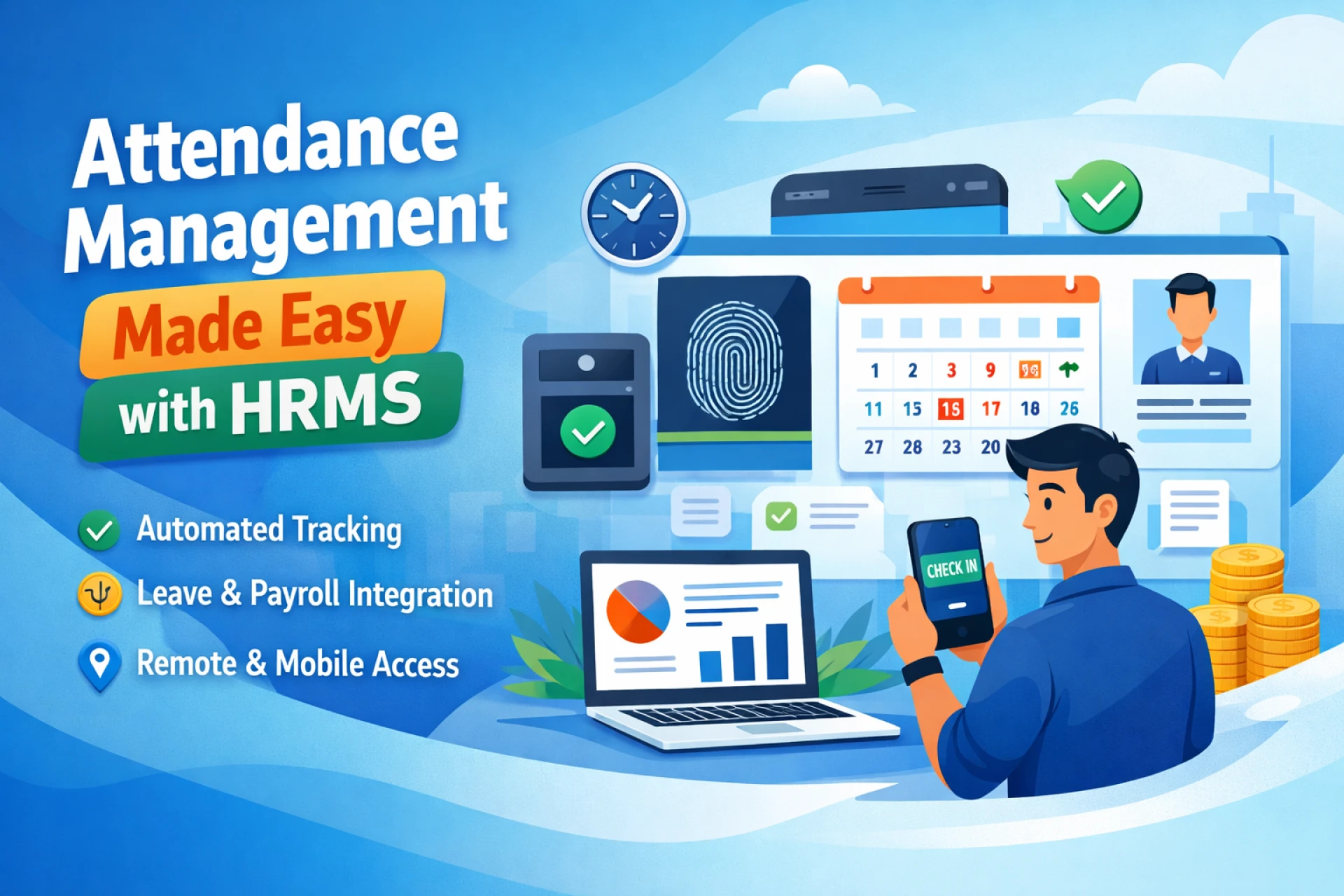
In today’s fast-paced business environment, managing employee attendance manually is not only time-consuming but also prone to errors. From tracking work hours to managing leaves and overtime, traditional methods often lead to inefficiencies and compliance issues. This is where a modern Human Resource Management System (HRMS) steps in to simplify and streamline attendance management.
What is Attendance Management in HRMS?
Attendance management in an HRMS refers to the automated process of tracking employee working hours, leaves, shifts, and absences using digital tools. It eliminates the need for manual registers or spreadsheets, ensuring accuracy and transparency across the organization.
Challenges of Traditional Attendance Systems
Many businesses still rely on outdated attendance methods, which come with several challenges:
- Manual errors in data entry
- Time-consuming record maintenance
- Difficulty in tracking remote or field employees
- Lack of real-time insights
- Compliance risks and payroll inaccuracies
These challenges can directly impact productivity and employee satisfaction.
How HRMS Simplifies Attendance Management
A robust HRMS transforms attendance tracking into a seamless and efficient process. Here’s how:
1. Automated Time Tracking
Employees can log in and out using biometric devices, mobile apps, or web portals. The system automatically records working hours, reducing manual intervention.
2. Real-Time Data Access
HR teams and managers can access attendance data instantly, enabling better decision-making and workforce planning.
3. Leave & Shift Management
Employees can apply for leave online, while managers can approve or reject requests with ease. Shift scheduling becomes more organized and flexible.
4. Integration with Payroll
Attendance data is directly linked with payroll systems, ensuring accurate salary calculations, overtime tracking, and compliance with labor laws.
5. Remote & Mobile Attendance
With mobile-based HRMS, employees can mark attendance from anywhere—ideal for remote teams and field staff.
Key Features to Look for in an HRMS
When choosing an HRMS for attendance management, consider the following features:
- Biometric & GPS-based attendance
- Automated leave management
- Shift and roster management
- Real-time analytics and reports
- Payroll integration
- Cloud-based access
Benefits of Using HRMS for Attendance
Implementing an HRMS offers multiple advantages:
- ⏱️ Saves time and reduces administrative workload
- 📊 Improves accuracy and eliminates manual errors
- 📈 Enhances productivity and workforce efficiency
- 🔒 Ensures compliance with labor regulations
- 😊 Improves employee transparency and satisfaction
Why Your Business Needs HRMS in 2026
As businesses continue to embrace digital transformation, adopting an HRMS is no longer optional—it’s essential. Whether you run a small business or a large enterprise, an automated attendance system helps you stay competitive, efficient, and compliant.
Attendance management doesn’t have to be complicated. With the right HRMS, you can automate processes, reduce errors, and focus on what truly matters—growing your business and supporting your employees.
If you’re looking to simplify your attendance management, now is the perfect time to invest in a smart HRMS solution.