The food delivery industry has become a competitive digital marketplace where customers expect convenience, fast ordering, multiple payment options, and reliable delivery tracking. For startups, entrepreneurs, restaurants, agencies, and enterprises, launching a Food Delivery App can create new opportunities to serve customers through a dedicated digital platform.
However, building a successful Online Food Delivery business requires more than having an app. Businesses need the right marketplace model, customer experience, restaurant management tools, delivery operations, and administrative controls.
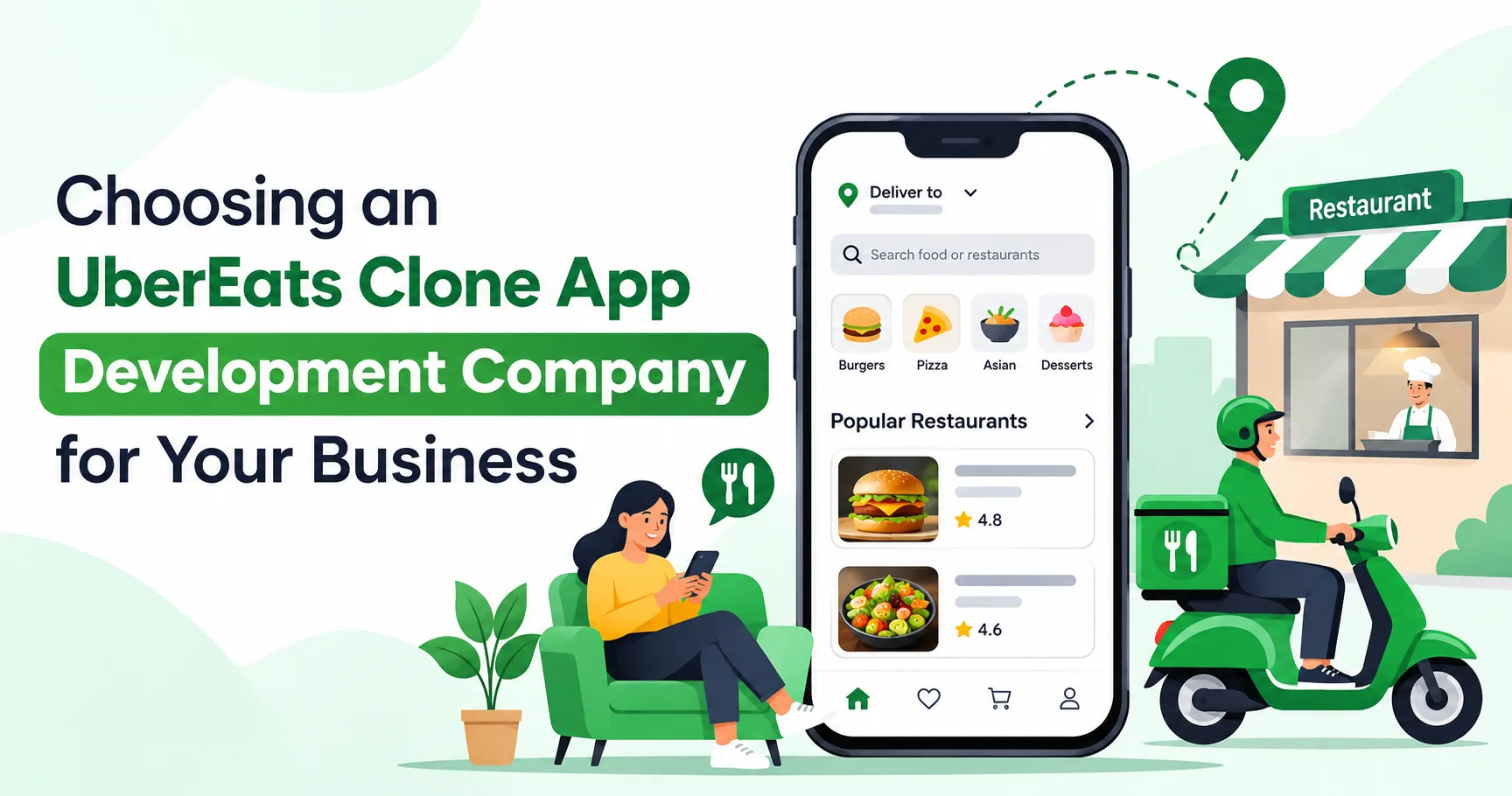
Choosing an UberEats Clone App Development Company can provide a ready foundation based on a proven food delivery model. Businesses can then customize the platform according to their brand, target audience, service area, and operational requirements.
This guide explains what to evaluate before selecting a development partner, which features matter, how the business model works, and when a white-label approach may be the right choice.
What Is an UberEats Clone App?
An UberEats Clone is a ready-made Food Delivery Platform inspired by the core business model and functionality of popular food delivery services. It connects customers, restaurants, delivery partners, and administrators through a single marketplace.
An Ubereats clone app does not mean copying another company's branding or identity. Instead, it provides a similar operational foundation that can be customized with a business's own brand, design, service areas, features, payment options, and workflows.
The platform generally includes four main components:
- Customer App: Allows users to discover restaurants, browse menus, place orders, make payments, and track deliveries.
- Restaurant Panel: Helps restaurants manage menus, receive orders, update availability, and monitor order progress.
- Delivery Partner App: Allows delivery partners to accept requests, navigate to pickup locations, and complete deliveries.
- Admin Panel: Gives business owners control over customers, restaurants, delivery partners, orders, promotions, and platform operations.
This structure makes an app like ubereats suitable for businesses that want to operate a multi-vendor food marketplace.
How Does an UberEats Clone App Work?
The customer journey starts with restaurant discovery. Users can search for restaurants or food items based on their location and preferences. They can review menus, select items, add them to a cart, and place an order.
After the order is confirmed, the restaurant receives the request and begins preparation. A delivery partner can then receive the delivery request, collect the order, and deliver it to the customer.
The admin manages the overall marketplace through a centralized dashboard. This includes managing users, restaurants, delivery partners, orders, promotions, service areas, and other operational activities.
The model can be adapted for different markets. For example, a business may focus on a particular city, target a specific food category, or create a broader marketplace with multiple restaurant types.
What to Look for in an UberEats Clone App Development Company
Choosing an UberEats Clone App Development Company should not be based only on the number of features advertised on a website. Businesses should evaluate the complete solution and the provider's ability to understand their business model.
Experience With On-Demand Marketplaces
Look for an UberEats Clone App Development Company with experience in marketplace and on-demand applications. Food delivery involves several stakeholders, so the development partner should understand restaurant operations, customer ordering, delivery management, partner onboarding, and marketplace administration.
Experience with other on-demand business models can also indicate that the provider understands different operational workflows.
Customization Flexibility
Every food delivery business has different requirements. You may need specific service zones, commission rules, restaurant categories, promotional campaigns, payment methods, or delivery workflows.
Your chosen provider should be able to customize the solution around your business requirements instead of forcing your operations into a fixed model.
White-Label Support
A white label UberEats clone app allows businesses to launch a food delivery platform under their own brand identity.
This can be useful for startups, agencies, entrepreneurs, and established businesses that want control over their customer-facing brand. Before selecting a provider, check the available branding options, customization scope, ownership terms, and ongoing support.
Product Demonstration
Always request an ubereats clone app demo before making a final decision. A demonstration allows you to experience the actual product instead of relying entirely on written feature descriptions.
Review the customer ordering journey, restaurant management, delivery workflow, notifications, payment experience, tracking, and admin controls.
Important UberEats Clone App Features
A successful Food Delivery App should provide useful features for every participant in the marketplace.
Customer App Features
Customers should be able to:
- Create and manage their accounts
- Search restaurants and food items
- Apply filters and sorting options
- Browse menus and item details
- Add products to their cart
- Save delivery addresses
- Apply promotional codes
- Select payment methods
- Track orders
- Rate restaurants and delivery partners
- Receive order notifications
- View previous orders
These ubereats clone app features help create a convenient ordering experience while giving customers greater control over their purchases.
Restaurant Features
Restaurant partners need tools that simplify their daily operations. Important capabilities include menu management, item availability, order acceptance, preparation status, restaurant information, promotions, and order history.
The restaurant experience should be simple because efficient partner operations directly influence customer satisfaction.
Delivery Partner Features
Delivery partners need access to delivery requests, pickup and drop-off information, navigation, availability controls, earnings information, delivery history, and notifications.
A straightforward delivery workflow can help partners manage orders more efficiently.
Admin Features
The admin panel should provide centralized control over customers, restaurants, delivery partners, orders, commissions, promotions, service areas, payments, and platform activity.
Reports and operational insights can also help business owners understand marketplace performance and make better decisions.
Business Opportunities With a Food Delivery Platform
A Food Delivery Platform can support different business models depending on the target market and operational strategy.
Startups and Entrepreneurs
Startups can use an established marketplace model to enter the food delivery sector while focusing their resources on restaurant partnerships, customer acquisition, marketing, and local operations.
Restaurant Groups
Restaurant groups can use an Online Food Delivery solution to establish a direct digital ordering channel and build stronger relationships with customers.
Local Food Delivery Businesses
A local business can create a platform focused on a particular city or region. The solution can be customized around local restaurants, delivery zones, payment preferences, and customer expectations.
Digital Agencies
Agencies can use a white-label solution to offer branded food delivery platforms to their clients. This can help them expand their service portfolio while using an existing marketplace foundation.
Enterprises
Large organizations can use a customizable platform when entering new markets, launching new business divisions, or expanding their digital ordering capabilities.
White Label vs Custom Food Delivery App
The decision between white label vs custom food delivery app depends on business requirements, product flexibility, market strategy, and the level of control needed.
A white-label solution starts with an established marketplace foundation that can be branded and customized. This can be suitable for businesses that want to launch a branded platform without starting the entire product from the beginning.
A fully custom solution may be more appropriate when a company has highly specialized workflows that cannot be supported by a ready-made platform.
Neither approach is automatically better. The right option depends on the business model and product objectives.
Why Businesses Choose an UberEats Clone Solution
One of the main reasons businesses work with an UberEats Clone App Development Company is to start with a structured marketplace model rather than developing a basic ordering application from scratch.
A ready solution can provide the foundation for customer ordering, restaurant management, delivery operations, and administration.
This allows businesses to concentrate more heavily on commercial priorities such as restaurant acquisition, customer engagement, delivery operations, market positioning, and expansion.
However, businesses should not select a provider simply because it advertises a long list of features. Product quality, usability, customization, ownership, support, and the provider's experience should also be evaluated.
Comparing Food Delivery Business Models
Different food delivery platforms can inspire different business strategies.
A business researching a Deliveroo clone may focus on restaurant discovery, ordering, and delivery operations within a multi-vendor marketplace.
A company studying a Zomato clone may pay closer attention to restaurant discovery, reviews, ratings, menus, and location-based food services.
Businesses interested in expanding beyond food can explore a Glovo clone model to understand how delivery platforms can support multiple service categories.
These models should be treated as references rather than exact blueprints. Your platform should ultimately be designed around your target audience, market conditions, service offering, and business objectives.
How to Evaluate the Best Provider
When comparing providers, start by reviewing their experience with food delivery and marketplace applications.
Next, request a product demonstration and examine the complete customer, restaurant, delivery partner, and admin workflows. Check whether the platform supports the features your business actually needs.
You should also review customization options, branding capabilities, ownership terms, support processes, previous projects, and communication practices.
A good UberEats Clone App Development Company should be able to explain how its solution can fit your business model instead of simply presenting a standard product.
What Makes a Reliable Food Delivery Development Partner?
A reliable Food delivery app development company should understand both technology requirements and marketplace operations.
The provider should be able to discuss restaurant onboarding, customer journeys, delivery operations, promotions, service areas, payment preferences, and future business expansion.
Clear communication is equally important. Defined requirements, transparent documentation, realistic project expectations, and responsive support can make the overall process easier for business owners.
For long-term growth, flexibility also matters. Your chosen platform should be capable of adapting as your customer base, restaurant network, and service requirements grow.
Conclusion
Choosing an UberEats Clone App Development Company is an important business decision for any company planning to enter the food delivery market. The right provider should offer more than a collection of features. It should provide a practical marketplace foundation that can be adapted to your brand, audience, and operational requirements.
Before making a decision, evaluate the product demo, customization options, marketplace features, ownership terms, support capabilities, and provider experience. A startup may have different requirements from an enterprise, while an agency may need a stronger white-label offering.
The goal is to select a clone app development company that understands your business objectives and can provide a flexible Food Delivery Platform capable of supporting your long-term strategy.
FAQs
1. What is an UberEats Clone App?
An UberEats Clone App is a food delivery marketplace solution based on the core model of popular food ordering platforms. It connects customers, restaurants, delivery partners, and administrators through a unified platform.
2. How do I choose the best UberEats Clone App Development Company?
Evaluate the provider's experience, product demo, customization options, available features, ownership terms, support, previous projects, and understanding of your business requirements.
3. Can an UberEats Clone App be customized?
Yes. A suitable clone solution can be customized with your branding, service areas, business rules, payment options, promotional features, marketplace workflows, and other requirements supported by the provider.
4. Is a white-label food delivery app suitable for startups?
A White-label food delivery app can be suitable for startups that want to launch a branded marketplace using an established product foundation. It allows them to focus on market positioning, restaurant partnerships, marketing, and operations.
5. Can I launch an UberEats Clone App for a specific city?
Yes. The platform can be configured around a specific city or region, depending on the provider's capabilities. Businesses can define their restaurant network, delivery zones, service rules, payment preferences, and target customers.