
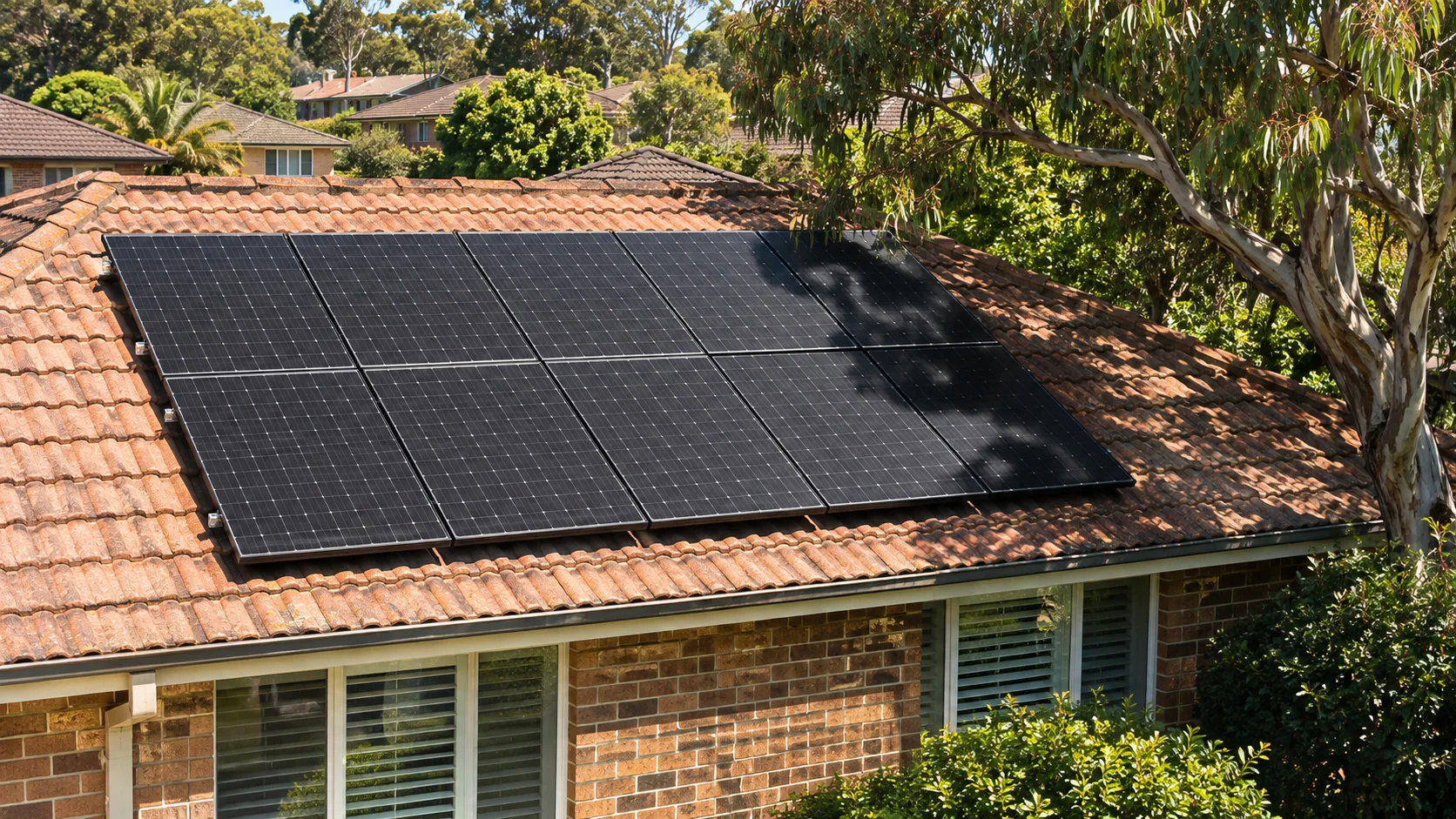
A neighbour’s tree reaches across part of your roof. Another house casts a shadow in the late afternoon. Perhaps a chimney shades one small section on winter mornings. It is easy to look at those shadows and decide that solar is off the table.
Shade does reduce the electricity a panel can produce. But a shaded roof is not always an unsuitable roof. What matters is where the shadow falls, when it falls and how the proposed system is designed around it.
For someone researching solar panels in Sydney, this is a better starting point than asking whether the roof receives uninterrupted sun all day. A Sydney roof with afternoon shade may still have a useful sunny area. A roof that looks bright in summer might face much more shade when the winter sun sits lower.
Why does a small patch of shade matter?
Solar panels work best when sunlight reaches them directly. A shadow from a tree branch, antenna or neighbouring building reduces the light available to the affected part of the system.
The impact can extend beyond the exact cells under the shadow because cells within a panel are connected in circuits. How that affects the whole installation depends on the panels and inverter arrangement. It is one reason a shaded roof needs a considered design rather than a rough guess from the street.
The shape of the shadow matters too. A chimney might shade one corner for a short time each morning. A large tree could cover most of the proposed panel area through the middle of the day. Those are very different problems, even though both homes could be described as having “some shade”.
Check the roof through the whole year
The sun does not follow the same path across your roof every day. A patch that gets plenty of light in summer may receive less in winter. Nearby buildings and trees can cast longer shadows when the sun is lower.
That is why one photograph taken at midday is not enough to judge a roof. A useful assessment considers the proposed panel locations and estimates how shade changes by time of day and season. It should also account for roof direction, pitch and anything else that may obstruct sunlight.
If a tree is involved, ask who owns it and whether it is likely to grow into the available sunlight. Do not assume it can simply be removed or heavily pruned. Local council rules may apply, and the tree may provide valuable shade to the house in summer. An installer can often assess the solar option while the tree remains in place.
Does every panel need to face north?
No. North-facing panels are often a good option in Australia, but other roof areas can be useful. East-facing panels generate more of their power earlier in the day, while west-facing panels can produce later in the afternoon. Their total annual output may differ from an ideal north-facing arrangement, yet the timing might better suit some households.
Imagine a house where the north-facing roof is partly shaded by a tall tree, but the eastern roof has a clear view of the morning sun. It may make more sense to assess the clear eastern area than to fill the shaded northern area simply because north is usually preferred.
The reverse can also be true. If afternoon shade reaches the west-facing roof just when the household returns home, that section may contribute less than the owner expects. The best layout follows the actual roof and electricity use, not a single rule about compass direction.
Can equipment reduce the effect of shade?
Sometimes. A system may use a conventional string inverter, panel optimisers, microinverters or a combination suited to its design. Some options can help when panels face different directions or when part of an array is shaded.
They cannot turn shade into sunlight. Equipment may help manage its effect, but it does not remove the lost solar energy. If a quote promises that a particular device will “fix” a heavily shaded roof, ask what output the installer expects with and without it.
That comparison is important because additional equipment has a cost. On a roof with only a small amount of early morning shade, a more complex setup may deliver less benefit than it would on a roof with several differently oriented sections. The choice should follow a site assessment and a clear production estimate.
Is a smaller, sunnier system better than a larger shaded one?
It can be. If part of the roof receives strong sunlight and another part is heavily shaded, adding panels to every available surface may not be the best use of your budget.
Ask the installer to show how much electricity the proposed panels on each roof section are expected to generate. If the shaded section adds little output for its cost, a smaller layout might be more sensible. On another home, the extra panels may still contribute enough to justify them.
Household habits matter here as well. A family using electricity in the morning may value production from an unshaded eastern roof. Someone working from home might benefit from a clear section that performs through the middle of the day. The aim is to design for electricity you can use, rather than to cover the maximum possible roof area.
What should a solar quote tell you about shade?
It should do more than say that your roof is “suitable”. You want to understand how the estimate accounts for the shadows you can see and any seasonal shade you may not have noticed.
Ask the installer to show you:
- Which roof sections they propose using and why
- What causes shade on each section
- When that shade is expected to affect the panels
- The estimated annual generation after allowing for shade
- Whether a different panel layout was considered
- Why the proposed inverter arrangement suits the roof
- What assumptions have been used to estimate bill savings
A quote based on a detailed assessment may differ from a quick online estimate. That does not necessarily mean either figure was careless. It means the roof’s real conditions need to be considered before you rely on a production number.
If you receive two quotes with very different generation estimates, ask both installers to explain their shade assumptions. A lower price is hard to compare with a higher one when they are forecasting very different results.
What about adding a battery?
A battery stores electricity produced by the system for later use. It cannot recover electricity the panels did not generate because they were shaded.
That does not rule a battery out. If the unshaded part of your roof still produces a useful daytime surplus and your household buys substantial electricity in the evening, storage may be worth assessing. But it is usually sensible to understand the solar generation estimate first. The battery proposal should be based on what the roof can realistically produce, not what an ideal unshaded roof would produce.
If you are unsure, ask for separate figures for panels alone and panels with a battery. Look at the expected savings and upfront costs of each option, along with when your household uses electricity. That gives you a clearer basis for deciding whether storage belongs in the initial installation or is something to revisit later.
When might shade make solar a poor fit?
There will be roofs where too much of the usable area is shaded for too much of the day. A small clear section, difficult roof layout or significant winter shade could make the expected output too low for the cost.
A good installer should be willing to say so. They might suggest a different section of roof, a smaller system or waiting until a planned roof renovation changes the available space. If the numbers still do not add up, deciding against installation is a useful outcome of the assessment.
That honesty matters more than an optimistic estimate. You should know what the solar panels are likely to produce on your roof, not what the same system could produce somewhere with perfect sun.
A shaded roof deserves a closer look, not an automatic yes or no. Find out where sunlight reaches it through the year, compare sensible layouts and ask how shade has been included in the forecast. If there is a suitable area, a carefully designed system may still serve your home well.