
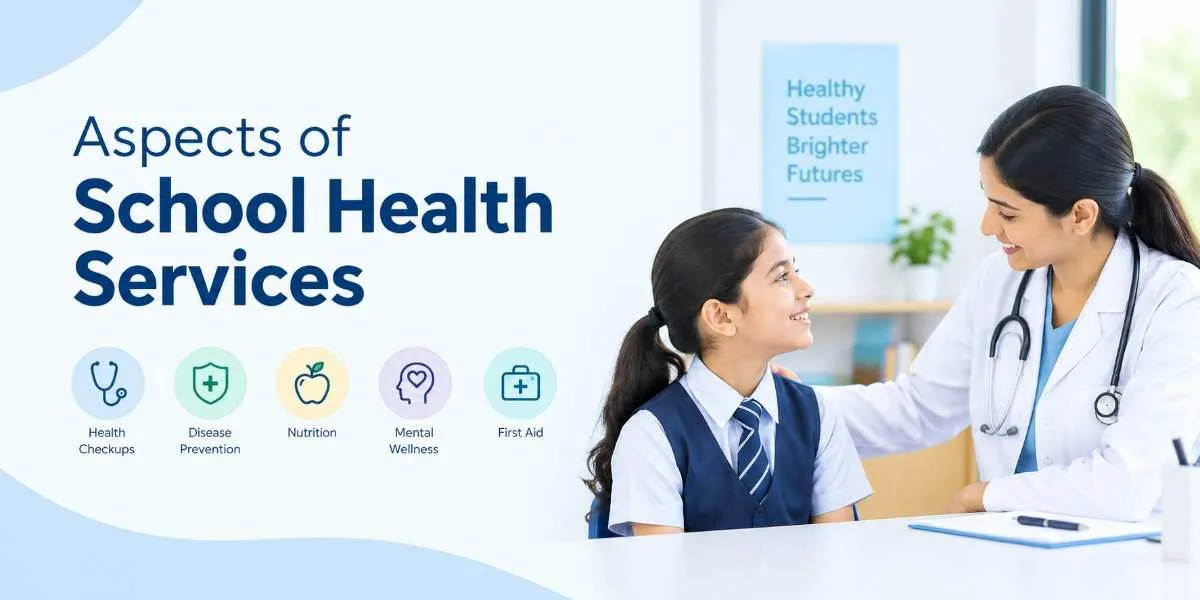
School health services are an important part of creating a safe and healthy learning environment. Schools are not only places where children receive education. They are also environments where students spend a large part of their day, develop habits, interact with others, and grow physically and emotionally.
A well-planned school health programme helps schools identify health problems early, provide timely medical support, promote healthy habits, and protect students from preventable health risks. The aspects of school health services cover several areas, including health assessment, disease prevention, nutrition, mental health, first aid, health education, dental care, eye care, and maintaining a healthy school environment.
Understanding these aspects can help schools develop a structured healthcare system that supports students throughout their school years.
What Are School Health Services?
School health services are organised healthcare activities designed to protect and improve the health of students and school staff. These services can include preventive healthcare, health screenings, medical support, emergency care, health education, nutrition programmes, mental wellness support, and health records management.
The purpose is not only to treat students when they become ill. School health services also focus on preventing health problems and helping students develop healthy habits.
A comprehensive school health programme combines healthcare professionals, school management, teachers, parents, students, and other stakeholders to create a healthier school community.
Major Aspects of School Health Services
The aspects of school health services cover different areas of student health. Each area has a role in supporting the overall well-being of children.
1. Health Appraisal and Regular Health Checkups
Health appraisal is one of the main aspects of school health services. Regular health checkups help monitor the physical health and development of students.
These assessments may include general physical examinations, height and weight measurements, vision screening, hearing checks, dental assessments, and other age-appropriate health evaluations.
Regular assessments can help identify potential health concerns at an early stage. When a problem is identified, schools can inform parents and recommend further medical consultation or referral when needed.
2. Remedial Measures and Follow-Up Care
Identifying a health problem is only the first step. Students may also need follow-up care, medical referrals, or monitoring.
Schools can maintain records of identified health concerns and track whether students have received the recommended care. Parents can also be informed about follow-up requirements.
A proper follow-up system helps prevent health concerns from being ignored after the initial screening.
3. Prevention of Communicable Diseases
Schools bring together a large number of students every day. This makes disease prevention an important aspect of school health services.
Schools can promote preventive practices such as:
- Regular handwashing
- Respiratory hygiene
- Personal cleanliness
- Safe drinking water
- Proper sanitation
- Safe food practices
- Awareness about common infections
- Appropriate health precautions during outbreaks
Health education can help students understand how everyday habits can reduce the spread of infections.
4. Nutrition and Dietary Services
Good nutrition is important for children's growth, development, concentration, and overall health.
Nutrition services in schools may include health education, nutrition awareness sessions, dietary assessments, healthy eating campaigns, and monitoring of food practices within the school.
Students can be taught about balanced meals, healthy snacks, hydration, fruits and vegetables, and the importance of making informed food choices.
Schools can also work with parents and healthcare professionals when a student requires specific dietary attention.
5. Mental Health and Emotional Well-Being
Mental health is an important part of school healthcare. Students may face academic pressure, social challenges, bullying, family concerns, anxiety, stress, or other emotional difficulties.
School health services can include counselling, mental wellness sessions, stress management activities, awareness programmes, and referral support.
Teachers and school staff can also be trained to recognise changes in student behaviour and guide students toward appropriate support.
Creating an environment where students feel comfortable asking for help is an important part of promoting mental well-being.
6. First Aid and Emergency Care
Accidents, injuries, sudden illness, and other medical emergencies can happen during school hours. Schools should therefore have suitable first-aid and emergency response arrangements.
This aspect of school health services may include:
- A properly equipped medical room or infirmary
- First-aid supplies
- Trained medical staff
- Emergency response procedures
- Emergency contact systems
- Ambulance support when required
- Referral arrangements with hospitals
School staff should also know what steps to take during common emergencies. Regular first-aid training can improve preparedness.
7. Dental Health Services
Dental health is another important aspect of school health services. Poor oral health can cause pain, difficulty eating, and discomfort that may affect a student's daily activities.
Schools can conduct dental screening programmes and provide education about brushing, oral hygiene, healthy food choices, and regular dental visits.
Early identification of dental problems can help parents seek appropriate treatment before the condition becomes more serious.
8. Eye and Vision Care
Vision problems can affect reading, writing, classroom participation, and academic performance. Students may not always realise that they have a vision problem.
Regular vision screening can help identify students who may need further examination by an eye-care professional.
Schools can also educate students about eye care, appropriate screen use, proper lighting, and healthy study habits.
9. Health Education
Health education helps students understand how their daily choices affect their health.
Topics can include:
- Personal hygiene
- Nutrition
- Physical activity
- Mental health
- Puberty and adolescent health
- Disease prevention
- First aid
- Substance use awareness
- Healthy sleep
- Digital and screen habits
Health education should be age-appropriate and presented in a simple way so students can understand and apply the information in their daily lives.
10. Healthy School Environment
A healthy physical environment is essential for student safety and well-being.
Schools should pay attention to clean drinking water, sanitation, ventilation, waste management, classroom safety, food hygiene, playground safety, and general cleanliness.
Regular hygiene and safety checks can help identify possible risks and allow school management to take corrective action.
A clean and safe environment also supports a better learning experience for students and staff.
11. Physical Activity and Fitness
Regular physical activity is important for children's physical and emotional health. Schools can encourage students to participate in sports, physical education, exercise, outdoor activities, and other forms of movement.
Physical activity can also support concentration, fitness, healthy growth, and overall well-being.
School health programmes should therefore work alongside physical education and sports activities rather than treating healthcare as a separate function.
12. Health Records and Documentation
Maintaining student health records is another important aspect of school health services. Records can include information about health screenings, medical visits, allergies, injuries, referrals, vaccinations, and follow-up requirements.
Digital health records can make it easier for schools to organise information, track student health, monitor follow-ups, and prepare reports.
Proper documentation can also help healthcare teams understand a student's health history when providing care.
How Blue Circle Supports School Healthcare
Managing all aspects of school health services requires trained professionals, proper systems, medical infrastructure, and regular monitoring. Schools may find it challenging to manage these requirements independently.
Blue Circle provides integrated healthcare solutions for schools and institutions. Its services include infirmary management, doctor and nurse staffing, primary care, ambulance support, health screenings, mental wellness programmes, first-aid training, digital health records, student health tracking, health dashboards, and parent or administrator reports.
Blue Circle also provides clinic setup, laboratory and pharmacy tie-ups, hygiene and safety audits, and multi-site health models. These services can help schools create a structured healthcare system that covers both preventive and immediate healthcare needs.
The company combines medical professionals, healthcare processes, infrastructure, and technology to support healthcare delivery in educational environments. Its website also highlights a campus healthcare project involving a 4,500+ student institute where healthcare systems were digitised.
Schools looking to strengthen their healthcare infrastructure can explore Blue Circle's school and institutional healthcare solutions and select services according to their student population, campus requirements, and healthcare needs.
Conclusion
The aspects of school health services cover much more than basic first aid. Health appraisal, follow-up care, disease prevention, nutrition, mental health, dental care, eye care, health education, emergency care, physical activity, healthy school environments, and health records all contribute to a complete school healthcare programme.
Schools that focus on these areas can create a safer and more supportive environment for students. With trained healthcare professionals, proper infrastructure, preventive programmes, and digital systems, schools can manage student health in a more organised way.
Healthcare providers such as Blue Circle can support schools in building and managing these systems. A structured approach to school health can help institutions focus not only on treating illness but also on prevention, early identification, health education, and long-term student well-being.