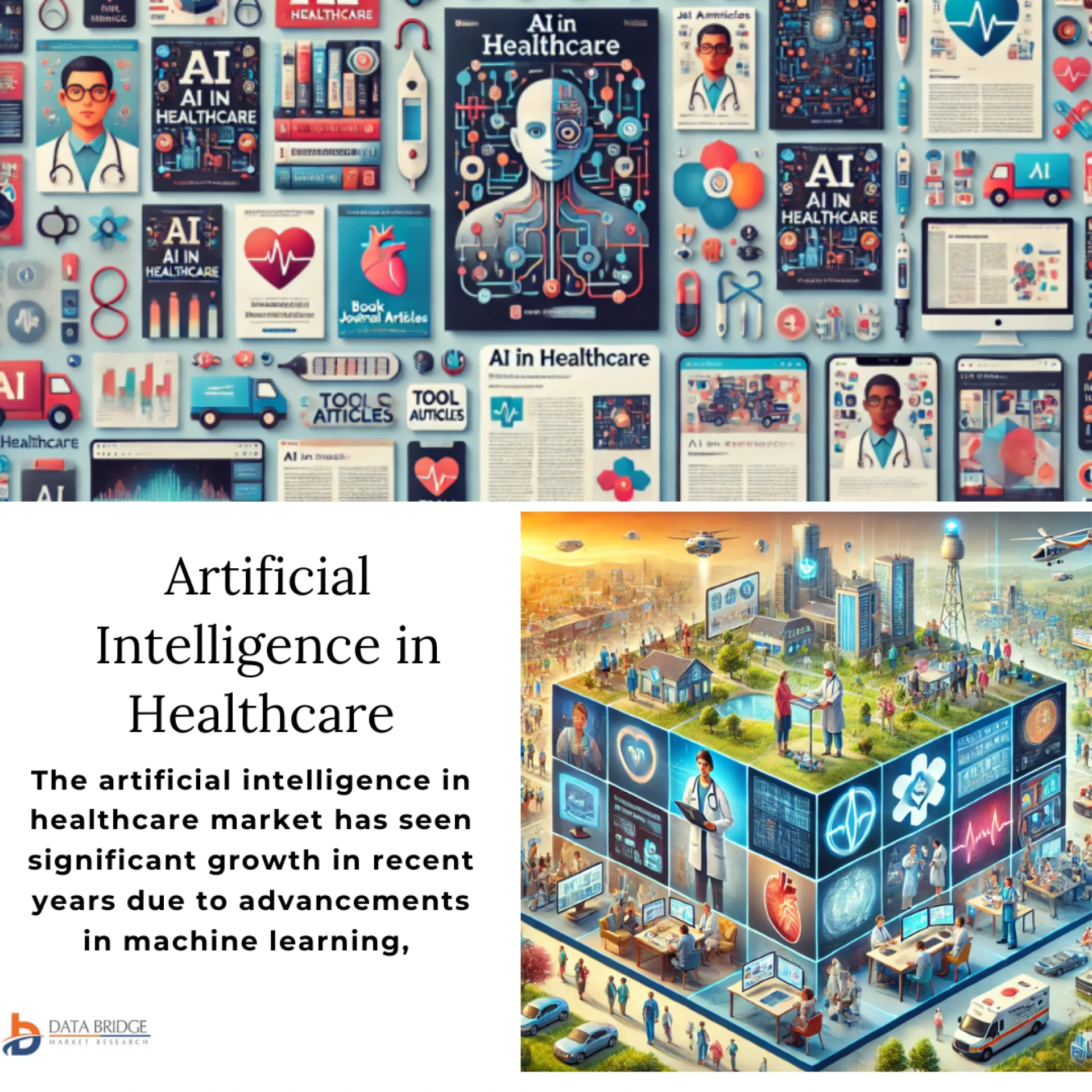
Market Overview and Growth Trajectory
The global artificial intelligence in healthcare market is experiencing extraordinary growth, driven by technological advancements, increasing healthcare digitization, and growing demand for personalized medicine. According to Data Bridge Market Research, the artificial intelligence in healthcare market was valued at USD 22.23 billion in 2024 and is projected to reach USD 629.09 billion by 2032, representing a remarkable compound annual growth rate (CAGR) of approximately 51.37% during the forecast period.
This explosive growth reflects the healthcare industry's rapid adoption of AI solutions across multiple domains, including diagnostic imaging, drug discovery, clinical decision support, and administrative workflows. The market expansion is particularly noteworthy when considering that various research firms project similar growth trajectories, with most estimates placing the market value between USD 26-29 billion in 2024, indicating strong consensus on the sector's robust expansion.
The North American market leads global adoption, with the region accounting for the largest market share due to advanced healthcare infrastructure, significant R&D investments, and favorable regulatory frameworks. The North American AI in healthcare market was estimated at USD 14.66 billion in 2024 and is projected to reach USD 250.81 billion by 2033, growing at a CAGR of 37.17%.
Get More Details : https://www.databridgemarketresearch.com/reports/global-artificial-intelligence-in-healthcare-market
Key Application Areas Driving Market Growth
Medical Imaging and Diagnostics
Artificial intelligence has demonstrated exceptional capabilities in medical imaging analysis, often surpassing human accuracy in detecting various conditions. AI algorithms can analyze radiological images, including X-rays, CT scans, MRIs, and ultrasounds, to identify abnormalities such as tumors, fractures, and cardiovascular diseases. This technology is particularly valuable in early disease detection, where timely intervention can significantly improve patient outcomes.
The integration of AI in diagnostic imaging has enabled faster turnaround times, reduced human error, and improved diagnostic consistency across healthcare facilities. Machine learning models trained on vast datasets can identify subtle patterns that might be missed by human radiologists, particularly in complex cases or when dealing with rare conditions.
Drug Discovery and Development
AI is revolutionizing pharmaceutical research by accelerating drug discovery processes and reducing development costs. Traditional drug development can take 10-15 years and cost billions of dollars, but AI-powered platforms can significantly compress these timelines by predicting molecular behavior, identifying potential drug targets, and optimizing compound structures.
Machine learning algorithms can analyze vast databases of molecular information, clinical trial data, and scientific literature to identify promising drug candidates more efficiently than conventional methods. This capability has become increasingly important as pharmaceutical companies seek to address complex diseases and develop personalized treatment options.
Recent breakthroughs include AI-designed antibiotics capable of killing drug-resistant bacteria such as gonorrhoea and MRSA, demonstrating the technology's potential to address critical healthcare challenges. Some projections suggest that full AI implementation in clinical trials could save up to 90% of drug development costs.
Clinical Decision Support Systems
AI-powered clinical decision support systems assist healthcare providers in making more informed treatment decisions by analyzing patient data, medical history, and current symptoms against vast databases of medical knowledge. These systems can recommend treatment protocols, identify potential drug interactions, and alert physicians to critical patient conditions.
The technology is particularly valuable in emergency medicine, where rapid decision-making is crucial, and in complex cases requiring consideration of multiple variables. AI systems can process and correlate information from electronic health records, laboratory results, and medical imaging to provide comprehensive patient assessments.
Personalized Medicine and Treatment Optimization
AI enables the development of personalized treatment plans based on individual patient characteristics, including genetic profiles, lifestyle factors, and treatment response history. This approach, known as precision medicine, allows healthcare providers to tailor treatments to maximize efficacy while minimizing adverse effects.
Genomic analysis powered by AI can identify genetic markers associated with disease susceptibility and treatment response, enabling proactive interventions and optimized therapeutic approaches. This personalization extends to medication dosing, treatment timing, and therapy selection.
Market Drivers and Growth Catalysts
Technological Advancement and Innovation
The rapid evolution of machine learning algorithms, natural language processing, and computer vision technologies has created new possibilities for healthcare applications. Advances in deep learning have enabled AI systems to process complex medical data with increasing accuracy and reliability.
Cloud computing platforms and edge computing solutions have made AI technologies more accessible to healthcare organizations of all sizes, reducing implementation barriers and enabling scalable deployments. The proliferation of Internet of Things (IoT) devices and wearable health monitors has also generated vast amounts of real-time patient data that AI systems can analyze for predictive insights.
Regulatory Support and Standardization
Healthcare regulators worldwide have begun establishing frameworks for AI system approval and deployment, providing clearer pathways for technology adoption. The FDA has approved numerous AI-based medical devices and diagnostic tools, building confidence in the technology's safety and efficacy.
Standardization efforts are helping ensure interoperability between different AI systems and healthcare platforms, facilitating broader adoption and integration into existing workflows.
Healthcare Workforce Optimization
AI technologies address critical healthcare workforce challenges by automating routine tasks, reducing administrative burden, and augmenting clinical decision-making capabilities. This optimization is particularly important given global healthcare worker shortages and increasing patient loads.
More than 80% of surveyed health system executives expect generative AI to have either a "significant impact" (26%) or "moderate impact" on their operations, according to recent research by Deloitte. This expectation reflects growing confidence in AI's ability to improve operational efficiency and clinical outcomes.
Cost Reduction and Efficiency Gains
Healthcare organizations are increasingly adopting AI solutions to reduce operational costs while improving service quality. AI can streamline administrative processes, reduce diagnostic errors, optimize resource allocation, and enable preventive care approaches that reduce long-term treatment costs.
Predictive analytics capabilities allow healthcare systems to anticipate patient needs, optimize staffing levels, and prevent costly emergency interventions through early identification of health risks.
Key Market Players and Competitive Landscape
The AI healthcare market features a diverse ecosystem of technology giants, specialized healthcare AI companies, and traditional medical device manufacturers. Major technology companies including Google (Alphabet), Microsoft, IBM, Amazon Web Services, and NVIDIA have made significant investments in healthcare AI solutions.
Google's healthcare AI initiatives span medical imaging, drug discovery, and clinical decision support, with notable projects including diabetic retinopathy detection and cancer screening tools. Microsoft's healthcare cloud platform provides AI-powered analytics and decision support capabilities for healthcare organizations.
IBM Watson Health (now sold to Francisco Partners) pioneered early AI applications in healthcare, while Amazon Web Services offers comprehensive AI and machine learning services specifically designed for healthcare applications.
Specialized healthcare AI companies such as Tempus, PathAI, and Zebra Medical Vision focus on specific applications like oncology, pathology, and medical imaging analysis. These companies often develop deep expertise in particular medical domains while leveraging partnerships with healthcare providers for validation and deployment.
Traditional healthcare technology companies including Philips, Siemens Healthineers, and GE Healthcare have integrated AI capabilities into their medical devices and imaging systems, creating comprehensive solutions that combine hardware and software innovations.
Challenges and Market Constraints
Data Privacy and Security Concerns
Healthcare AI systems require access to sensitive patient data, raising significant privacy and security concerns. Organizations must ensure compliance with regulations such as HIPAA in the United States and GDPR in Europe while implementing robust cybersecurity measures to protect patient information.
Data breaches in healthcare can have severe consequences, including identity theft, insurance fraud, and violation of patient trust. The need for comprehensive data protection measures can increase implementation costs and complexity.
Regulatory Compliance and Validation
While regulatory frameworks are evolving, the approval process for AI-based medical devices remains complex and time-consuming. Healthcare AI developers must demonstrate safety, efficacy, and reliability through extensive clinical validation studies.
The regulatory landscape varies significantly across different countries and regions, creating challenges for companies seeking global market access. Ongoing changes in regulatory requirements also create uncertainty for long-term product development strategies.
Integration and Interoperability Challenges
Healthcare organizations often operate legacy systems that may not easily integrate with modern AI solutions. Achieving seamless interoperability between different healthcare information systems, medical devices, and AI platforms requires significant technical expertise and investment.
The lack of standardized data formats and communication protocols can create silos that limit the effectiveness of AI implementations across different departments and healthcare facilities.
Healthcare Professional Resistance and Training
Some healthcare professionals express concerns about AI systems potentially replacing human expertise or creating liability issues. Successful AI implementation requires comprehensive training programs and change management strategies to ensure healthcare workers can effectively utilize new technologies.
The learning curve associated with AI tools can temporarily reduce productivity during implementation phases, creating resistance to adoption among time-pressured healthcare professionals.
Regional Market Analysis
North America
North America dominates the global AI healthcare market, accounting for the largest market share due to advanced healthcare infrastructure, significant research and development investments, and favorable regulatory environments. The United States leads adoption with major technology companies, healthcare systems, and academic institutions driving innovation.
The presence of leading AI healthcare companies, abundant venture capital funding, and strong government support for healthcare technology research contribute to the region's market leadership. Healthcare organizations in North America have also demonstrated greater willingness to invest in experimental technologies and pilot programs.
Europe
Europe represents the second-largest market for AI in healthcare, with countries such as the United Kingdom, Germany, and France leading adoption efforts. The European Union's focus on digital health initiatives and substantial healthcare technology investments support market growth.
European healthcare systems' emphasis on preventive care and population health management aligns well with AI capabilities for predictive analytics and early intervention. However, strict data privacy regulations under GDPR require careful consideration of AI implementation strategies.
Asia-Pacific
The Asia-Pacific region demonstrates the highest growth potential, driven by rapidly expanding healthcare infrastructure, increasing healthcare digitization, and growing investment in AI technologies. Countries such as China, Japan, and Singapore are emerging as significant markets for healthcare AI solutions.
Large populations, rising healthcare demands, and government initiatives supporting digital health transformation create substantial opportunities for AI healthcare companies in this region. However, diverse regulatory environments and varying healthcare system structures present implementation challenges.
Future Outlook and Market Opportunities
Generative AI Integration
The emergence of generative AI technologies represents a significant opportunity for healthcare applications. According to Data Bridge Market Research, the generative AI in healthcare market was valued at USD 2.38 billion in 2024 and is expected to reach USD 22.81 billion by 2032, growing at a CAGR of 32.6%.
Generative AI can enhance medical education, create synthetic medical data for research purposes, assist in clinical documentation, and support drug discovery efforts through molecular design and optimization.
Preventive and Predictive Healthcare
AI technologies are increasingly enabling shift from reactive treatment models to proactive prevention and prediction approaches. Predictive analytics can identify patients at risk for specific conditions, enabling early interventions that improve outcomes and reduce costs.
Wearable devices and continuous monitoring technologies generate real-time patient data that AI systems can analyze to detect subtle changes indicating potential health issues. This capability supports the development of comprehensive population health management strategies.
Expansion into Emerging Markets
Developing countries with limited healthcare infrastructure present significant opportunities for AI solutions that can extend specialist expertise to underserved populations. Telemedicine platforms powered by AI can provide diagnostic support and treatment recommendations in areas lacking medical specialists.
Mobile health applications incorporating AI capabilities can deliver healthcare services directly to patients in remote locations, potentially leapfrogging traditional healthcare infrastructure limitations.
Integration with Emerging Technologies
The convergence of AI with other emerging technologies such as robotics, augmented reality, and Internet of Things creates new possibilities for healthcare applications. Surgical robots powered by AI can enhance precision and reduce invasiveness, while AR systems can provide real-time guidance during medical procedures.
Smart medical devices connected through IoT networks can continuously monitor patient conditions and automatically adjust treatments based on AI analysis of physiological data.
Conclusion
The artificial intelligence in healthcare market represents one of the most dynamic and promising sectors in the global economy. With market projections indicating growth from USD 22.23 billion in 2024 to USD 629.09 billion by 2032, according to Data Bridge Market Research, the sector demonstrates exceptional potential for continued expansion and innovation.
The convergence of technological advancement, regulatory support, and pressing healthcare needs creates a compelling environment for AI adoption across the healthcare continuum. While challenges related to data privacy, regulatory compliance, and system integration remain, the substantial benefits demonstrated by early AI implementations provide strong motivation for continued investment and development.
As healthcare organizations worldwide seek to improve patient outcomes while managing costs and addressing workforce challenges, AI technologies offer proven solutions that can transform medical care delivery. The next decade will likely witness unprecedented integration of AI capabilities across all aspects of healthcare, from basic administrative functions to complex clinical decision-making processes.
The success of this transformation will depend on continued collaboration between technology developers, healthcare providers, regulatory authorities, and patients to ensure that AI implementations truly serve the goal of improving human health and well-being. Organizations that successfully navigate the implementation challenges and capitalize on AI's capabilities will be positioned to lead the future of healthcare delivery.