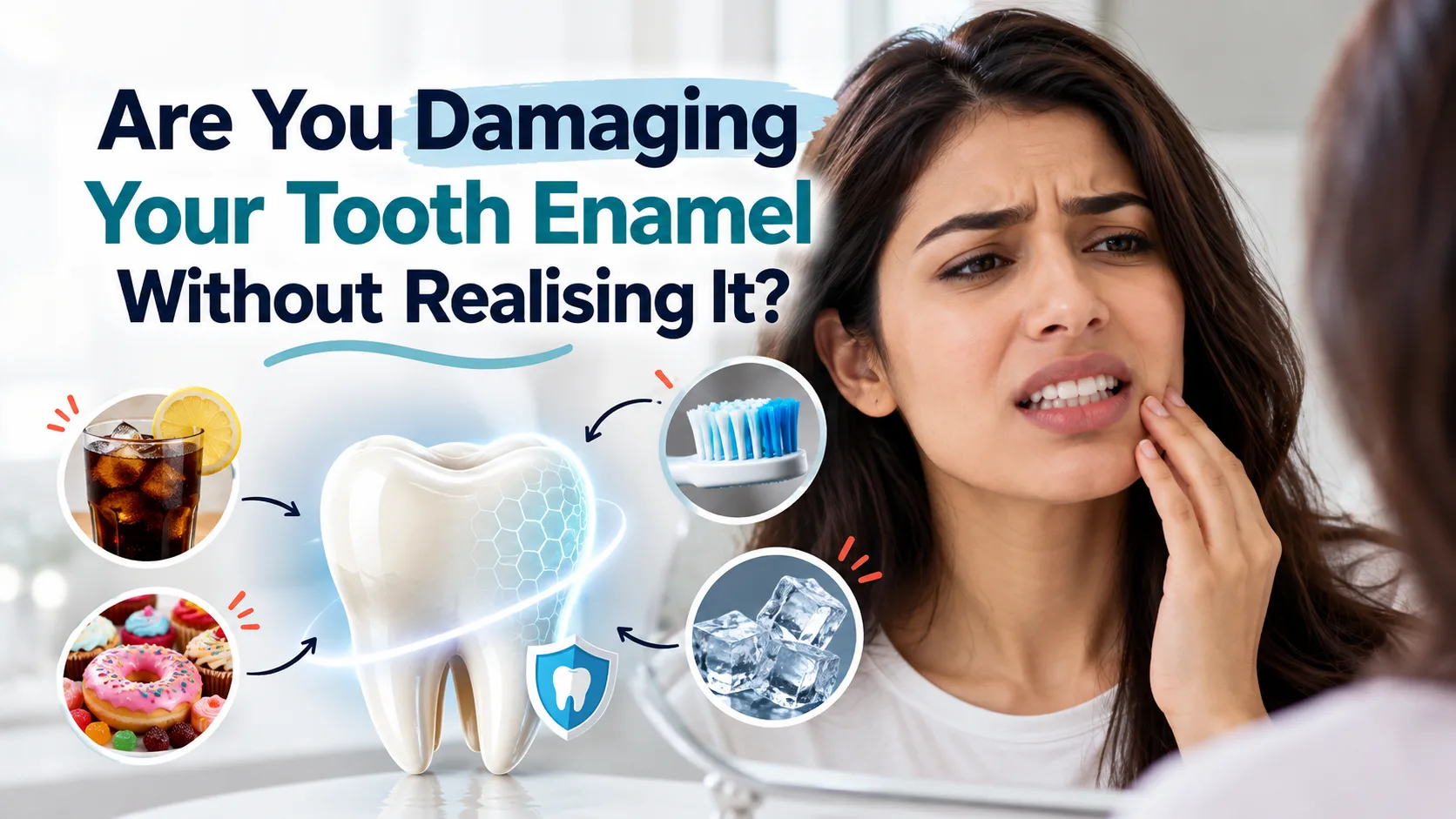
Have you ever noticed that your teeth look a little more yellow than before, feel sensitive when you drink something cold, or seem rough around the edges? You might blame it on ageing or cavities, but sometimes the problem starts with small everyday habits.
Your tooth enamel could be wearing down without you even realising it.
Enamel is the hard, protective outer layer of your teeth. It protects them from daily chewing, temperature changes, and acid attacks. Although it is the hardest substance in the human body, it is not indestructible. Once enamel is permanently lost, your body cannot naturally grow it back.
The good news is that a few simple changes can help protect your enamel and maintain better oral health. Let’s look at seven common habits that may be damaging your teeth and what you can do about them.
1. Brushing Your Teeth Too Hard
Do you believe that brushing harder makes your teeth cleaner? Many people do, but this habit can actually work against you.
Using a hard brush while brushing your teeth can lead to teeth erosion. The root of the tooth that is exposed next to the gum can become sensitive.
To prevent this, use a soft brush when cleaning your teeth and always use short strokes. Make sure to clean your teeth for two minutes, twice a day, using a fluoride toothpaste.
However, if there is sensitivity or any irregularity on the gum area, visiting the dentist can help detect the cause and prevent it from persisting further.
2. Drinking Too Many Acidic Beverages
Your favourite drinks might be affecting your teeth more than you think. Soft drinks, energy drinks, citrus juices, and lemon-based beverages can contain acids that gradually soften enamel.
This process is known as dental erosion. Frequent acid exposure can weaken the tooth surface and make it more vulnerable to wear.
You do not necessarily have to give up every favourite drink. Try to drink water more often, limit frequent sipping of acidic beverages, and avoid holding drinks in your mouth.
After consuming something acidic, rinse your mouth with plain water and wait around 30–60 minutes before brushing.
These small habits can support healthy teeth and gums and help reduce unnecessary enamel damage.
3. Brushing Immediately After Eating
Brushing after meals is generally a good habit, but timing matters when you have just consumed acidic food or drinks.
Acid temporarily softens enamel. Brushing immediately afterwards may increase the risk of wear because the softened surface is more vulnerable to abrasion.
Instead, rinse your mouth with water and wait around 30–60 minutes before brushing.
If you regularly experience sensitivity after meals, consult a dentist to determine whether enamel erosion, tooth decay, or another dental issue could be responsible.
4. Frequently Eating Sugary Snacks
Sugar does not directly dissolve enamel in the same way as acids in beverages. However, bacteria in dental plaque use sugar to produce acids that attack your teeth.
Repeated acid attacks can cause minerals to leave the enamel, increasing the risk of cavities over time.
Frequent snacking on chocolates, biscuits, sweets and sugary foods increases the number of acid attacks on teeth during the day
To improve your oral health and prevent tooth decay, limit frequent sugary snacks, choose water instead of sugary drinks, and maintain a regular brushing and flossing routine.
Regular dental examinations can also help detect cavities early on, before they require more invasive procedures.
5. Chewing Ice or Biting Hard Objects
Do you chew ice after finishing a cold drink or use your teeth to open packaging? These habits may seem harmless, but they can put excessive pressure on your teeth.
Using a hard brush while brushing your teeth can cause them to erode. The root of the tooth adjacent to the gum is exposed and can become sensitive.
To avoid this, use a soft brush when cleaning your teeth, and always use short strokes. Be sure to clean your teeth for two minutes, twice a day, with a fluoride toothpaste.
However, if there is a sensitivity or some irregularity on the gum area, visiting the dentist can help identify the cause and prevent it from persisting further.
6. Grinding or Clenching Your Teeth
Sometimes, enamel damage happens while you are asleep.
Teeth grinding, also known as bruxism, involves repeatedly clenching or grinding your teeth. It can happen during sleep or while you are awake, often without you noticing it.
Over time, this habit can wear down enamel, flatten the biting surfaces, and increase tooth sensitivity. You may also experience jaw soreness, headaches, or discomfort when chewing.
If your teeth look unusually worn or you regularly wake up with an aching jaw, consult a dentist. Depending on the cause, a custom night guard may help protect your teeth from further damage.
A dental examination can also help identify cracks or worn areas that may need treatment.
7. Ignoring Acid Reflux or Frequent Vomiting
This is another cause of enamel damage that people often overlook.
Stomach acid is highly acidic. When it repeatedly reaches your mouth because of acid reflux or frequent vomiting, it can erode enamel and expose the naturally yellow dentin underneath.
You might notice increased tooth sensitivity, changes in tooth colour, or a smoother-looking tooth surface.
If this happens regularly, consult a healthcare professional about the underlying cause. After acid exposure, rinse your mouth with water and avoid brushing immediately.
Treating the underlying problem and reducing repeated acid exposure can help protect your remaining enamel.
How Can You Protect Your Tooth Enamel?
You cannot naturally replace enamel once it has been permanently lost, but you can protect the enamel you still have and support the early repair of mineral loss.
Follow these simple habits:
- Brush twice daily with fluoride toothpaste and a soft-bristled toothbrush.
- Clean between your teeth every day using floss or suitable interdental cleaners.
- Drink water regularly, particularly after acidic foods and beverages.
- Limit frequent sugary snacks and acidic drinks.
- Avoid brushing immediately after acid exposure.
- Avoid chewing ice or biting hard objects.
- Schedule regular dental checkups and professional cleaning when recommended.
Fluoride helps strengthen enamel through remineralisation when mineral loss is still at an early stage. However, it cannot rebuild enamel that has already been physically worn away.
Good oral hygiene, preventive dental care, and early diagnosis can help reduce the risk of further damage.
Why Choose Dixit Dental Excellence for Your Dental Care?
At Dixit Dental Excellence, we place importance on educating our patients to enable them to take charge and make informed decisions in relation to their oral health needs. Seeking a dental check-up is vital to patients who are experiencing sensitive teeth, worn-down teeth, tooth cavities, or unhealthy gums. A dental examination enables the dentist to identify the underlying causes of these problems and develop an appropriate treatment plan.
The clinic also caters to a range of dental needs, including root canal treatment in Adarsh Nagar, Delhi, and restorative options such as dental implants in Adarsh Nagar, Delhi and zirconia crowns when clinically suitable. For families seeking children's dental care, consulting a dentist for kids in Adarsh Nagar, Delhi can also help establish healthy oral hygiene habits from an early age.