
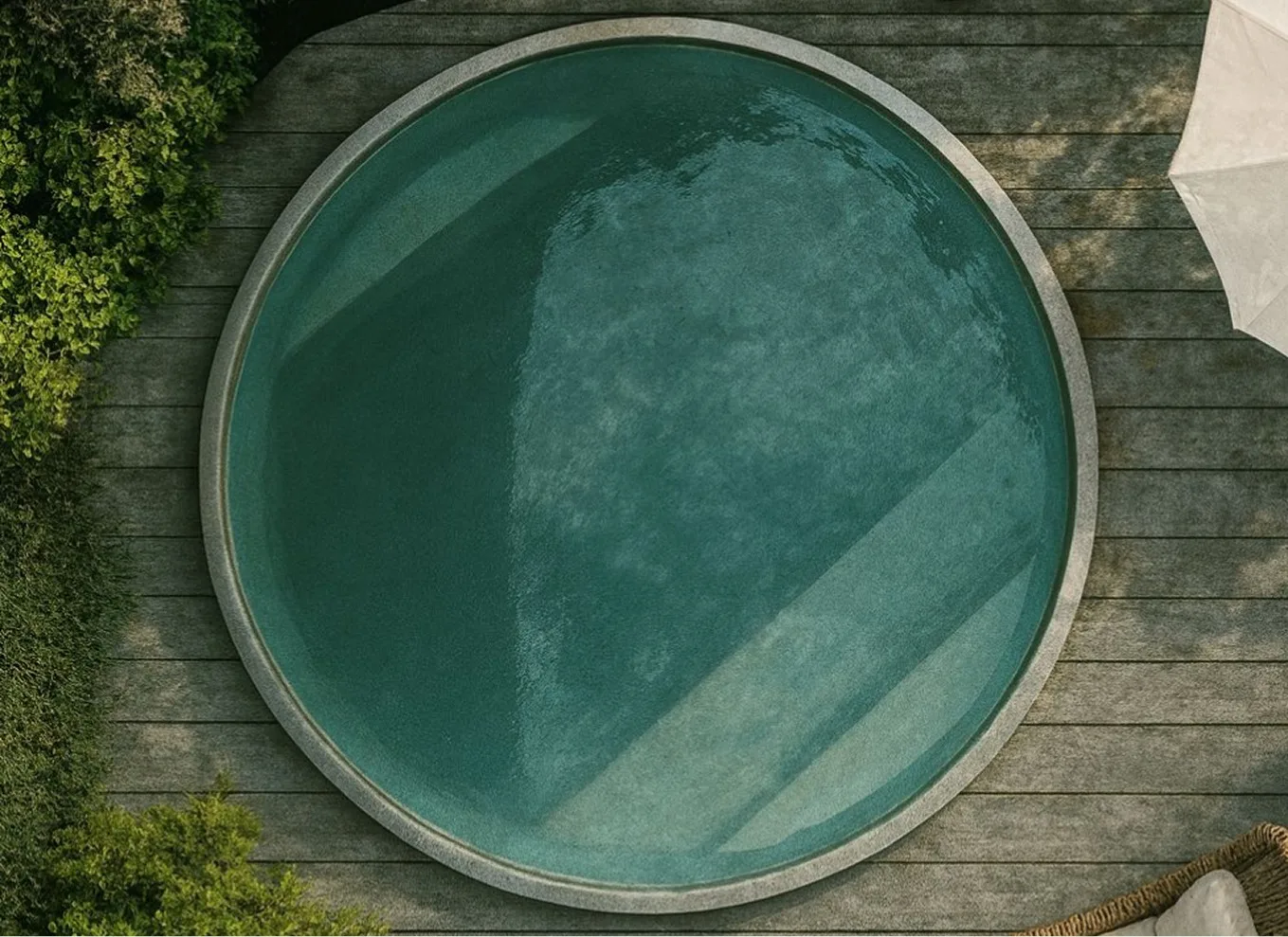
Are precast concrete pools cheaper than fiberglass? There is no single answer because the total cost depends on the pool, equipment, delivery, excavation and installation. Plungee currently lists its Rectangle model from $24,000 + GST for DIY and $40,000 + GST for an installed option, excluding delivery.
For a homeowner comparing pool types, the advertised shell price should not be the only factor.
A fiberglass pool may have a different base price and installation process. A precast option may include different equipment or preparation. Comparing complete projects gives you a much clearer picture.
How Do Precast Concrete Pools Compare With Fiberglass?
A precast concrete plunge pools system is manufactured before it reaches the customer's property, just like a fiberglass pool shell is produced away from the installation site.
The main difference is the structural material.
Plungee uses reinforced precast concrete and describes its pools as having thicker reinforced walls and greater concrete mass than many other small pool options.
Fiberglass uses a lightweight manufactured shell. That can make it attractive for certain properties and installation situations.
Neither material is automatically the right choice for every backyard. Your space, access, budget and preferred pool design all matter.
Is a Concrete Pool More Expensive Than Fiberglass?
Not necessarily.
The cost comparison changes depending on what each supplier includes.
Plungee's current Rectangle DIY option costs $24,000 + GST, excluding delivery. The package includes the custom poured precast concrete pool, LED lighting, two water jets, skimmer box, pump, saltwater or mineral chlorinator and sand filtration system.
The installed option costs $40,000 + GST, excluding delivery. It includes excavation and preparation, an epoxy interior finish, filtration equipment and plumbing up to five metres from the pool.
A concrete pool can therefore look more expensive if you compare its complete package with a fiberglass shell-only price.
The fairest comparison is to list every component required to finish both projects.
What Should You Compare Before Buying?
Start with the complete project rather than the shell.
Check these points:
- Pool shell: Compare the construction material and dimensions.
- Equipment: Check pumps, filters, chlorination, lighting and other inclusions.
- Delivery: Confirm whether transport is included.
- Excavation: Ask who handles site preparation.
- Installation: Establish what labour and plumbing are included.
- Finishing: Compare interior finishes and surrounding work.
- Landscaping: Keep paving, fencing and garden work in a separate budget.
This gives you an accurate comparison between different pool systems.
Is Concrete More Durable Than Fiberglass?
Reinforced concrete is a substantial structural material with a long history of use in construction.
Plungee builds its pools from reinforced precast concrete and positions them as long-term backyard pools. The company also states that its pools are designed to provide the strength and durability associated with traditional concrete construction.
Fiberglass has its own strengths. The factory-made shell provides a smooth finished surface and can be suitable for many residential installations.
Maintenance will depend on the pool system, filtration, water treatment and how frequently the pool is used.
Your installer should explain the expected maintenance requirements before you make a purchase.
Which Option Works Better for Small Backyards?
This is where a plunge pool can have a practical advantage.
A full-sized pool can take up a large portion of a residential backyard. A compact design leaves more room for outdoor living.
The Rectangle Plungee measures 4.8 metres long and 1.75 metres deep. Its full-width ledge and cascading steps are designed to make efficient use of the available swimming space.
That makes it suitable for homeowners who want a usable pool without dedicating the entire backyard to swimming.
A concrete swimming pool can also become part of the landscape rather than simply occupying space in the garden.
What About Installation?
Installation costs can vary considerably between properties.
Access is particularly important for precast pools because the completed shell needs to be transported and placed into position.
Plungee's DIY Rectangle package states that delivery is arranged using a truck and Hiab. The installed package includes site excavation and preparation and is currently available for installation in Hawke's Bay.
If you are outside the company's installation area, you should confirm how delivery and local installation will be managed.
So, Which Pool Is Better Value?
The answer depends on the complete project.
A fiberglass pool may make sense for one property. A precast concrete option may provide better value for another.
Look beyond the initial shell price. Compare equipment, installation, delivery, excavation, finishing and the amount of work you will need to coordinate yourself.
The second precast concrete plunge pools option you consider should be judged against fiberglass using the same criteria.
For homeowners who want a compact, reinforced concrete pool with substantial depth and a permanent design, Plungee offers a focused alternative to larger conventional pool construction.
The best choice is the one that works financially and practically for your property.
Frequently Asked Questions
Q: Are precast concrete pools cheaper than fiberglass?
A: Costs vary by project. Compare the complete pool, equipment, delivery, excavation and installation before deciding.
Q: What does the Plungee DIY package include?
A: It includes the pool, LED light, water jets, skimmer, pump, chlorinator and sand filter system.
Q: Is installation included with the $40,000 option?
A: The installed option includes site excavation and preparation, equipment and plumbing up to five metres.
Q: How deep is the Rectangle Plungee?
A: The Rectangle Plungee is 1.75 metres deep and 4.8 metres long.
Q: Where does Plungee install pools?
A: Plungee currently provides its installed pool service in Hawke's Bay, New Zealand.