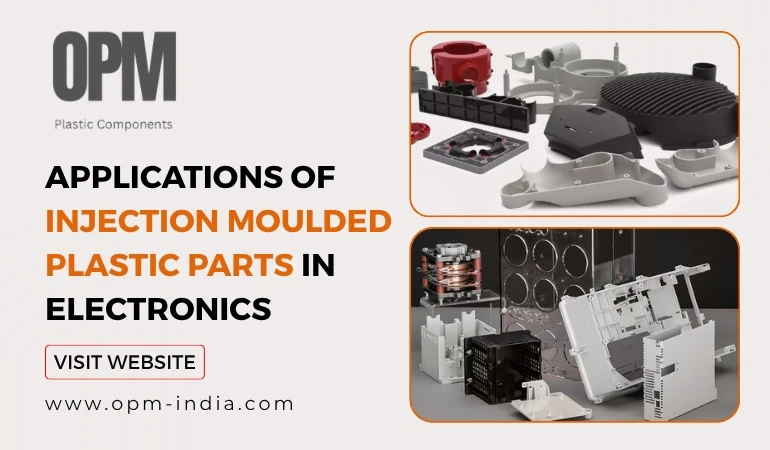
Injection moulding has become a cornerstone manufacturing process in the modern electronics industry. With the growing demand for lightweight, durable, and cost-effective components, Injection Moulded Plastic Parts in Electronics play a vital role in ensuring efficiency, precision, and scalability. From consumer gadgets to industrial systems, electronics injection molding enables manufacturers to produce high-quality components that meet both functional and aesthetic requirements.
1. Enclosures and Housings
Making enclosures and housings is one of the most popular uses of plastic injection molding for electronic parts. Sensitive interior components of devices like laptops, televisions, routers, smartphones, and remote controls are protected by plastic casings. In addition to providing design versatility, injection molding enables the production of intricate shapes with exact dimensions, guaranteeing a flawless fit for internal circuitry.
In addition to being strong, these housings are lightweight, which is essential for portable devices. Plastic materials also offer insulation, shielding consumers from electrical risks. Additionally, manufacturers may directly insert features like screw bosses, ventilation slits, and snap-fits into the design thanks to advanced molding techniques.
2. Connectors and Cable Components
Connectors are essential for ensuring seamless communication between electronic devices. Plastic injection molding for electronics industry is widely used to produce connectors, plugs, sockets, and cable assemblies. These components require high precision and consistency, as even minor defects can affect performance.
Because of their superior electrical insulating qualities, injection-molded polymers are perfect for connector applications. Long-term durability is ensured by their resistance to heat and chemicals. This technology is very effective for large-scale manufacturing since it can generate identical parts in big quantities.
3. Switches and Control Panels
In order to interact with electrical gadgets, switches, buttons, and control panels are essential. Manufacturers can create smooth-finished, aesthetically beautiful, and ergonomic components by using injection molding. Precision and robustness are essential, whether it’s a control panel interface, power button, or keyboard key.
Manufacturers can utilize a range of materials and finishes, including transparent polymers for backlit panels and textured surfaces, with electronics injection molding. Both functionality and user experience are improved as a result.
4. Internal Structural Components
Apart from external parts, Injection Moulded Plastic Parts in Electronics are widely used for internal structural components such as brackets, mounts, and supports. These parts help secure circuit boards, batteries, and other internal elements in place.
Maintaining the integrity of electronic assemblies requires high strength and dimensional accuracy, which injection molding guarantees. Additionally, it makes it possible to combine several functionalities into a single element, which eliminates the need for extra parts and streamlines the assembling procedure.
5. Heat Management Components
An essential component of electrical device design is heating management. While certain plastic parts are made to facilitate thermal management, metals are frequently employed for heat dispersion. Advanced engineering plastics are utilized in components including insulating barriers, fan housings, and heat sinks because they can tolerate high temperatures.
Manufacturers can reduce overall weight and cost while producing components that work well with metal heat management systems by using plastic injection molding for electronic parts. Additionally, these materials provide stability at a range of temperatures by being resistant to thermal expansion.
6. LED and Lighting Components
In order to produce LED housings, diffusers, and reflectors, the lighting sector mostly depends on plastic injection molding. It is possible to adjust light dispersion, increase efficiency, and improve aesthetics with injection-molded plastics.
Transparent and translucent plastics are commonly used to create lenses and covers that protect LED components while ensuring optimal light output. The ability to produce intricate designs makes injection moulding ideal for modern lighting solutions.
7. Battery Compartments and Covers
Another important use for injection-molded plastic parts in electronics is battery compartments and covers. These parts need to be lightweight, strong, and simple to put together. Battery enclosures that are safe, easy to use, and resistant to environmental variables and leaks can be produced thanks to injection molding.
These components frequently have characteristics that are simple to incorporate during the molding process, like spring contacts and locking mechanisms. This improves product reliability and cuts down on assembly time.
8. Sensors and Micro Components
The need for small and accurate components has grown dramatically with the emergence of IoT and smart devices. Small components for wearable technology, micro switches, and sensors are made using injection molding. Injection molding can provide the high accuracy and consistency needed for these components.
The use of advanced materials ensures that these parts can withstand environmental conditions such as moisture, dust, and temperature variations, making them suitable for a wide range of applications.
9. Custom Electronic Parts
Customization is a key advantage of electronics injection molding. Manufacturers can design and produce unique components tailored to specific applications. This is particularly beneficial for industries such as automotive electronics, medical devices, and industrial automation.
Custom injection moulded parts allow companies to innovate and differentiate their products in a competitive market. The flexibility of the process enables rapid prototyping and quick adjustments to designs.
How OPM Helps
In today’s competitive electronics sector, manufacturers need precision, efficiency, and reliability in every component. OPM supports businesses by delivering high-quality Injection Moulded Plastic Parts in Electronics that meet strict performance and durability standards. With advanced expertise in electronics injection molding, every product is designed for accuracy and seamless integration into modern devices.
The company offers end-to-end solutions, from design optimization to full-scale production. Its capabilities in Plastic Injection Molding for Electronic Parts enable the creation of complex components such as enclosures, connectors, and internal structures with consistent quality. By leveraging modern technology and premium materials, production processes are streamlined to reduce costs while maintaining superior output.
With a deep understanding of the plastic injection molding for electronics industry, customized solutions are provided to match specific project requirements. Whether for prototyping or mass manufacturing, the focus remains on delivering efficiency, precision, and faster turnaround times. This makes OPM a trusted partner for businesses seeking reliable Injection Molding for Electronics Manufacturers solutions.
Driven by innovation and quality commitment, OPM helps electronics brands enhance product performance, improve cost-effectiveness, and achieve quicker market delivery.
Conclusion
Injection Moulded Plastic Parts in Electronics are crucial for manufacturing durable, lightweight, and high-precision components used in modern devices. From protective enclosures to complex internal parts, plastic injection molding ensures consistency, scalability, and superior performance across a wide range of applications. It also supports design flexibility, reduces material waste, and enables cost-effective mass production without compromising quality.
OPM offers advanced injection molding solutions tailored specifically for electronics manufacturers, combining precision engineering with reliable production processes. With a focus on quality and efficiency, businesses can streamline operations and accelerate time-to-market.
Looking to upgrade your manufacturing capabilities?
Partner with OPM today and take your electronics production to the next level with confidence.