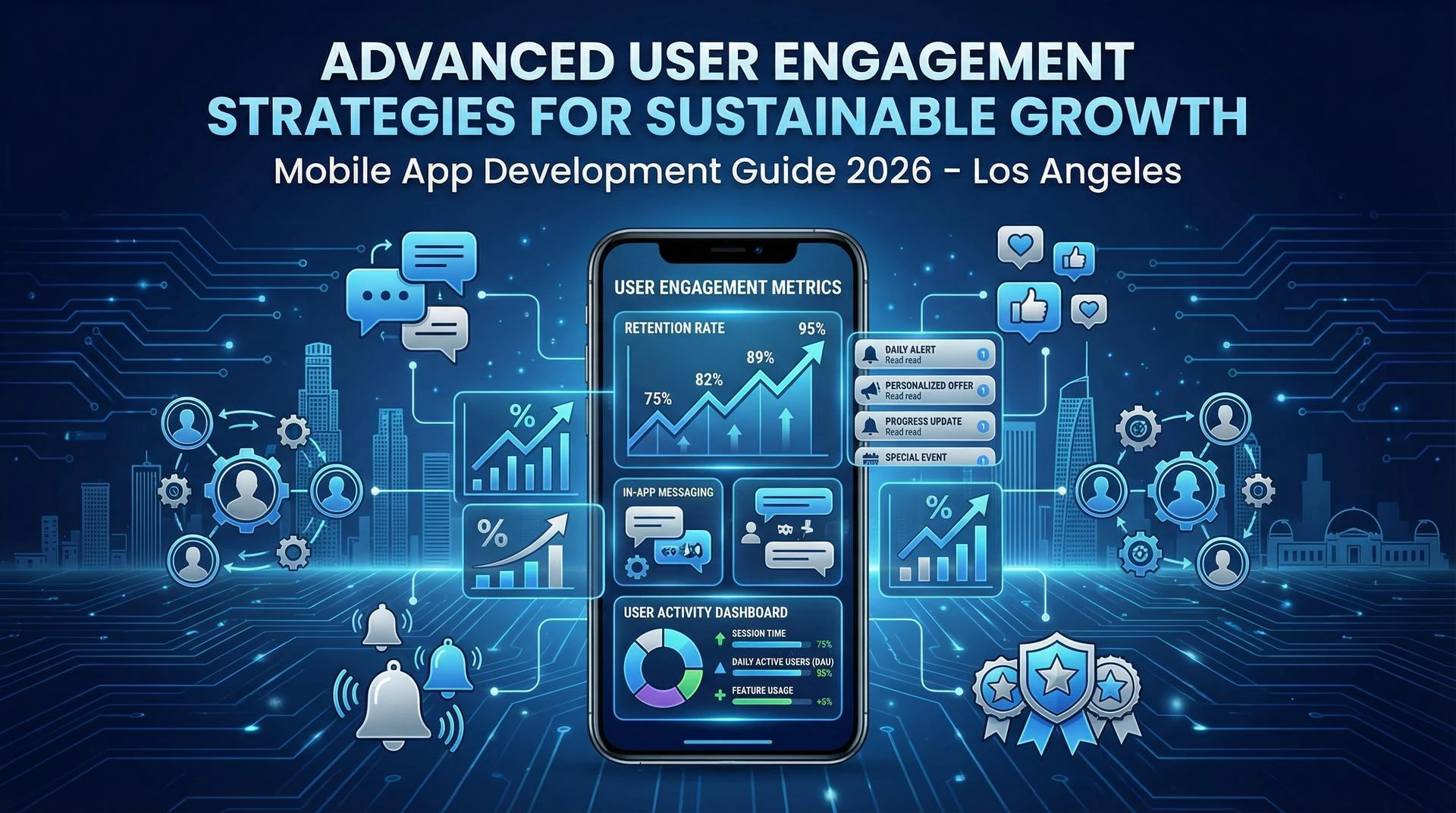
The battle for user attention is fierce, especially in a market like Los Angeles, where competition is intense, and users have countless options for every service imaginable. The success of an app in this environment is not just about how well it functions or how many features it has. It’s about keeping users engaged—ensuring they come back, interact frequently, and derive enough value to justify the ongoing use of the app.
For founders and product teams working with a mobile app development company in los angeles, user engagement should be considered the primary lever for growth. In many ways, the most successful apps in Los Angeles don’t just “get users” — they cultivate loyal, active user bases that drive sustained growth.
This blog will explore the advanced engagement strategies that apps in highly competitive sectors like transportation and grocery shopping should be focusing on in 2026. Whether it’s through personalized notifications, community-building features, or behavior-driven interaction, the key to success lies in keeping users invested.
Why User Engagement Should Be Your Top Priority
User acquisition is important, but user retention is where the true value lies. Apps can only grow sustainably if they manage to keep users coming back after their initial engagement. With Los Angeles being a hub for on-demand services like transportation and grocery delivery, users expect apps to be more than just functional; they need to become an integral part of their daily routines.
Engagement is what turns an app from a one-time tool to a habit. Engaged users are:
- More likely to use the app repeatedly
- More likely to explore new features
- More likely to share the app with friends
- Less likely to churn
The best way to ensure long-term success is to build a strategy for creating ongoing value that keeps users involved at every stage of their journey.
Personalization Is Key to Maintaining User Interest
Personalization is one of the most powerful tools for keeping users engaged. In Los Angeles, where users have high expectations for tech and innovation, offering a personalized experience is no longer optional—it’s a necessity.
Personalization can range from simple preferences like language and location to advanced features like personalized product recommendations, custom notifications, or location-based services.
Here’s how personalization can enhance engagement:
- Customized user interfaces: Display the most relevant information based on user preferences or past behavior. For example, a grocery shopping app can highlight offers and products based on previous purchases.
- Behavior-driven recommendations: Suggest new routes or delivery options in transportation apps based on a user’s regular activity or preferences.
- Personalized notifications: Send tailored messages that remind users of their goals or show new deals based on their preferences.
By leveraging user data in a meaningful and non-invasive way, apps create a feeling of relevance that brings users back.
Gamification Drives Interaction and Motivation
Gamification is one of the most effective strategies to enhance user engagement, especially for apps where user actions can be incentivized. By adding game-like elements—such as points, badges, and rewards—apps can keep users motivated to engage more frequently.
In the transportation app industry, gamification might look like:
- Earning points for frequent rides
- Unlocking rewards for referrals or sharing trip information
- Achieving milestones (e.g., “100th ride” or “5-star driver rating”)
For grocery shopping apps, gamification could involve:
- Rewarding users with discounts or special offers after a certain number of orders
- Providing loyalty points for eco-friendly shopping behavior, such as choosing reusable bags or sustainable products
- Creating challenges (e.g., “buy 5 healthy products this week”)
These features enhance user retention by providing ongoing incentives and making the app feel fun and rewarding.
Social and Community Features Foster Long-Term Engagement
People are social by nature, and mobile apps can leverage that need for connection by integrating community-building features. Whether it’s creating a social platform around the product or incorporating user-generated content, these features create a deeper emotional bond with the app.
For transportation apps, consider integrating:
- Ride-sharing community features: Allow users to see driver reviews and connect with other riders.
- Driver forums: Enable users to share experiences and tips within the app to create a sense of community.
For grocery shopping apps, consider:
- Shopping groups: Enable users to share grocery lists, recipes, or shopping experiences with friends or within a community.
- Social shopping experiences: Users can share the items they’ve purchased or engage in healthy food challenges with others, creating social connections tied to the app.
These community features ensure users don’t just use the app—they feel invested in it, improving the likelihood of long-term retention.
Push Notifications Keep Users Engaged and Informed
Push notifications are a powerful tool to keep users engaged, but they need to be used wisely. Irrelevant or overly frequent notifications can lead to app uninstalls, so they should be personalized and sent at the right time.
For transportation apps, push notifications can:
- Remind users of upcoming trips or service availability
- Offer special promotions or discounts for frequent users
- Alert users to traffic delays or route changes in real-time
For grocery shopping apps, push notifications might include:
- Flash sales or discounts for items users have bought before
- Reminders for items left in the cart
- Notifications about new products or eco-friendly alternatives
The key to successful push notifications is to make them valuable and timely. When users feel they are receiving personalized information that improves their experience, they are much more likely to stay engaged with the app.
A/B Testing Helps Optimize User Experience
To continuously improve user engagement, app developers need to constantly test different features and interfaces. A/B testing (comparing two versions of the same feature to see which one performs better) allows you to optimize your app’s user experience based on real user data.
In the case of transportation software development company, A/B testing could help you determine:
- Which ride-booking flow has higher conversion rates
- Which notification frequency keeps users engaged without overwhelming them
- Which map interface or route recommendation performs best with users
For grocery apps, A/B testing can help optimize:
- Which layout results in better product discovery
- Which discount structure encourages more repeat purchases
- Which promotional message gets users to take action faster
Continuous A/B testing ensures that the app stays aligned with user preferences and improves user engagement over time.
Why Los Angeles Startups Focus on User Engagement
User engagement is at the heart of every successful app in Los Angeles.
Whether you’re working on with a grocery shopping app development or a transportation app, user retention is directly linked to the quality of engagement strategies. In a competitive market like Los Angeles, where the user’s attention is constantly divided, focusing on features that keep users involved is essential.
Working with a mobile app development company in los angeles ensures that your app is optimized for engagement from the beginning. By implementing personalized notifications, social features, gamification, and behavior-driven updates, you can create an app that users will return to again and again.
Closing: Creating Lasting User Engagement in Los Angeles
In Los Angeles, where user engagement is key to app success, focusing on strategies that build long-term relationships with users can make all the difference. By using gamification, personalized experiences, social features, and push notifications, your app can maintain high user retention, ensuring growth over time.
Partnering with an experienced an app development company in los angeles will allow you to create a strategy that centers on user engagement, helping your app succeed in the fast-paced Los Angeles startup ecosystem.