The vacation rental industry offers opportunities for entrepreneurs who want to connect property owners with travelers through online booking platforms. From holiday homes and private villas to apartments and homestays, travelers have different accommodation preferences, creating demand for platforms that make discovering and reserving properties easier.
For businesses planning to enter this market, an Airbnb Clone App provides a way to establish a branded rental marketplace without developing every component from the ground up. It brings property listings, booking management, guest communication, payments, and host operations into a single digital platform.
In this article, we explore how an Airbnb Clone works, which features matter most, how the business can generate revenue, and what to consider before launching a vacation rental marketplace.
What Is an Airbnb Clone App?
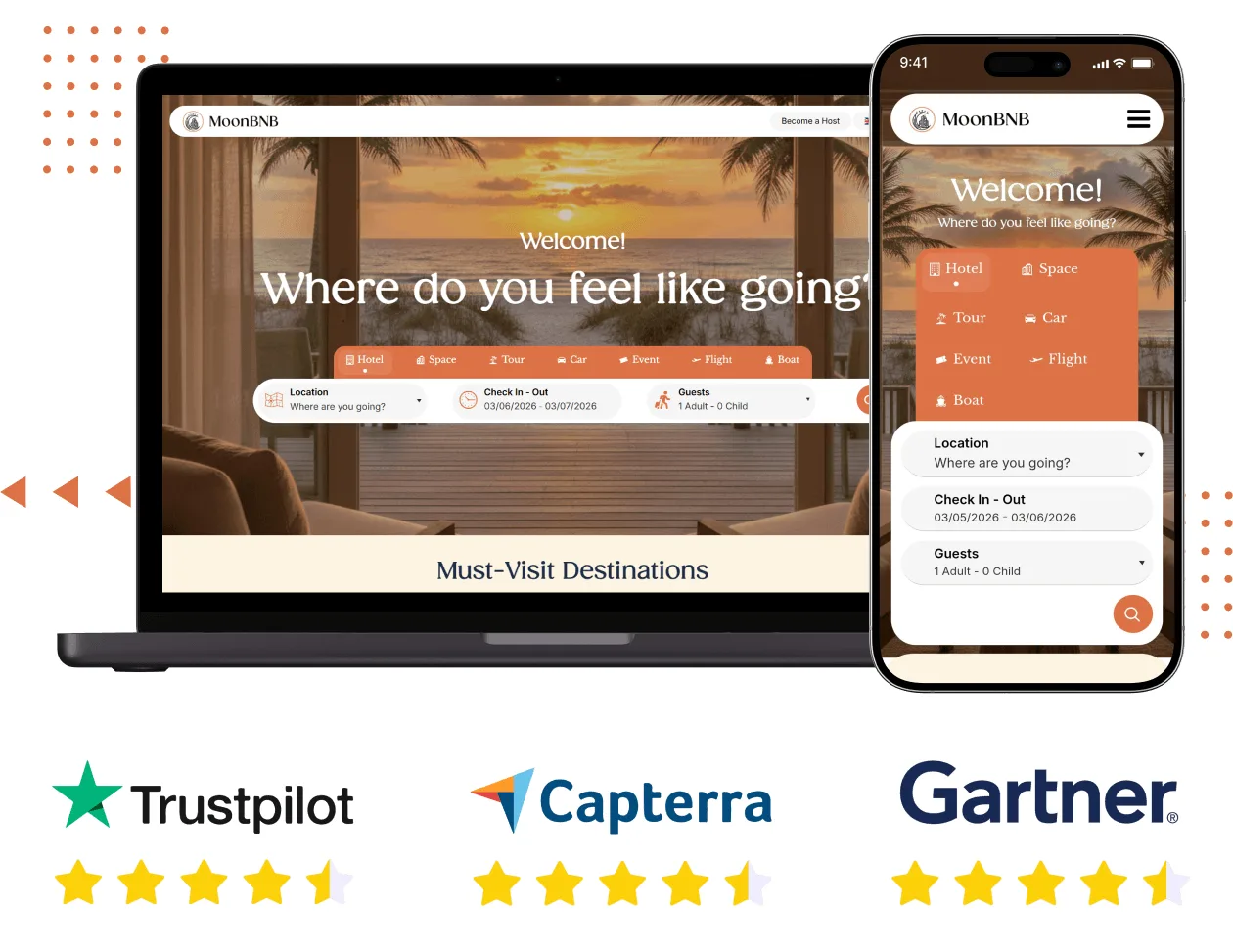
An Airbnb Clone App is a vacation rental booking solution designed around the core functions of a property-sharing marketplace. It connects property owners who want to rent out their accommodations with travelers looking for places to stay.
Hosts can create property listings, upload photographs, set rental prices, manage availability, and handle reservations. Guests can search for properties, compare amenities, check availability, make bookings, and communicate with hosts. Administrators oversee listings, users, transactions, commissions, and other marketplace operations.
The software can be customized to serve different business models. For example, an entrepreneur might develop a platform dedicated to luxury villas, a regional homestay marketplace, serviced apartments, or holiday homes for families.
Rather than copying another company's brand, businesses can use the underlying marketplace concept to establish an independent platform with their own identity, policies, and revenue strategy.
How Does an Airbnb Clone Platform Work?
A vacation rental marketplace typically has three primary user groups, each with different responsibilities.
1. Guests
Guests use the platform to find accommodation that matches their destination, travel dates, budget, and preferences. They can review property descriptions, compare prices, examine amenities, contact hosts, and complete reservations.
A well-designed guest interface should make it easy to understand the total booking cost, cancellation conditions, property rules, and reservation status before confirming a stay.
2. Hosts
Hosts register on the platform and publish details about the properties they want to rent. They can manage photographs, descriptions, pricing, available dates, booking requests, and guest communication.
Depending on the booking model, hosts may receive reservations automatically or approve requests manually. A host dashboard helps property owners organize their rental activities without relying on separate tools for every task.
3. Administrators
Administrators manage the marketplace through a centralized dashboard. Their responsibilities may include approving listings, managing accounts, configuring commissions, monitoring transactions, handling complaints, and reviewing booking reports.
This administrative layer helps the business maintain consistent marketplace policies while coordinating activities between guests and hosts.
Essential Features of an Airbnb Clone Script
The right feature set depends on the target audience and the type of accommodation being offered. However, several functions form the foundation of a reliable vacation rental marketplace.
Advanced Property Search
Search functionality helps guests discover suitable accommodations based on destination, check-in and check-out dates, price range, property type, guest capacity, and amenities.
Additional filters for ratings, bedrooms, accessibility, and accommodation preferences can make property discovery more relevant.
Property Listing Management
Hosts need a straightforward way to publish and maintain property listings. Each listing can include photographs, descriptions, facilities, house rules, location details, pricing, and availability.
Accurate information helps guests make informed booking decisions and reduces confusion about what a property offers.
Booking and Calendar Management
A booking engine coordinates reservations and property availability. When a reservation is confirmed, the selected dates should be blocked to prevent overlapping bookings.
Hosts should also be able to adjust availability, set booking conditions, and manage cancellations according to the platform's policies.
Online Payments and Host Payouts
Payment integration enables guests to pay for reservations through supported payment methods. Depending on the business model, the platform can calculate service fees, deduct commissions, process eligible refunds, and coordinate host payouts.
Clear transaction records help hosts and administrators monitor booking payments and resolve billing questions.
In-App Messaging and Notifications
Communication tools allow guests and hosts to discuss property details, check-in arrangements, and special requirements. Automated notifications can keep users informed about booking confirmations, payment updates, cancellations, and upcoming stays.
Reviews and Ratings
Guest feedback provides useful information about the property, cleanliness, host communication, and overall stay. Review systems can help travelers compare accommodations while encouraging hosts to maintain service quality.
Platforms should establish clear review guidelines and appropriate moderation procedures.
Admin Dashboard and Reporting
An administrative dashboard allows the business owner to manage users, property listings, reservations, commissions, payment records, and support requests.
Reports covering booking volume, revenue, cancellations, and property performance can help identify operational issues and guide business decisions.
How Can an Airbnb Clone Generate Revenue?
Before launching a rental marketplace, entrepreneurs should determine how the business will earn revenue. Several models can be considered.
Booking commissions: Charge hosts, guests, or both a percentage or fixed fee for completed reservations.
Listing fees: Collect a fee from property owners to publish or maintain listings on the platform.
Host subscriptions: Offer monthly or annual plans with different listing limits, management tools, or promotional benefits.
Featured listings: Allow hosts to pay for additional visibility in selected search results or promotional sections.
Additional services: Generate revenue through optional offerings such as cleaning, local experiences, concierge assistance, or property management services.
A business can combine these approaches, but the pricing structure should be easy to understand. Revenue projections should also account for payment processing, customer acquisition, hosting, support, refunds, and other operating costs.
How to Start Your Own Vacation Rental Marketplace
Launching a rental booking business requires planning beyond the software itself. The following steps can help entrepreneurs establish a practical starting point.
Step 1: Identify Your Target Audience
Decide whether your marketplace will serve vacation travelers, business visitors, families, digital nomads, or another audience. You can also focus on a specific accommodation category, such as luxury villas, rural homestays, or serviced apartments.
A clear target market helps define the necessary features and marketing strategy.
Step 2: Research the Market
Analyze competing platforms, accommodation prices, customer expectations, and local rental regulations. Speak with potential property owners to understand their concerns about listing management, payments, cancellations, and guest communication.
This research can reveal opportunities to differentiate your marketplace.
Step 3: Select a Revenue Model
Choose whether to earn through commissions, subscriptions, listing fees, or additional services. Estimate the costs associated with acquiring users, processing payments, providing customer support, and maintaining the software.
A sustainable model should benefit both property owners and travelers.
Step 4: Choose Your Development Approach
You can build a custom platform from scratch or use an existing Airbnb Clone Script.
Custom development allows businesses to define the application architecture and features from the beginning, but it generally requires more development planning and resources. An established software solution can provide core marketplace functions that can then be adapted to the business's requirements.
Compare the available options based on customization, source code ownership, security, integrations, scalability, and ongoing support.
Step 5: Customize the Platform
Configure the platform's branding, property categories, search filters, booking rules, commission structure, and payment methods.
For example, a platform serving luxury vacation homes might prioritize premium listings and concierge services, while a regional homestay marketplace may focus on local discovery and multilingual support.
Step 6: Recruit Property Owners
A rental marketplace needs a useful inventory of accommodations to attract travelers. Develop a host onboarding process, provide clear listing guidelines, and explain how reservations, payments, and commissions work.
Accurate property information and reliable availability help establish trust with early users.
Step 7: Test Before Launch
Test account registration, property publishing, search filters, booking confirmations, payments, cancellations, refunds, and notifications. Review the experience across mobile devices and desktop browsers.
Also establish procedures for customer support, listing moderation, privacy, and handling booking disputes.
Step 8: Promote Your Marketplace
Use search engine optimization, destination-specific content, social media, partnerships, and paid advertising to attract guests and property owners.
Track metrics such as completed bookings, active listings, booking conversion rates, cancellations, repeat reservations, and customer acquisition costs. These indicators help you determine which parts of the business need improvement.
How AI Can Improve a Vacation Rental Booking Platform
Artificial intelligence can support selected marketplace activities by helping users discover properties and assisting hosts with routine tasks.
- Smart property search: Help guests find relevant accommodations based on their preferences and search requirements.
- Pricing recommendations: Analyze available demand and seasonal patterns to suggest appropriate rental prices.
- Virtual assistance: Answer common questions about bookings, property amenities, and platform policies.
- Personalized recommendations: Suggest relevant properties based on user preferences and permitted browsing or booking information.
- Review analysis: Identify recurring themes in guest feedback to help hosts improve their listings and services.
- Fraud monitoring: Flag unusual account, payment, or booking activity for further investigation.
AI features should be selected according to the business's needs and implemented with appropriate privacy, security, and human oversight. Their effectiveness depends on the quality of the available data and the design of the underlying systems.
Benefits of Using an Airbnb Clone Script
An established rental marketplace solution can reduce the work required to develop standard booking functionality. Its potential benefits include:
Reduced initial development effort: Core features such as property listings, user accounts, and booking management may already be available.
Faster deployment: Businesses can focus on configuration, branding, integrations, testing, and market preparation instead of building every component from scratch.
Custom branding: A white-label solution can be adapted to reflect the business's name, visual identity, and target audience.
Flexible business models: The platform may be configured for different accommodation categories, booking policies, and monetization approaches.
Centralized management: Hosts, guests, properties, transactions, and reservations can be coordinated through connected interfaces.
Potential for expansion: Additional languages, payment methods, property categories, and integrations can be introduced as requirements evolve, depending on the platform's architecture.
These benefits depend on the quality of the software, the scope of customization, and the services included in the selected package. Businesses should evaluate these factors before making a decision.
Common Challenges in Running a Rental Marketplace
Developing the application is only one part of building a successful marketplace. Entrepreneurs should prepare for operational challenges as well.
Building trust: Establish processes for identity verification, listing moderation, transparent policies, and handling complaints.
Attracting both sides of the market: Guests need enough suitable properties to make the platform useful, while hosts need a reasonable opportunity to receive bookings. Building supply and demand together is a key challenge for new marketplaces.
Maintaining accurate availability: Calendar synchronization and reliable booking updates help prevent double bookings, particularly when properties appear on multiple platforms.
Managing cancellations and refunds: Clear policies and dependable payment workflows help reduce disputes and confusion.
Meeting local requirements: Rental regulations, taxes, privacy requirements, insurance obligations, and accommodation rules vary by location. Businesses should assess the requirements applicable to their operating markets.
Addressing these challenges early can help establish a more reliable experience for hosts and guests.
Launch Your Vacation Rental Marketplace with OyeLabs
Businesses exploring the vacation rental market can learn more about the OyeLabs Airbnb Clone Script, a customizable, white-label solution for establishing a branded property booking marketplace.
The solution supports core marketplace operations, including property listings, guest and host management, reservations, payments, commissions, and administrative controls. OyeLabs also offers optional AI capabilities, such as smart search, pricing recommendations, personalized property suggestions, and virtual assistance.
According to OyeLabs, the platform can be deployed in as little as seven days, subject to applicable terms and project requirements. Businesses should confirm the features, integrations, customization scope, and deployment details included in their chosen package.
Whether you are a startup founder, travel business, real estate company, or property management provider, evaluate the solution against your target audience, operational requirements, and long-term business plans before proceeding.
Frequently Asked Questions
What is an Airbnb Clone Script?
An Airbnb Clone Script is a software solution for building a vacation rental marketplace that connects property owners with travelers through property listings, search, reservations, payments, and related management features.
Who can use an Airbnb Clone App?
Entrepreneurs, startups, travel companies, real estate businesses, and property management providers can use this type of software to develop their own accommodation booking marketplace.
Can I launch a rental marketplace without owning properties?
Yes. A marketplace can connect independent property owners with travelers without owning the listed accommodations. The operator still needs suitable agreements, listing policies, and procedures for bookings and customer support.
Can I customize an Airbnb Clone Script?
Customization depends on the selected solution. It may include branding, user interfaces, booking workflows, property categories, payment integrations, and additional features.
How does an Airbnb Clone make money?
Common revenue models include booking commissions, host subscriptions, listing fees, paid property promotions, and optional hospitality services.
Can an Airbnb Clone support web and mobile applications?
Some solutions provide a web application and Android and iOS apps. Confirm the exact applications, integrations, and deployment services included in the package you choose.
How long does it take to launch an Airbnb Clone App?
The timeline depends on the software, customization, integrations, testing, and deployment requirements. OyeLabs states that its solution can be deployed in as little as seven days, subject to applicable terms and conditions.
Can AI features be added to a rental marketplace?
Yes, if the software supports the required integrations or customization. Potential applications include smart search, pricing recommendations, automated assistance, and personalized property discovery.
Conclusion
An Airbnb Clone Script can provide the software foundation for a vacation rental marketplace, but building a sustainable business requires more than booking functionality. Entrepreneurs need a clear target market, a practical revenue model, reliable property inventory, effective customer support, and a strategy for attracting both guests and hosts.
By evaluating software capabilities, ownership terms, customization options, security, and ongoing support, businesses can choose an approach that fits their requirements and provides room for future development.