
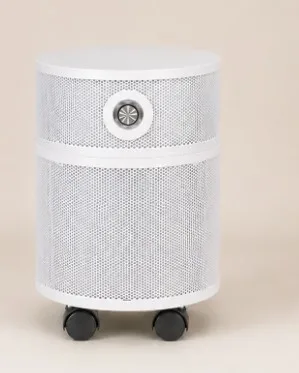
Most air purifiers do not lower CO2 levels. If you bought one hoping it would fix that stuffy, sleepy feeling in your bedroom or home office, you were sold a myth. An air purifier for CO2 sounds like the obvious fix, but the science behind how these machines work tells a different story.
Let's clear this up properly, because getting it wrong means you keep breathing bad air while thinking you've solved the problem.
Why People Confuse Air Purifiers with CO2 Control
CO2 builds up anywhere people breathe in a closed space: bedrooms, conference rooms, classrooms, cars with the windows up. Levels above 1,000 ppm start affecting focus and energy. Cross 1,500 ppm and headaches, brain fog, and drowsiness show up fast. Office workers know this feeling even if they've never checked a number: that 3 p.m. crash in a sealed meeting room.
So when a product labeled "CO2 air purifier" shows up on a shopping site, it feels like the natural answer. The packaging shows clean air graphics, the reviews mention "fresher rooms," and the price point makes it an easy purchase. The problem is what's actually happening inside the machine.
Why Standard Filters Don't Touch CO2
A typical air purifier works with a HEPA filter and, in better models, an activated carbon layer. HEPA filters trap physical particles: dust, pet dander, pollen, smoke particles. Activated carbon adsorbs certain odor molecules and volatile organic compounds by trapping them in tiny pores on its surface.
CO2 doesn't behave like those particles. It's a small, stable gas molecule that passes straight through HEPA media and mostly ignores standard carbon too, since carbon adsorption works best on larger, heavier organic vapor molecules, not simple gases like carbon dioxide. This is the core reason marketing an air purifier for CO2 removal is misleading in most cases. The filter media just isn't built for that job.
That's not a flaw in the product; it's a mismatch between what the machine does and what the label implies.
What a Vapor Air Purifier Actually Handles Well
Here's where things get useful instead of just disappointing. A vapor air purifier, one built around activated carbon or a similar sorbent, is genuinely effective at a different task: pulling out chemical vapors. Think paint fumes, cleaning product residue, off-gassing from new furniture, or lingering cooking smells.
If your air feels "heavy" because of chemical odors rather than because a room is packed with people, this is the right tool. It won't move your CO2 reading, but it will noticeably cut the vapor load in your air, which matters just as much for comfort and long-term exposure to household chemicals.
Where Gas Air Purifiers Fit into the Picture
The term gas air purifier gets used loosely, and that's part of the confusion. Some gas-phase purifiers use specialized media- potassium permanganate, impregnated carbon, or catalytic filters- designed for specific gases like ozone, formaldehyde, or sulfur compounds. These are common in industrial or lab settings where a particular gas is the known target.
None of that media is engineered to strip CO2 out of ordinary room air, because CO2 isn't a contaminant in the traditional sense; it's a normal atmospheric gas that only becomes a problem in high concentration. Removing it efficiently at low cost requires a completely different approach than filtering pollutants.
What Actually Lowers CO2 Levels
So if filtration isn't the answer, what is? Three things, and none of them are exotic.
- Ventilation is the real fix. Opening a window, running an exhaust fan, or using an HVAC system that pulls in fresh outdoor air dilutes CO2 fast. Even five minutes of cross-ventilation in a stuffy room drops levels noticeably.
- CO2 scrubbers exist, but they're a different category. These use chemical absorbents like soda lime or amine-based sorbents to bind CO2 molecules chemically. You'll find this tech in submarines, spacecraft, and some greenhouse setups; not in the average countertop purifier sold for home use. They're effective but built for sealed environments where opening a window isn't an option.
- A CO2 monitor tells you what's actually happening. This is the piece most people skip. A fifteen-dollar sensor gives you real numbers instead of guessing based on how tired you feel. Once you see your bedroom hit 1,800 ppm overnight, the case for cracking a window becomes obvious.
Building a Smarter Air Quality Setup
The smartest approach isn't picking one device and hoping it does everything. It's layering tools based on what each one is actually good at.
Run a HEPA and carbon unit for dust, allergens, and odors. Add a vapor air purifier if chemical smells or off-gassing are a concern in a newly furnished room. Keep windows crackable or your HVAC fresh-air intake active for CO2. And if you're serious about tracking it, get a monitor so you're reacting to data, not assumptions.
This combination costs less than chasing a single miracle machine, and it actually addresses the different problems hiding under the umbrella term "indoor air quality."
How CO2 Levels Compare to Other Air Quality Problems
CO2 gets lumped in with PM2.5, VOCs, and allergens, but it behaves nothing like them. Particulate matter and allergens are physical debris floating in the air; they settle, they can be trapped, they respond to filtration. CO2 is a gas byproduct of breathing that keeps accumulating as long as people are in the room and air isn't exchanged.
This distinction matters because a single air quality score on an app or device often blends multiple readings into one number. A "good" overall score can hide a CO2 spike if the sensor weighs particulate matter more heavily. Check the individual readings, not just the summary score, before assuming your air is fine.
The Testing Gap Behind Misleading Marketing Claims
Most air purifier marketing leans on particle removal data: CADR ratings, HEPA efficiency percentages, allergen capture rates. These numbers are real and independently tested. What's missing from almost every product page is any CO2 reduction figure, and there's a reason for that: independent lab tests consistently show standard filtration has no measurable effect on CO2 concentration.
When a listing calls something an air purifier for CO2 without citing a specific ppm reduction test, that's the tell. Legitimate CO2-reduction technology, like scrubbers or dedicated ventilation systems, publishes actual before-and-after concentration data because the mechanism supports it.
Bedrooms Are the Worst Offenders for CO2 Buildup
Closed doors, low ceilings, and eight hours of continuous breathing make bedrooms the single most common place CO2 quietly climbs overnight. Studies on sleep and air quality have linked elevated bedroom CO2 to lighter, more fragmented sleep and grogginess the next morning, even when temperature and humidity were controlled.
Running a CO2 air purifier in this setting won't move the needle, but cracking a window an inch, using a bedroom door vent, or running a small exhaust fan will. If a partial window opening isn't practical in winter, a trickle vent or a timed fan cycle overnight does the same job with far less heat loss.
Bottom Line
An air purifier for CO2 is a phrase that sells well because it promises a simple fix to a real problem. But CO2 buildup needs airflow, not filtration. Save your purifier budget for what filters and carbon media genuinely do best: particles and vapors, and handle CO2 the way it's actually handled: by moving air, not trapping it.
Get a monitor, open a window when the numbers climb, and let your purifier focus on the job it was built for.