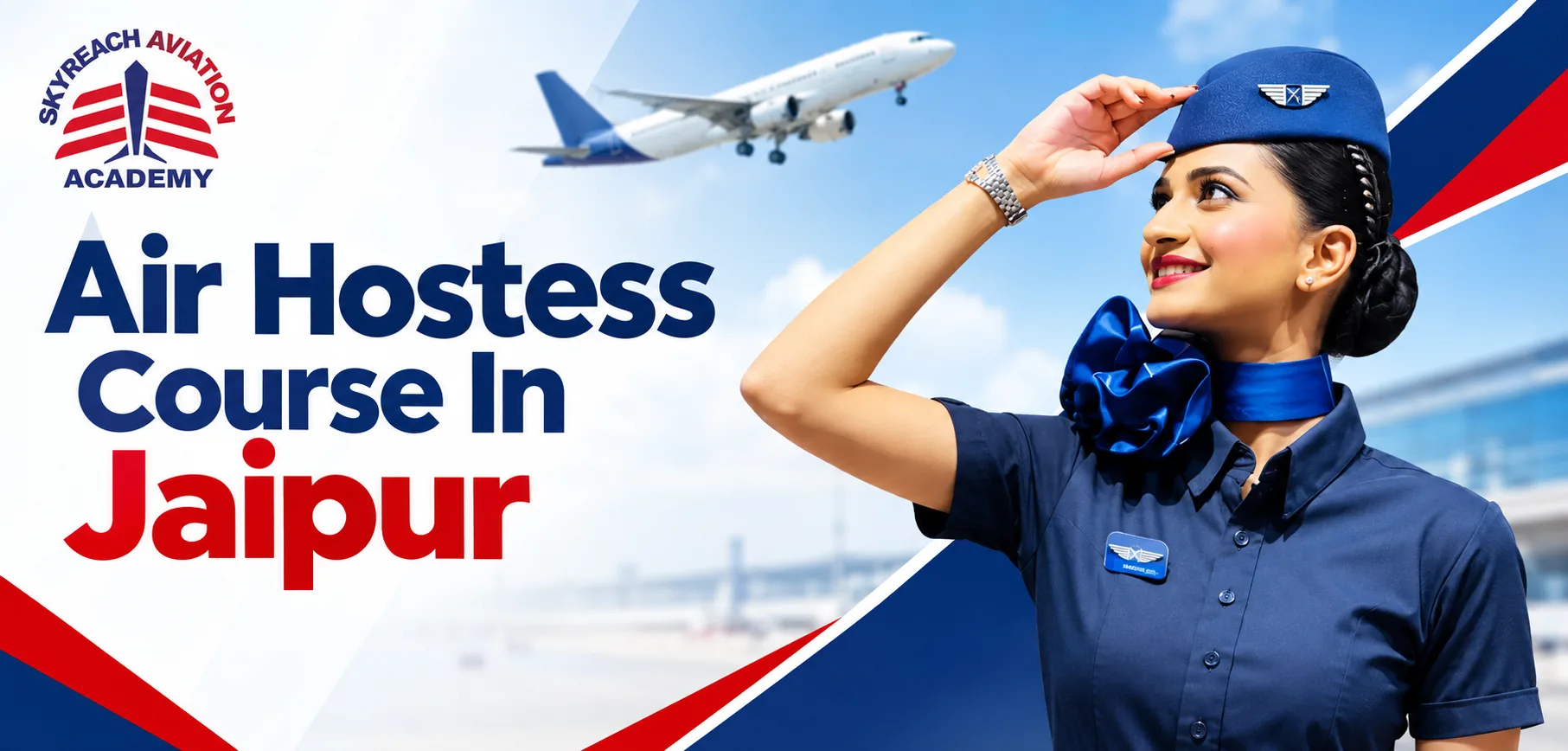
Starting a career in the aviation industry can be an exciting choice for students who enjoy meeting people, travelling, and working in a professional environment. However, becoming cabin crew requires more than good communication and a confident personality. Proper training helps students understand safety procedures, passenger handling, grooming, and the responsibilities of working onboard an aircraft.
For students looking for an Air Hostess Course In Jaipur, choosing suitable training and understanding the career path can make the journey more structured and practical. A good course should focus on both professional skills and personal development so that students are better prepared for airline recruitment and the demands of the aviation industry.
What Does an Air Hostess Course Cover?
An air hostess or cabin crew course is designed to introduce students to the responsibilities of working inside an aircraft. Although the exact curriculum can vary between institutes, most career-focused programs cover a combination of theoretical knowledge, practical activities, and personality development.
Students may learn about:
- Cabin crew responsibilities and professional standards
- Passenger service and communication
- Aviation safety procedures
- Emergency response and evacuation procedures
- Basic first aid and medical assistance
- Aircraft cabin operations
- Grooming and professional presentation
- Hospitality and customer service
- Interview and group discussion preparation
- Teamwork and workplace etiquette
The goal is not simply to teach students how to look professional. Training should help them understand how to respond calmly and responsibly in different situations.
Why Proper Training Matters for Cabin Crew Careers
Cabin crew members have an important role in airline operations. Their responsibilities include passenger service, but safety remains a major part of the job. They must understand emergency procedures, follow airline policies, and communicate clearly with passengers and other crew members.
Training gives students an opportunity to build these skills before entering the recruitment process.
Building Communication Skills
Clear communication is essential in aviation. Cabin crew members interact with passengers from different backgrounds and may need to explain instructions during normal and emergency situations.
Training can help students improve:
- Spoken English
- Listening skills
- Professional vocabulary
- Confidence while speaking
- Body language
- Customer interaction
Students who are nervous during conversations can gradually become more comfortable through practice, role-play activities, and mock interviews.
Developing Professional Grooming
Appearance and presentation are important parts of many cabin crew recruitment processes. Training may introduce students to professional grooming, posture, etiquette, and workplace presentation.
However, grooming is only one part of becoming successful in aviation. Employers also look for communication ability, customer-service skills, discipline, teamwork, and the ability to handle responsibilities professionally.
How to Choose an Air Hostess Training Institute
Choosing an appropriate training provider is an important step because the quality and focus of training can differ from one institute to another.
Before enrolling, students should consider the following factors:
- Course curriculum: Check whether the program covers safety, emergency procedures, customer service, communication, and interview preparation.
- Practical exposure: Ask whether students receive opportunities for activities such as role plays, mock interviews, and practical exercises.
- Trainer experience: Experienced trainers can provide useful insights into aviation-related workplace expectations.
- Learning environment: A professional and supportive environment can make it easier for students to develop confidence.
- Career guidance: Look for training that helps students understand recruitment processes and possible aviation career paths.
- Course duration and structure: Make sure the schedule and learning format suit your academic and personal requirements.
Students should also verify course details directly with the institute before making an admission decision.
Understanding Air Hostess Training Fees in Jaipur
One of the most common questions students ask before joining a course is about Air Hostess Training Fees In Jaipur. There is no single fee applicable to every training provider because costs can depend on several factors.
Fees may vary according to:
- Course duration
- Training modules
- Practical sessions
- Facilities and infrastructure
- Personality development programs
- Communication training
- Interview preparation
- Certification or other included services
Instead of choosing a course only because it has a lower fee, students should compare what is actually included in the program.
A useful approach is to ask for a complete fee structure and clarify whether additional charges apply for uniforms, study materials, examinations, certifications, or other activities.
For students also exploring broader aviation education, information about aviation management programs can provide another perspective on career options within the industry.
What Skills Do Airlines Look For?
Cabin crew recruitment is not based on one skill alone. Airlines can have their own eligibility and recruitment criteria, but candidates generally benefit from developing a professional attitude and strong interpersonal abilities.
Important skills include:
Communication
Candidates should be able to communicate clearly and politely with passengers and colleagues.
Confidence
Confidence helps candidates perform better during interviews and interact comfortably with different people.
Teamwork
Cabin crew members work as part of a team. Cooperation and coordination are important during both routine operations and unexpected situations.
Customer Service
Passengers may have different needs and expectations. Cabin crew members need patience and a service-oriented approach.
Problem-Solving
A professional cabin crew member may need to respond appropriately when passengers face difficulties or when unexpected situations arise.
Preparing for an Airline Cabin Crew Interview
Completing training is only one part of the career journey. Students should also prepare carefully for airline recruitment.
A practical preparation routine can include:
- Practising common interview questions
- Improving spoken English
- Reading about the airline before an interview
- Working on posture and body language
- Participating in mock interviews
- Practising group discussions
- Preparing a professional resume
- Learning how to introduce yourself confidently
Candidates should answer honestly instead of memorising complicated responses. Interviewers may be interested in how naturally a candidate communicates and responds to different situations.
What to Expect from an Air Hostess Training Institute
A structured Air Hostess Training Institute In Jaipur can provide students with a learning environment where they can practise aviation-related skills before applying for jobs.
Students may participate in classroom sessions, communication activities, role plays, grooming sessions, and interview exercises. These activities can help bridge the gap between academic learning and workplace expectations.
Career guidance can also help students understand that cabin crew is not the only career option available after aviation training. Depending on their education, interests, and eligibility, students may explore opportunities in airport ground operations, hospitality, customer service, airline support functions, and aviation management.
Is an Air Hostess Course Suitable for Every Student?
An air hostess course may be suitable for students who enjoy interacting with people and are interested in aviation and hospitality. However, students should understand the nature of the job before enrolling.
Cabin crew work can involve:
- Irregular working hours
- Long periods away from home
- Standing and moving for extended periods
- Working with passengers from different backgrounds
- Handling stressful or unexpected situations
- Following strict safety and professional procedures
It is therefore useful to research the profession carefully and consider whether its working environment matches your interests and career expectations.
Career Growth After Cabin Crew Training
Cabin crew can be a starting point for a broader aviation career. With experience, professionals may develop additional responsibilities depending on their airline, role, performance, and internal career structure.
Possible areas of progression can include senior cabin crew responsibilities, training-related roles, customer service positions, airport operations, and other aviation or hospitality functions.
Career development also depends on individual skills, airline requirements, experience, and available opportunities. Continuing to improve communication, leadership, customer service, and industry knowledge can support long-term professional development.
Frequently Asked Questions
1. What is taught in an air hostess course?
An air hostess course can cover cabin crew responsibilities, aviation safety, emergency procedures, passenger handling, communication, grooming, hospitality, first aid basics, and interview preparation.
2. Is an air hostess course necessary to apply for cabin crew jobs?
Not every airline follows the same recruitment requirements. Some airlines provide their own training after selection, while prior cabin crew training may help candidates understand the industry and prepare for recruitment.
3. How much do air hostess courses cost in Jaipur?
Course fees vary depending on the institute, duration, curriculum, facilities, practical training, and other included services. Students should request a detailed fee structure before enrolling.
4. What qualifications are needed for cabin crew?
Eligibility requirements can vary by airline and position. Students should check the latest recruitment requirements of the airline they plan to apply to, including educational, age, communication, and other criteria.
5. Can boys apply for cabin crew positions?
Yes. Cabin crew careers are open to both male and female candidates, subject to the eligibility and recruitment requirements set by individual airlines.
6. Does cabin crew training guarantee an airline job?
Training can help candidates develop relevant skills and prepare for recruitment, but selection depends on the airline's eligibility criteria, assessment process, vacancies, and the candidate's performance.
Conclusion
An aviation career requires preparation, confidence, discipline, and a clear understanding of professional responsibilities. A well-structured course can help students develop communication, safety awareness, customer-service abilities, grooming, and interview skills before entering the recruitment process.
Students researching cabin crew careers can compare course content, training methods, fees, practical exposure, and career guidance before choosing a program. They should also verify current eligibility requirements directly with airlines and training providers.
For students in Jaipur seeking aviation-focused education and career guidance, Skyreach Aviation Academy offers a range of aviation training options to explore. Skyreach Aviation Academy