
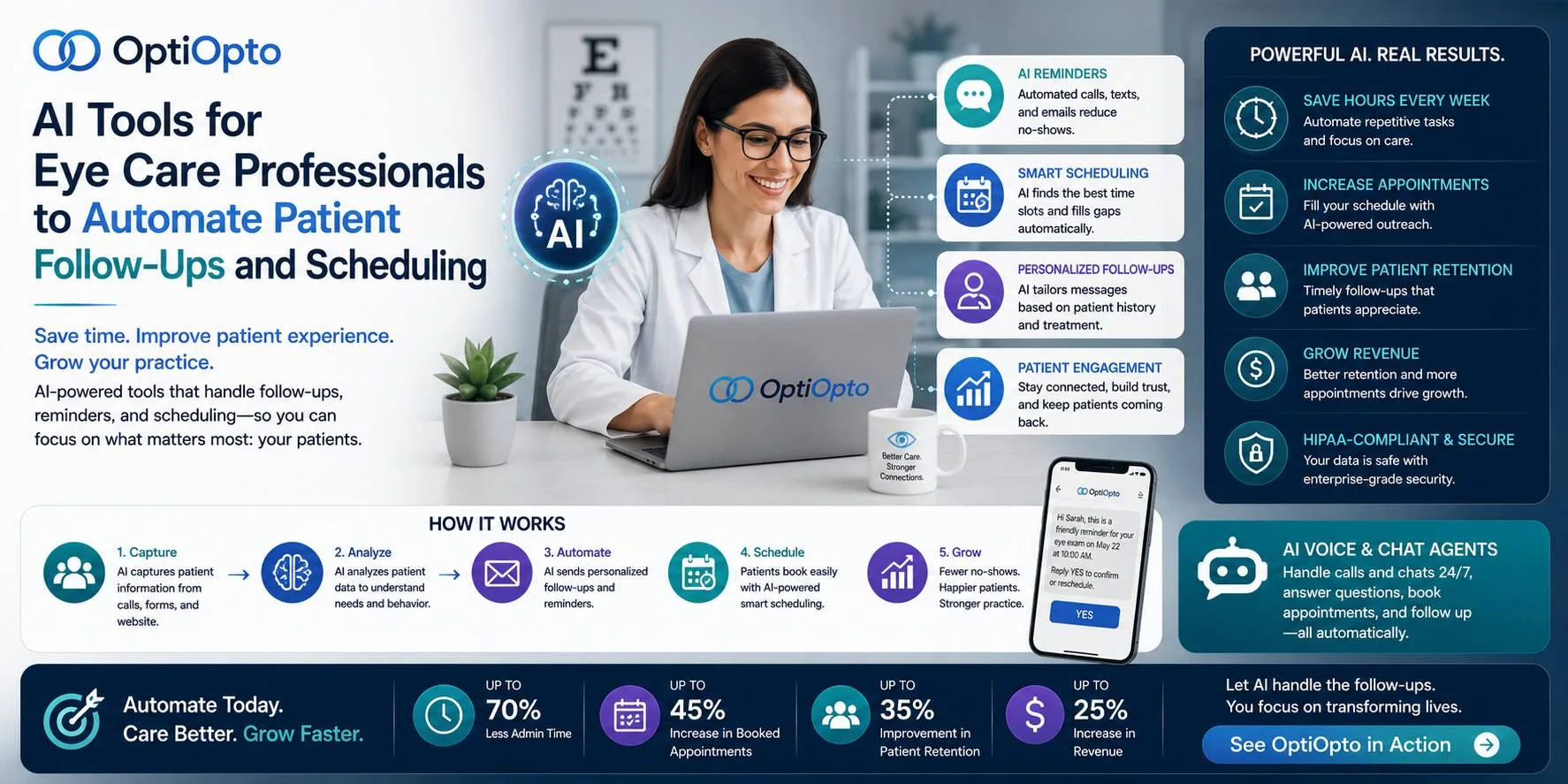
Most independent practices already have the information they need. The EHR shows the last exam date. The calendar shows who canceled. The phone log shows missed calls. Yet those records may stay in separate systems, so staff must check each one.
AI tools for eye care professionals can trigger outreach after a real event. A patient overdue for an annual exam may need a simple reminder. Someone who canceled yesterday needs a different message. A contact lens patient nearing reorder time should not receive the same copy as a new lead asking about an urgent visit.
An AI marketing platform for optometrists can stop a sequence once the patient books. Good patient reactivation software should also recognize replies, opt-outs, and requests that need staff attention.
How Smarter Scheduling Reduces Lost Appointments
Online booking works only when patients can move through it without friction. Some systems still ask people to click through several screens, choose from unclear appointment types, or wait for a call back.
AI tools for eye care professionals can connect a booking form with text or email follow-up. If a patient starts but does not finish, the system can send the booking link again. If no suitable time appears, it can route the request to staff instead of losing the inquiry.
An AI marketing platform for optometrists should separate routine scheduling from requests that require judgment. A standard exam can follow a normal path. Sudden vision changes, eye pain, or post-procedure questions should go to a qualified team member.
OptiOpto supports this workflow through smart booking, automated follow-up, and a 24/7 voice agent developed for independent eye care practices.
Follow-Up Tasks Worth Automating
Not every patient message belongs in an automated sequence. The best starting point is work that repeats, follows a clear rule, and does not require clinical interpretation.
- Annual eye exam reminders based on the previous visit
- Follow-up after canceled or missed appointments
- Contact lens reorder reminders
- Insurance benefit expiration messages
- Review requests after completed visits
- Re-engagement for inactive patients
- Follow-up for callers who reached the office after hours
Each sequence needs a stopping point. Once a patient books, replies, or asks a clinical question, the workflow must change. Otherwise, automation turns into noise.
Why Missed Calls Still Cost Practices
A missed call may come from a new patient comparing nearby offices, a parent booking for a child, or someone looking for a same-day visit. When nobody answers, that caller may contact another practice.
AI tools for eye care professionals can answer basic questions, collect details, and offer appointment times outside regular hours. An AI marketing platform for optometrists can connect that call with the same follow-up process used for website leads and current patients.
The system should never present clinical advice. It can handle office hours, directions, booking steps, and approved service questions. Symptoms and treatment questions need human review.
Connecting Follow-Up With Practice Operations
Follow-up software becomes useful when the practice can see what happened after each message. Clicks do not explain much alone. Booked visits, recovered cancellations, completed appointments, and review requests show whether a campaign produced useful activity.
OptiOpto combines patient-growth technology with vendor management, consolidated billing, rebates, purchasing support, and vendor advocacy. Independent practices can use that support without adopting a new brand identity or accepting an exclusive supplier arrangement.
A good system should connect with the existing calendar, EHR, and CRM. Staff should not have to move the same patient information between several dashboards.
Keeping Automation Useful for Patients
Patients notice careless communication. The constant reminders, incorrect information on appointments, and timing of inappropriate promotions erode trust in a hurry. Practices should have consent controls, limits on message content, easy opt-outs, and a human process for unusual requests.
Staff should be able to pause a campaign, view the history of messages sent in the campaign, and adjust the schedule in patient reactivation software. Automated appointment scheduling should account for canceled visits, duplicate records, blocked time, and different appointment lengths. Reliable automated appointment scheduling also needs staff oversight when an exception appears.
Choosing the Right System
A practice should judge software by how it handles real work. Can it recognize completed bookings? Does it route sensitive questions to staff? Can the team change message timing? Does reporting connect outreach with actual appointments?
Practices need to consider integrations, patient consent, call handling, campaign controls, and reporting before choosing AI tools for eye care professionals or an AI marketing platform for optometrists. Finally, the decision should be made after careful consideration of experts who are familiar with the workings of optometry and the ability of patients to communicate, as well as the extent to which automation can be used.