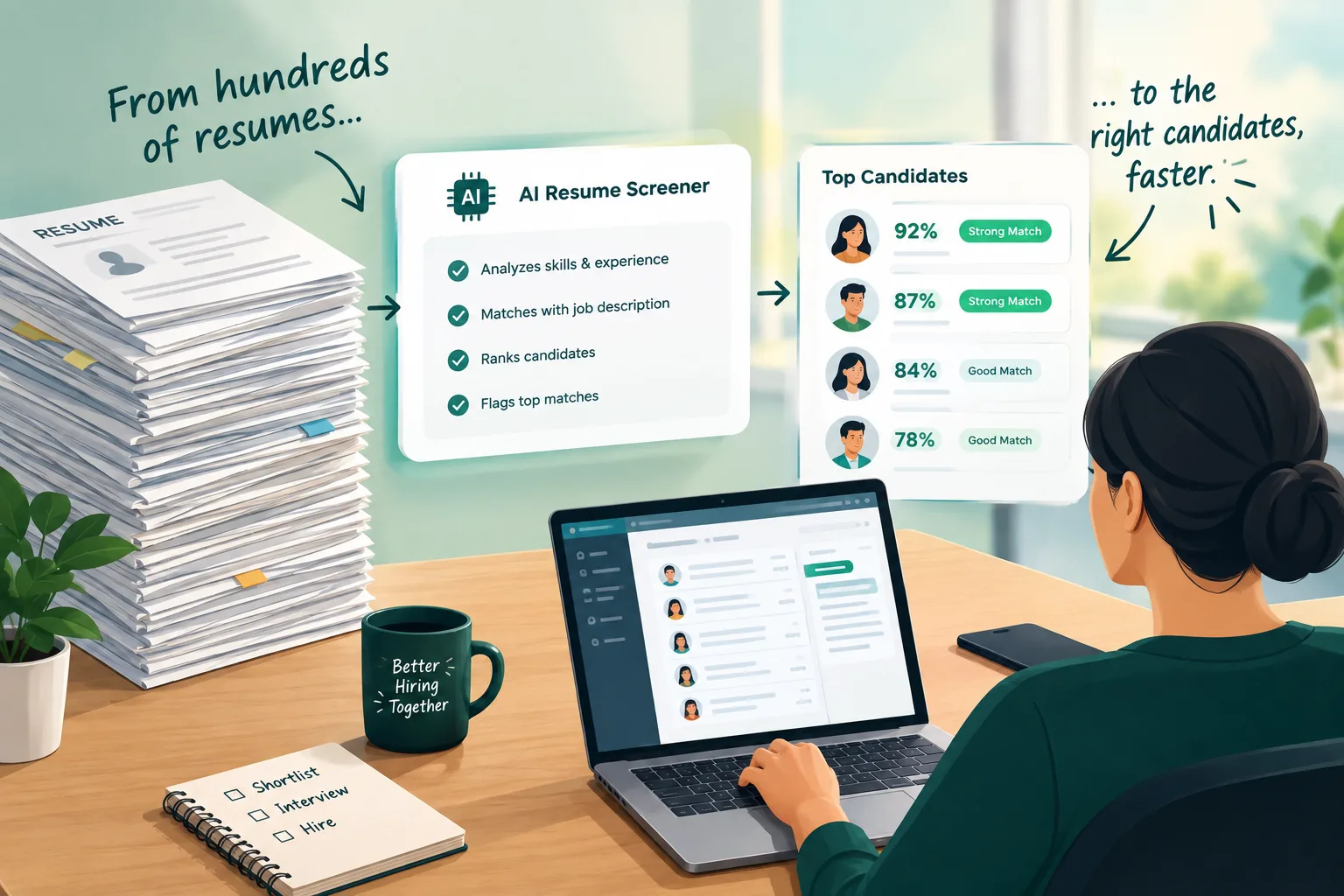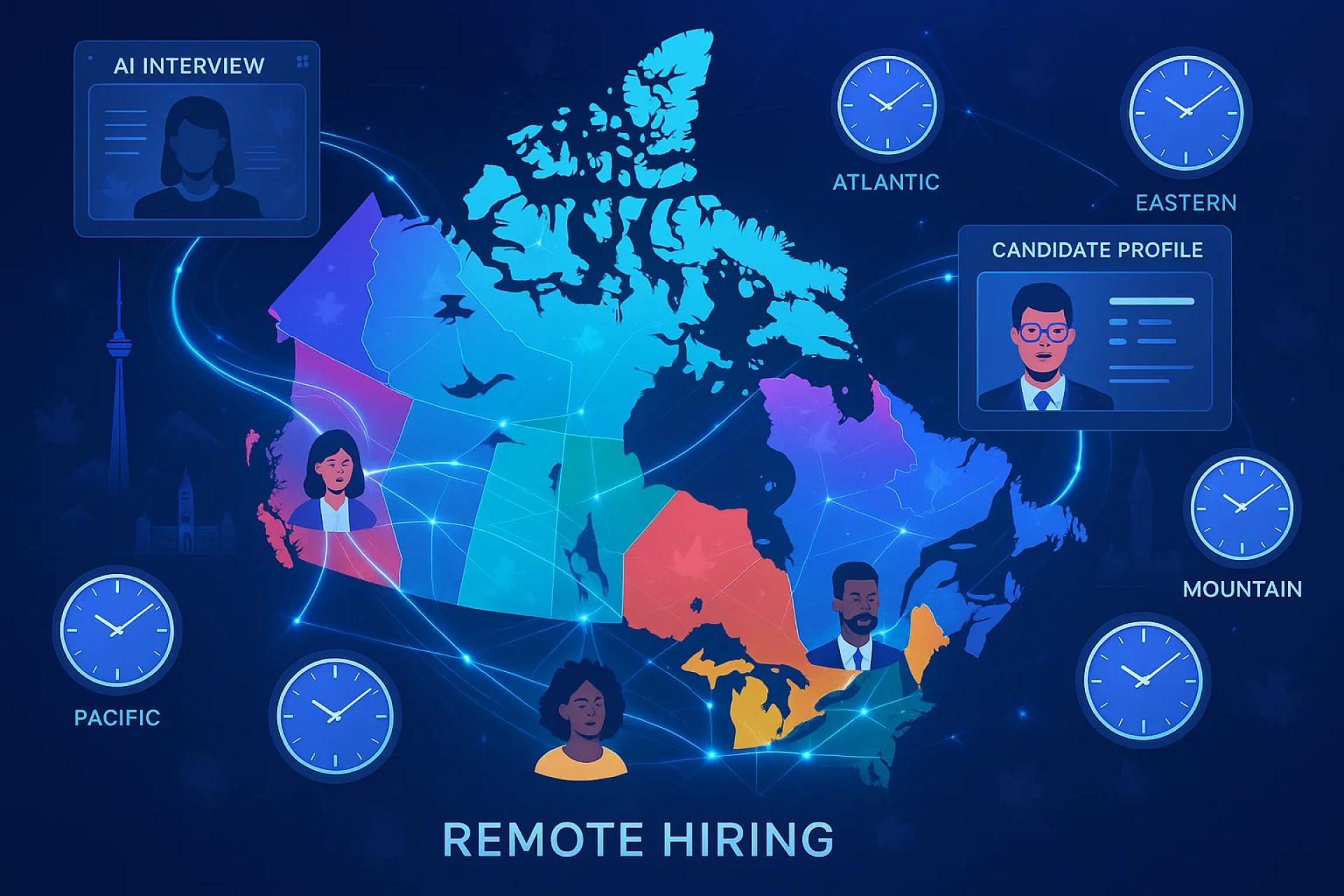
Remote work has fundamentally transformed the Canadian job market, creating unprecedented opportunities for employers to access talent across all provinces and territories. However, this expansion has also introduced complex challenges that traditional recruitment methods struggle to address effectively. Managing hiring processes across six time zones, navigating provincial employment regulations, and coordinating interviews from St. John's to Vancouver requires sophisticated solutions that go beyond conventional approaches.
AI recruiting in Canada has emerged as the definitive answer to these remote hiring challenges, enabling organizations to build truly national teams without geographical limitations. By automating interview scheduling, standardizing candidate evaluation, and ensuring regulatory compliance across all provinces, artificial intelligence transforms remote recruitment from a logistical nightmare into a streamlined competitive advantage.
The Remote Hiring Challenge in Canada's Vast Geography
Geographic and Time Zone Complexities
Canada spans six time zones from Newfoundland Time to Pacific Time, creating a 4.5-hour difference between the easternmost and westernmost regions. Traditional interview scheduling becomes exponentially complex when recruiters in Toronto attempt to coordinate with candidates in Vancouver, Edmonton, and Halifax simultaneously. The simple task of finding mutually convenient interview times can delay hiring processes by weeks.
Provincial boundaries add another layer of complexity beyond time zones. Each province maintains distinct employment standards, wage requirements, and hiring regulations that recruiters must navigate carefully. A recruitment strategy that works perfectly in Ontario may face compliance issues in Quebec due to language requirements, or encounter different overtime regulations in British Columbia.
The sheer physical distance between major business centers creates additional challenges. Flying recruiters between cities for in-person interviews becomes prohibitively expensive and time-consuming. Video conferencing helps, but coordinating schedules across time zones still requires significant administrative overhead that slows down the entire hiring process.
Traditional Recruitment Limitations
Conventional recruitment methods simply weren't designed for Canada's geographic reality. Phone screenings scheduled for 2 PM Eastern Time occur at 10:30 AM Newfoundland Time and 11 AM Pacific Time, creating awkward scheduling constraints for both recruiters and candidates. Multiple rounds of interviews compound these challenges, often stretching hiring timelines to several months.
Manual coordination across provinces also increases administrative costs substantially. Recruiters spend countless hours managing calendars, rescheduling conflicts, and ensuring all stakeholders can participate in interview processes. This administrative burden reduces the time available for strategic hiring activities and relationship building with top candidates.
Cultural and linguistic considerations add complexity in provinces like Quebec, where bilingual capabilities may be required for certain positions. Traditional recruitment approaches often struggle to assess language skills consistently or ensure compliance with provincial language regulations during the hiring process.
How AI Recruiting in Canada Transforms Remote Hiring
24/7 Automated Interview Scheduling
AI recruiting platforms eliminate time zone scheduling challenges by enabling 24/7 automated interview availability. Candidates can complete AI-powered interviews at their convenience, whether they're in St. John's at 8 AM local time or in Victoria at 11 PM Pacific Time. This flexibility dramatically improves candidate experience while reducing administrative overhead for recruitment teams.
Aicruit's AI interview platform operates continuously across all Canadian time zones, conducting structured interviews that maintain consistency regardless of when or where candidates participate. The system automatically adjusts for local time zones, sends appropriate notifications, and ensures candidates receive clear instructions in their preferred language.
This automation particularly benefits organizations hiring for shift work, customer service roles, or positions requiring coverage across multiple time zones. Instead of trying to coordinate complex scheduling matrices, recruiters can simply invite candidates to complete interviews within flexible windows that accommodate work schedules and personal preferences.
Standardized Multi-Provincial Compliance
AI recruiting in Canada addresses provincial regulatory variations through built-in compliance frameworks that automatically adjust evaluation criteria based on hiring location. The system ensures that all interview processes meet provincial employment standards while maintaining consistent candidate evaluation across regions.
For Quebec-based positions, AI platforms can automatically include bilingual assessment components and ensure compliance with Charter of the French Language requirements. British Columbia roles incorporate appropriate overtime and wage regulation considerations, while Alberta positions reflect that province's specific employment standards.
This automated compliance management reduces legal risks for organizations while ensuring fair treatment for candidates regardless of their provincial location. Recruiters no longer need to manually track different regulatory requirements for each province where they're hiring.
Efficient Cross-Provincial Talent Access
AI recruiting technology enables organizations to cast wider nets for talent acquisition across all provinces simultaneously. Instead of limiting searches to specific geographic regions due to logistical constraints, companies can evaluate candidates from coast to coast using standardized AI assessment protocols.
This expanded reach proves particularly valuable for specialized roles where talent pools may be concentrated in specific regions. Technology companies based in Toronto can easily access software engineering talent from Vancouver, Montreal, or Halifax without the traditional barriers of distance and time zones.
Remote hiring through AI platforms also supports Canada's broader economic development by enabling talent to remain in smaller communities while accessing opportunities with larger organizations in major business centers. This geographic flexibility helps retain talent in all provinces while giving employers access to the full spectrum of Canadian expertise.
Key Benefits for Canadian Organizations
Dramatic Time-to-Hire Improvements
Organizations implementing AI recruiting in Canada typically achieve 60-75% reduction in time-to-hire for remote positions. Traditional cross-provincial hiring processes that previously required 4-6 weeks can be compressed to 10-14 days through automated screening and interview capabilities.
This acceleration proves especially critical in competitive talent markets where top candidates receive multiple offers quickly. Companies that can move from application to offer within days rather than weeks gain significant competitive advantages in securing preferred candidates.
The speed improvements compound when hiring for multiple positions simultaneously. AI platforms can conduct hundreds of interviews concurrently across all provinces, enabling rapid team scaling that would be impossible through traditional methods.
Cost Reduction Through Automation
Remote hiring through AI recruiting platforms eliminates travel costs, reduces administrative overhead, and minimizes recruiter time investment per candidate. Organizations report 40-50% reduction in cost-per-hire when implementing comprehensive AI recruiting solutions for cross-provincial positions.
Administrative savings prove particularly significant when calculated across large hiring volumes. The time previously spent on scheduling coordination, travel planning, and manual interview management can be redirected toward strategic recruitment activities and candidate relationship building.
Technology investments in AI recruiting platforms typically achieve positive ROI within 90 days for organizations conducting regular remote hiring across multiple provinces.
Enhanced Candidate Experience
Candidates appreciate the flexibility and convenience of AI-powered remote interviews that accommodate their schedules and locations. Rather than requesting time off work for phone screenings or video calls during business hours, candidates can complete comprehensive evaluations during evenings or weekends at their convenience.
The standardized nature of AI interviews also creates fairer evaluation processes that reduce potential bias related to regional accents, cultural differences, or communication styles that might influence human interviewers unconsciously.
Many candidates report higher satisfaction with AI interview processes compared to traditional methods, particularly when interviewing for remote positions where flexibility and technological proficiency are valued qualities.
Provincial-Specific Considerations
Quebec's Unique Language Requirements
AI recruiting in Canada must address Quebec's distinct linguistic landscape where French language proficiency may be mandatory for certain positions. Advanced AI platforms like Aicruit can conduct interviews in both official languages and assess bilingual capabilities accurately through natural language processing.
The system automatically incorporates Charter of the French Language compliance requirements while maintaining consistent evaluation standards with positions in other provinces. This ensures fair treatment for all candidates while meeting provincial regulatory obligations.
Bilingual assessment capabilities prove particularly valuable for national organizations that need employees capable of serving customers or colleagues in both French and English across different regions.
Atlantic Canada's Remote Work Opportunities
The Atlantic provinces have emerged as attractive locations for remote work arrangements, offering cost-of-living advantages while maintaining access to quality talent pools. AI recruiting enables organizations to tap into these markets efficiently without establishing physical presence in the region.
Remote hiring through AI platforms supports Atlantic Canada's economic development initiatives by providing local talent with access to opportunities with organizations based in larger business centers while allowing them to remain in their home communities.
Western Canada's Resource and Technology Sectors
Alberta, Saskatchewan, British Columbia, and Manitoba offer specialized talent pools in natural resources, agriculture, and emerging technology sectors. AI recruiting platforms enable organizations to access this expertise efficiently regardless of their physical location.
Cross-provincial hiring proves particularly valuable for project-based work in resource industries where talent needs fluctuate based on market conditions and project timelines.
Technical Infrastructure and Integration
ATS Integration Across Provincial Systems
Modern AI recruiting platforms integrate seamlessly with existing ATS and HRIS systems used by Canadian organizations, ensuring candidate data flows smoothly regardless of provincial hiring location. This integration eliminates duplicate data entry and maintains comprehensive hiring records for compliance purposes.
Aicruit's platform connects with leading HR systems including Workday, Greenhouse, Lever, and Taleo, providing unified candidate management across all provincial hiring activities.
Data Security and Privacy Compliance
AI recruiting in Canada must address federal privacy legislation (PIPEDA) as well as provincial privacy requirements that vary across regions. Advanced platforms implement comprehensive data protection protocols that exceed regulatory requirements while enabling efficient candidate evaluation processes.
Secure data handling proves particularly important for remote hiring where sensitive candidate information travels across provincial boundaries through digital platforms.
Future Trends in Canadian Remote Hiring
Hybrid Work Model Integration
The future of AI recruiting in Canada increasingly focuses on hybrid work arrangements that combine remote flexibility with periodic in-person collaboration. AI platforms will continue evolving to assess candidates' suitability for flexible work arrangements while maintaining team cohesion across geographic distances.
Advanced Multilingual Capabilities
As Canada's workforce becomes increasingly diverse through immigration, AI recruiting platforms will expand language support beyond English and French to accommodate candidates who may be more comfortable interviewing in other languages while still meeting job requirements.
Provincial Economic Development Support
AI recruiting technology will play increasingly important roles in supporting provincial economic development initiatives by enabling talent retention in smaller communities while connecting local workers with opportunities across Canada.
Measuring Success in Remote Hiring
Organizations should track specific metrics to evaluate AI recruiting effectiveness for cross-provincial hiring:
- Time-to-hire reduction: Measure improvements in hiring speed across different provinces
- Candidate completion rates: Monitor interview completion percentages by province and time zone
- Cost-per-hire: Calculate total recruitment costs including technology, administrative, and travel expenses
- Candidate satisfaction: Survey candidates about their experience with remote AI interview processes
- Hire quality: Track employee performance and retention rates for remote hires across provinces
Implementation Best Practices
Gradual Provincial Rollout
Organizations should consider implementing AI recruiting in Canada through phased approaches that start with high-volume hiring needs or specific provinces before expanding nationally. This allows teams to refine processes and address regional considerations systematically.
Cultural Sensitivity Training
While AI handles initial screening and interviews, human recruiters still play crucial roles in final candidate selection and relationship building. Training programs should address cultural differences across provinces and effective remote communication strategies.
Ongoing Optimization
Regular review of AI recruiting performance across different provinces helps identify optimization opportunities and ensures consistent candidate experience regardless of geographic location.
Conclusion: The Future of Cross-Provincial Hiring
AI recruiting in Canada represents the evolution of talent acquisition from a geographically constrained activity to a truly national capability. Organizations that embrace AI-powered remote hiring gain access to the full spectrum of Canadian talent while reducing costs, improving efficiency, and creating better experiences for candidates across all provinces.
The technology eliminates traditional barriers of distance, time zones, and administrative complexity that previously limited cross-provincial hiring. As remote work continues reshaping the Canadian economy, AI recruiting platforms will become essential tools for building distributed teams that leverage talent from coast to coast.
Companies like Aicruit are leading this transformation by providing comprehensive AI recruiting solutions specifically designed for Canadian organizations. With built-in provincial compliance, multilingual capabilities, and seamless integration with existing HR systems, these platforms enable truly national hiring strategies that were previously impossible to execute effectively.
The future belongs to organizations that can access talent wherever it exists across Canada's vast geography, and AI recruiting technology makes this vision a practical reality today.