
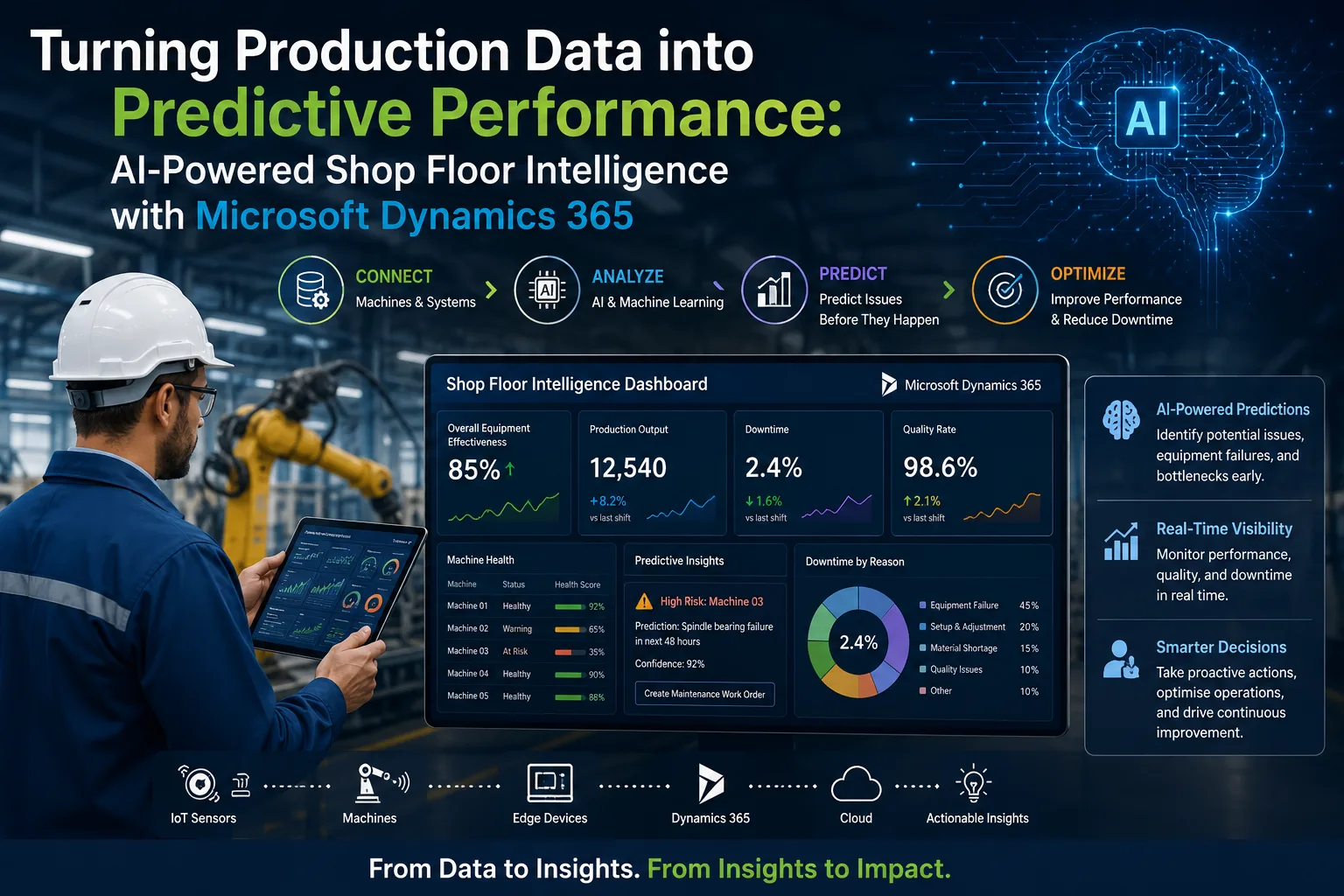
Manufacturing has entered a new era where data is becoming as valuable as machines and equipment. Traditional shop floor operations often depend on manual reporting, delayed updates, and reactive decision-making. As customer expectations continue to rise and production environments become more complex, manufacturers need smarter ways to monitor operations and improve productivity.
AI-powered shop floor intelligence is helping businesses achieve this goal by combining real-time production data, automation, and advanced analytics. With modern digital technologies, manufacturers can quickly identify production issues, reduce downtime, improve product quality, and make faster decisions based on accurate information. These capabilities are transforming factories into connected, intelligent workplaces that support continuous improvement. The growing adoption of AI and connected manufacturing platforms reflects a broader industry shift toward predictive operations and data-driven decision-making.
What is AI-Powered Shop Floor Intelligence?
AI-powered shop floor intelligence refers to the use of artificial intelligence, machine learning, IoT devices, and connected business applications to collect and analyze production data in real time. Instead of relying on spreadsheets or end-of-day reports, manufacturers receive instant visibility into machine performance, production status, material consumption, and workforce productivity.
This continuous flow of information allows supervisors and plant managers to detect bottlenecks before they become major problems. AI can also recognize unusual production patterns, predict equipment failures, and recommend corrective actions, enabling teams to respond proactively rather than reactively.
The result is a smarter production environment where decisions are based on live operational data rather than assumptions.
The Importance of Real-Time Production Visibility
One of the biggest challenges in manufacturing is the lack of visibility across the shop floor. Delayed information often leads to production losses, missed deadlines, quality issues, and increased operational costs.
Real-time monitoring provides instant updates about:
- Machine utilization
- Production progress
- Equipment health
- Material availability
- Quality inspection results
- Operator performance
When every department has access to the same accurate information, communication improves and production planning becomes much more efficient. Managers can immediately identify production delays and take corrective action before customer deliveries are affected.
AI Helps Reduce Downtime and Improve Productivity
Unexpected machine breakdowns are among the most expensive challenges manufacturers face. Traditional maintenance schedules often replace parts too early or too late, resulting in unnecessary costs or unexpected failures.
AI changes this approach through predictive maintenance. By analyzing sensor data and historical machine behavior, intelligent systems can predict when equipment is likely to require maintenance. Maintenance teams can schedule repairs during planned production breaks instead of responding to emergency failures.
This proactive approach offers several advantages:
- Reduced unplanned downtime
- Lower maintenance expenses
- Longer equipment lifespan
- Higher production efficiency
- Better resource utilization
Manufacturers can maintain smoother production schedules while minimizing costly interruptions.
Better Decision-Making with Microsoft Power BI
Collecting production data is only valuable when businesses can understand it clearly. This is where Microsoft Power BI plays a significant role.
Microsoft Power BI transforms complex manufacturing data into easy-to-read dashboards and interactive reports. Production managers can monitor key performance indicators (KPIs), compare production lines, track inventory trends, and identify quality issues from a single dashboard.
Instead of manually compiling reports, decision-makers gain instant access to visual insights that support faster and more informed decisions. Real-time dashboards also make it easier to identify performance trends, monitor production targets, and evaluate overall operational efficiency.
By combining AI-generated insights with Microsoft Power BI visualizations, manufacturers gain a comprehensive understanding of their shop floor performance while improving collaboration across departments.
Connecting People, Machines, and Business Systems
Modern manufacturing relies on seamless communication between equipment, production teams, and enterprise applications. AI-powered shop floor intelligence connects these different systems into one integrated environment.
Information flows automatically between production equipment, inventory management, maintenance teams, and management dashboards. This eliminates manual data entry while improving data accuracy across the organization.
Connected manufacturing also enables better production scheduling, faster issue resolution, and improved collaboration between departments. Everyone works from the same source of information, reducing delays caused by inconsistent or outdated reports.
Improving Product Quality Through AI
Maintaining consistent product quality requires continuous monitoring throughout the manufacturing process. AI can analyze production data in real time to identify quality deviations before defective products move further down the production line.
Instead of waiting until final inspection, manufacturers receive early warnings when production parameters move outside acceptable limits. This allows operators to make immediate adjustments, reducing waste, improving customer satisfaction, and lowering quality-related costs.
Continuous quality monitoring also helps businesses maintain compliance with industry standards while strengthening customer confidence.
Preparing Manufacturing for the Future
Digital transformation is no longer optional for manufacturers looking to remain competitive. AI-powered shop floor intelligence provides the foundation for smarter operations by combining automation, predictive analytics, and real-time visibility.
When integrated with tools like Microsoft Power BI, organizations can convert large volumes of production data into meaningful business insights that support strategic decision-making. As manufacturing continues to evolve, businesses that embrace intelligent technologies will be better positioned to improve operational efficiency, reduce costs, increase productivity, and deliver consistently high-quality products.
The future of manufacturing belongs to organizations that can transform data into actionable intelligence. AI-powered shop floor solutions are making that future a reality by helping manufacturers build more connected, agile, and efficient production environments.