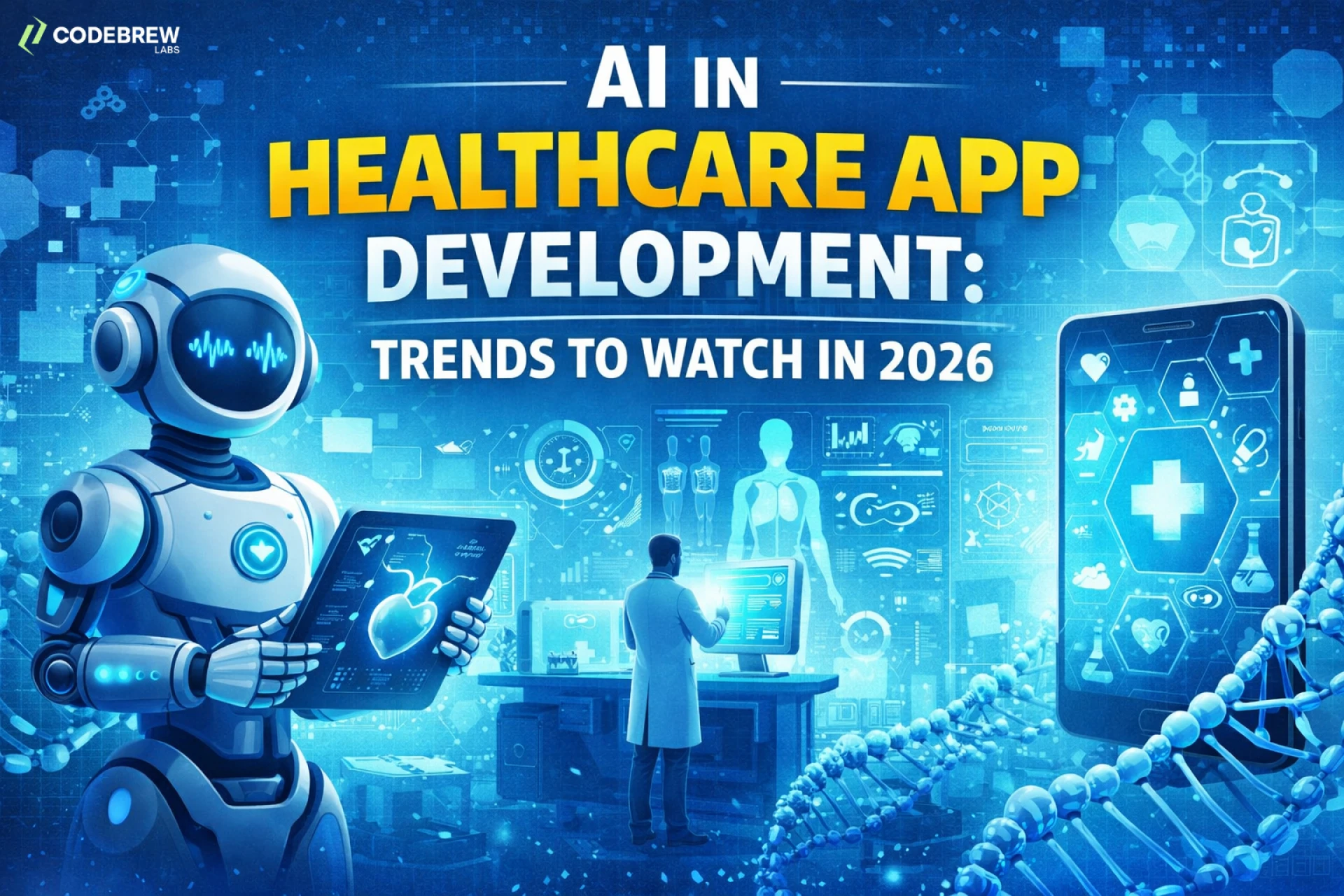
The healthcare industry is undergoing one of the most significant digital transformations in history—and Artificial Intelligence (AI) is at the center of it.
In 2026, healthcare apps are no longer just about booking appointments or tracking fitness. They are becoming intelligent platforms capable of predicting diseases, assisting doctors, and delivering personalized care in real time.
For businesses looking to build healthcare apps, understanding these AI trends is critical—not just to stay relevant, but to lead the market.
Let’s explore the key AI trends shaping healthcare app development in 2026.
The Growing Role of AI in Healthcare AppsAI adoption in healthcare is accelerating faster than any other technology in the sector, driven by the need to improve efficiency, reduce costs, and enhance patient outcomes .
From diagnostics to patient engagement, AI is transforming how healthcare apps function by:
- Automating repetitive tasks
- Providing real-time insights
- Enhancing decision-making
- Delivering personalized care
In short, AI is turning healthcare apps into smart digital health assistants.
Top AI Trends in Healthcare App Development (2026)1. AI-Powered Diagnostics & Early Detection
AI is revolutionizing diagnostics by analyzing medical data faster and more accurately than ever before.
- AI can detect diseases from medical images and patient data
- Early warning systems identify health risks before symptoms appear
- Improves accuracy in diagnosis and reduces human error
Healthcare systems are increasingly using AI for risk assessment and early disease detection, improving overall care quality .
2. Predictive Analytics & Preventive Care
One of the biggest shifts in 2026 is from treatment to prevention.
AI enables healthcare apps to:
- Predict potential health issues
- Monitor patient behavior and vitals
- Provide preventive recommendations
AI systems are now being used to predict and prevent illness, transforming patient care into a continuous process .
3. AI Chatbots & Virtual Health Assistants
AI-powered chatbots are becoming a core feature in healthcare apps.
They can:
- Answer patient queries instantly
- Schedule appointments
- Provide medication reminders
- Offer mental health support
These systems improve accessibility while reducing administrative workload.
Patients now expect 24/7 support without waiting for human intervention.
4. AI in Medical Documentation & Workflow Automation
One of the biggest challenges in healthcare is administrative burden.
AI is solving this through:
- Automated clinical documentation
- Real-time transcription of doctor-patient interactions
- Smart data entry and report generation
AI tools like ambient scribes are helping reduce clinician burnout by automating documentation tasks .
5. Hyper-Personalized Patient Experience
Personalization is becoming the standard in healthcare apps.
AI analyzes:
- Medical history
- Lifestyle data
- Wearable device inputs
This enables:
- Customized treatment plans
- Personalized health recommendations
- Tailored fitness and wellness programs
In fact, healthcare is shifting toward continuous, personalized care experiences powered by digital tools .
6. AI + Wearables for Remote Patient Monitoring
Wearable devices combined with AI are transforming healthcare apps into real-time monitoring systems.
- Track heart rate, sleep, glucose levels
- Detect abnormalities instantly
- Send alerts to doctors and caregivers
AI-powered wearables are enabling preventive and remote healthcare, reducing hospital visits .
7. Generative AI in Healthcare Apps
Generative AI is one of the most exciting trends in 2026.
It is being used for:
- Drug discovery and research
- Generating clinical reports
- Creating personalized treatment suggestions
Generative AI is significantly accelerating innovation in healthcare, especially in pharmaceutical research.
8. AI-Powered Virtual Care & Telemedicine
Telemedicine is evolving with AI integration.
Modern healthcare apps now offer:
- AI-assisted virtual consultations
- Smart symptom checkers
- Real-time health insights
Healthcare apps are becoming essential tools for remote care and digital health services.
9. Digital Twins & Advanced Simulation
A futuristic but rapidly emerging trend is the concept of digital twins.
- Virtual replicas of patients
- Simulate treatments before real-world application
- Predict health outcomes
Digital twins are expected to transform personalized medicine by enabling predictive and precise care.
10. AI Security, Privacy & Ethical Compliance
As AI adoption grows, so do concerns around data privacy.
Healthcare apps must:
- Ensure secure data handling
- Comply with regulations (HIPAA, GDPR, etc.)
- Provide transparency in AI decision-making
Trustworthy AI is becoming a critical requirement for long-term adoption.
Key Benefits of AI in Healthcare App DevelopmentAI is not just a trend—it’s delivering real business and patient value:
Improved Patient Outcomes
Faster diagnosis and personalized treatments
Increased Efficiency
Automation reduces manual workload.
Cost Reduction
Optimized operations and fewer hospital visits
Better Accessibility
Remote care and 24/7 support
Continuous Learning
AI systems improve with data over time
Challenges to ConsiderDespite its benefits, AI implementation comes with challenges:
- Data privacy and security risks
- High development and integration costs
- Need for high-quality medical data
- Regulatory compliance complexities
A strategic approach is essential to overcome these barriers.
The Future of AI in Healthcare AppsLooking ahead, AI will continue to evolve in ways that redefine healthcare:
- AI-powered decision support for doctors
- Fully automated patient journeys
- Real-time global health data analysis
- Smarter, more human-like virtual assistants
AI is moving from being a “feature” to becoming the foundation of healthcare app development.
ConclusionAI is no longer optional in healthcare app development—it’s the driving force behind innovation in 2026.
From predictive analytics to personalized care and automation, AI is transforming healthcare apps into intelligent ecosystems that benefit both patients and providers with Code Brew Labs.