
The Soundscape of Tomorrow: A Transformative Prelude
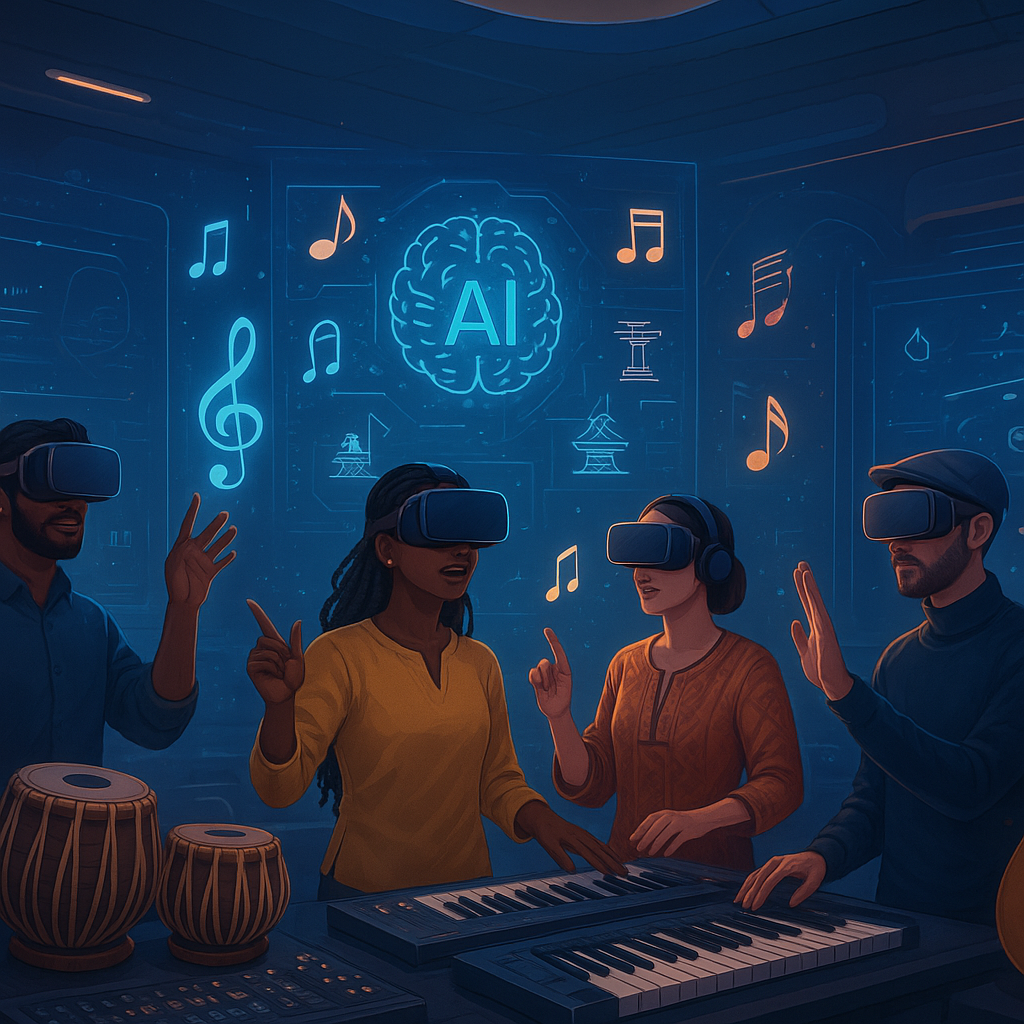
On a crisp evening in early 2026, a live concert in Berlin mesmerized thousands—not with a traditional band on stage, but through an AI-composed symphony performed by holographic avatars in a fully immersive VR environment. Audience members, scattered across continents, donned lightweight headsets to experience this event in real-time, adjusting soundscapes to their personal tastes via neural interfaces. This scene, once a sci-fi fantasy, exemplifies the seismic shifts reshaping music’s future. It’s no longer just about notes and rhythms but about interactivity, personalization, and technological convergence.
According to industry estimates, global music revenues reached $140 billion in 2025, buoyed primarily by digital experiences and immersive platforms. The integration of AI in composition, distribution, and consumption has accelerated this growth, heralding a new epoch where creativity is augmented by technology rather than replaced. This article explores the multifaceted future of music through the lenses of technological innovation, cultural dynamics, industry transformations, and what lies ahead for artists and audiences alike.
“Music has always evolved alongside technology, but what we’re witnessing now is a fundamental reshaping of how music is conceived, performed, and experienced.” — Dr. Elaine Ramirez, Music Technologist
Tracing the Evolution: From Vinyl to Virtual Reality
The trajectory leading to today’s music revolution is rooted in decades of technological milestones and cultural shifts. The 20th century saw the rise of recorded music—vinyl, cassettes, CDs—each enabling new forms of accessibility and distribution. The late 1990s and early 2000s introduced digital formats and peer-to-peer sharing, disrupting traditional industry models.
Streaming platforms became dominant by the 2010s, transforming revenue models from ownership to access. This democratization empowered independent artists but also intensified debates over fair compensation. Meanwhile, the rise of social media began to redefine fan engagement and music discovery.
The 2020s accelerated these trends with the incorporation of AI and machine learning. AI-driven tools now assist in songwriting, mastering, and even generating entire albums. Virtual and augmented reality created immersive concert experiences, especially catalyzed by the COVID-19 pandemic’s impact on live events. Blockchain technology introduced new paradigms for rights management and fan monetization through NFTs and decentralized platforms.
This historical context reveals music as a dynamic cultural artifact, continuously shaped by technological advances and societal needs. Understanding this evolution is key to appreciating the innovations defining 2026 and beyond.
Core Dynamics Reshaping Music in 2026
Today, five dominant forces are converging to sculpt music’s future landscape:
- Artificial Intelligence and Generative Music: AI tools like OpenAI’s MuseNet and Google’s MusicLM have matured, enabling artists to co-create with machines. AI can analyze vast datasets of musical styles, generating novel compositions or augmenting human creativity. In 2026, AI-assisted production is standard across genres, with platforms offering seamless integration into DAWs (digital audio workstations).
- Immersive and Spatial Audio Technologies: Advances in 3D audio, binaural sound, and spatial computing deliver hyper-realistic auditory experiences. Live VR concerts and AR-enhanced performances allow listeners to 'walk through' soundscapes, tailoring intensity and directionality, enhancing emotional connection.
- Direct Artist-to-Fan Engagement: Decentralized platforms and blockchain facilitate transparent royalty distribution and fan-driven support models. Subscription services have evolved into interactive hubs where fans participate in creative processes and exclusive content access.
- Cross-Disciplinary Collaboration: Music increasingly intersects with gaming, film, AI art, and virtual environments. This convergence demands new skills and hybrid creative roles, expanding the definition of what constitutes musical artistry.
- Cultural Diversity and Global Access: Digital platforms amplify underrepresented voices and genres, fostering a more pluralistic musical ecosystem. AI translation and localization tools enable global appreciation of regional sounds, breaking linguistic and cultural barriers.
These dynamics are supported by compelling data: a 2026 report by the International Music Summit reveals that over 60% of new music releases globally involve AI-assisted composition. Additionally, live VR concert attendance has grown 250% year-over-year since 2023, underscoring the shift toward immersive experiences.
“The fusion of AI and human creativity is not replacing artists but expanding the palette from which they paint their sonic masterpieces.” — Yara Chen, CEO of Harmonia Labs
2026 Milestones: Current Developments and Industry Shifts
This year, several landmark developments have further cemented music’s transformative trajectory. Notably, MetaSound—an industry consortium of tech giants and record labels—launched the OpenSound Protocol, standardizing immersive audio formats across devices and platforms. This initiative has facilitated seamless concert experiences across VR headsets, AR glasses, and spatial audio speakers.
Moreover, several chart-topping albums of 2026 feature AI-generated elements, with artists openly crediting collaborative AI systems. For instance, pop icon Amira Sol’s latest album, "Neon Pulse," incorporated AI-generated harmonic progressions, which critics have praised for pushing creative boundaries.
On the business front, decentralized music marketplaces powered by blockchain continue to disrupt traditional label-centric models. Platforms like TuneChain enable artists to tokenize their catalogs, granting fans fractional ownership and rights to future royalties. This has generated new revenue streams and enhanced transparency.
The rise of neural interfaces also marks a pivotal shift. Companies such as NeuroSound have introduced wearable devices allowing users to modulate music playback through brainwave patterns, personalizing auditory experiences without manual controls.
- MetaSound’s OpenSound Protocol adoption by over 100 hardware manufacturers
- AI-assisted tracks comprising 40% of Billboard’s Top 100 in Q1 2026
- Over 15 million active users on decentralized music platforms globally
- Launch of NeuroSound’s brainwave music modulation headset in select markets
These developments underscore the accelerating pace of innovation and the music industry’s adaptive capacity.
Expert Insights: Industry Voices on Music’s Evolution
Leading voices across music, technology, and culture offer nuanced perspectives on these transformations. Dr. Elaine Ramirez, a pioneer in music technology research, emphasizes the collaborative potential of AI and human musicianship. “Rather than viewing AI as a threat, we should embrace it as a co-creator that can unlock unexplored creative dimensions,” she argues.
Record label executives highlight the necessity for new business models. Sophia Martinez, Chief Strategy Officer at Harmonic Records, notes: “The traditional album release cycle is evolving. We now focus on ongoing engagement through immersive experiences, exclusive digital assets, and fan participation.”
Artists themselves share diverse reactions. Amira Sol reflects on her AI collaborations: “It’s a dialogue, not a monologue. AI challenges me to rethink composition, pushing my boundaries.” Meanwhile, underground musicians embrace decentralized platforms to bypass gatekeepers, fostering grassroots growth.
These insights reveal a complex ecosystem where technology, artistry, and commerce intersect. TheOmniBuzz’s coverage of Six Defining Sounds Shaping Music’s Future Today and How Music’s Digital Renaissance Is Reshaping Creativity and Culture provide deeper context on these expert analyses.
“The future of music is a tapestry woven from human emotion, technological innovation, and cultural diversity.” — Sophia Martinez, Harmonic Records
What to Watch: Trends and Takeaways for the Next Decade
Looking ahead, several trends will likely dictate music’s trajectory through the late 2020s and beyond:
- Hyper-Personalization: Music experiences will become increasingly tailored through AI and neural interfaces, adapting in real-time to listeners’ moods and environments.
- Ethical and Legal Frameworks: As AI-generated content proliferates, clear guidelines on copyright, authorship, and royalties will be essential to protect creators and consumers alike.
- Greater Immersion and Multi-Sensory Integration: Music will merge with haptics, visuals, and even olfactory stimuli, creating holistic sensory experiences.
- Decentralization and Fan Empowerment: Fans will gain unprecedented influence over music production and distribution, fostering participatory culture.
- Cross-Genre and Cross-Cultural Fusion: Technology will facilitate blending of global musical traditions, driving innovation and inclusivity.
For artists and industry stakeholders, embracing these shifts will require agility and openness to experimentation. Consumers can anticipate richer, more interactive relationships with music, moving beyond passive listening to immersive co-creation.
These future directions echo themes explored in TheOmniBuzz’s piece on Why Music Remains the Pulse of Human Connection and Innovation, emphasizing music’s enduring social and emotional significance amid technological change.
Case Study: Amira Sol’s "Neon Pulse" and the AI Collaboration Model
Amira Sol’s 2026 album "Neon Pulse" exemplifies the fusion of human artistry and AI innovation. Collaborating with Harmonia Labs’ AI system, Sol co-developed harmonic textures and rhythmic patterns, refining them through iterative feedback.
The project involved:
- Initial AI-generated melody drafts based on Sol’s thematic inputs
- Human curation and lyrical composition layered atop AI foundations
- Real-time AI mastering adjustments tailored to streaming platform acoustics
The album achieved critical acclaim and commercial success, demonstrating how AI can expand creative possibilities rather than supplant them. Industry reports cite a 35% increase in listener engagement on immersive platforms linked to "Neon Pulse" experiences, where fans could remix tracks interactively.
This case underscores the shifting role of artists—from sole creators to collaborative orchestrators within hybrid human-AI ecosystems. It also highlights new revenue models driven by fan interaction and digital collectibles.
Amira Sol’s approach resonates with broader industry trends, reinforcing the insights in TheOmniBuzz’s Mastering Music: Essential Expert Tips to Elevate Your Sound, which addresses the technical and creative integration of emerging tools.