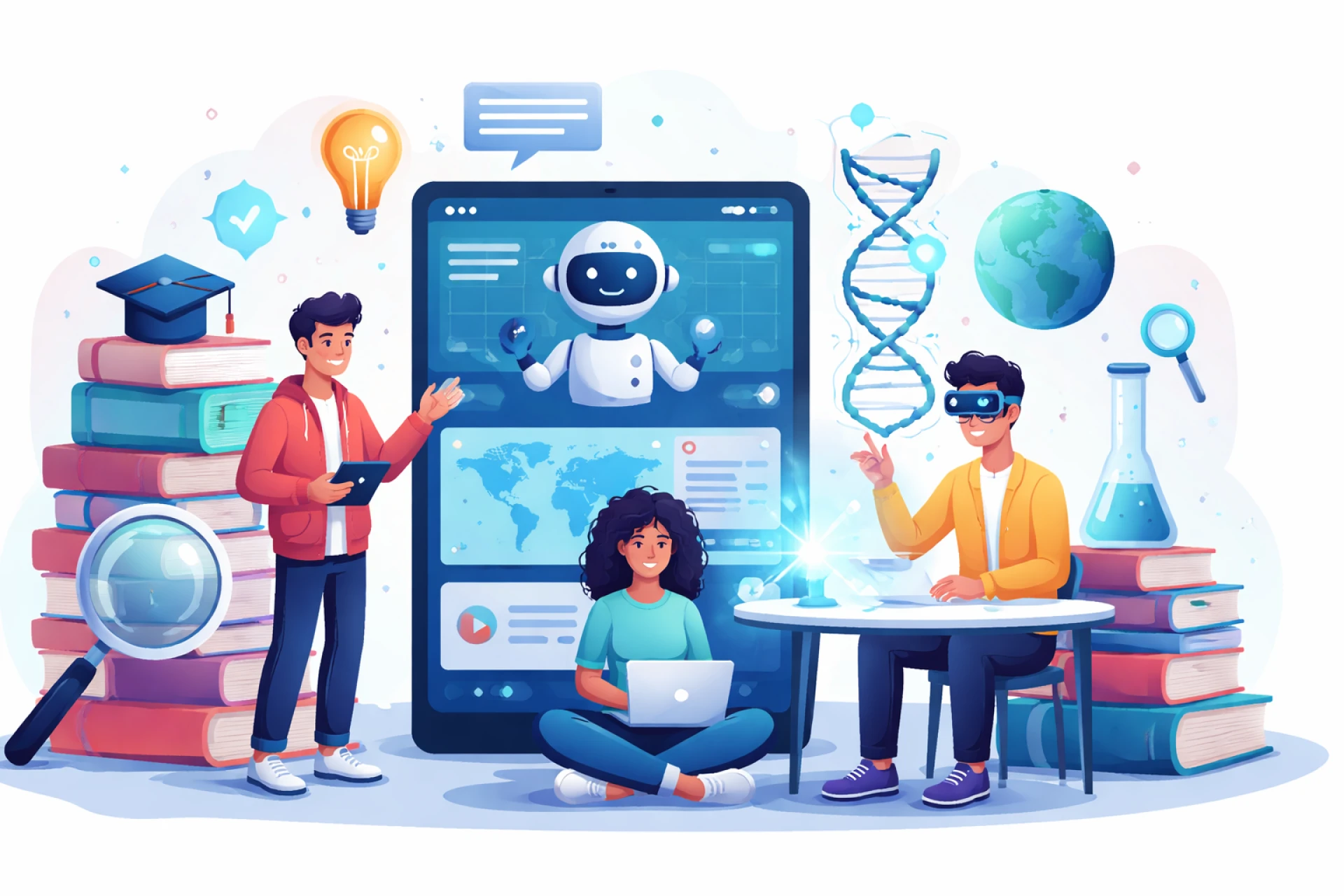
The education landscape is evolving faster than ever. Learners today expect more than textbooks and lectures—they want interactive, personalized, and engaging experiences that adapt to their needs. This shift has created an enormous opportunity for education app development, where technology meets learning to create platforms that are immersive, outcome-driven, and scalable.
Modern educational apps are not just digital tools; they are ecosystems that help students learn more effectively while giving educators data, insights, and tools to improve outcomes. From artificial intelligence (AI) to augmented reality (AR), developers are integrating cutting-edge innovations to transform the way knowledge is shared and absorbed.
Why Education Apps Are Booming
The demand for digital learning has grown exponentially. With schools, universities, and corporate training programs moving online, the market for high‑quality learning apps has exploded.
Consider these numbers:
- Educational apps generated around $5.93 billion in revenue in 2023, marking a notable increase from previous years.
- These apps were used by 709 million people worldwide and downloaded over 939 million times in 2023.
- Duolingo alone generated $748 million in revenue in 2024, a 40% year‑over‑year increase, with more than 100 million monthly active users engaging with the platform.
Such statistics highlight the potential of building an education app — not just as a business opportunity, but as a chance to make learning accessible, engaging, and meaningful for millions of users.
AI: Personalization at Scale
Artificial intelligence has become a game-changer in e-learning app development. It allows platforms to personalize learning for each student, analyzing their progress, identifying gaps, and tailoring content to their strengths and weaknesses.
For instance, AI-driven language apps can detect pronunciation errors and offer targeted exercises, while math apps can identify concepts a student struggles with and recommend practice problems accordingly. AI doesn’t just improve learning—it also helps educators by automating grading, generating insights, and suggesting ways to optimize lesson plans.
The result is an experience that adapts in real-time, ensuring students are constantly challenged and supported.
AR and VR: Immersive Learning Experiences
Augmented reality (AR) and virtual reality (VR) are redefining engagement in school app development. AR overlays digital elements onto the real world, while VR immerses learners in entirely virtual environments.
Imagine a history lesson where students can walk through ancient Rome or a biology class where they explore the human heart in 3D. These immersive experiences make abstract concepts tangible, improve retention, and appeal to visual and kinesthetic learners.
VR simulations also allow for practical, risk-free experiences, such as chemistry experiments or medical procedures, which would be impossible in a traditional classroom. AR and VR are no longer futuristic—they are becoming essential tools in the modern learning toolkit.
Gamification: Turning Learning Into Play
Gamification is one of the most effective ways to enhance engagement in education apps. By integrating points, badges, leaderboards, and challenges, learning becomes fun and motivating.
Students are more likely to complete lessons, revisit difficult concepts, and stay consistent when learning feels interactive rather than obligatory. Platforms like Duolingo, Kahoot, and Classcraft have proven that gamification increases both engagement and retention, showing that play and learning can coexist seamlessly.
Microlearning and On-Demand Education
Modern learners prefer lessons that are short, focused, and accessible anytime, anywhere. Microlearning—the practice of delivering bite-sized, targeted content—is transforming e-learning app development.
These apps allow learners to consume content in short sessions, whether during a commute, a break, or between classes. Microlearning modules often include quizzes, exercises, and interactive elements to reinforce learning, ensuring that even small time investments result in meaningful knowledge gains.
Essential Features for Modern Education Apps
To stand out, modern education apps must combine innovative technology with thoughtful user-centric design. Key features include:
- Personalized Learning Paths: Tailoring lessons to individual student needs based on progress and performance.
- Interactive Content: Multimedia lessons, drag-and-drop exercises, simulations, and in-app quizzes.
- Live Classes & Collaboration: Real-time video integration, peer-to-peer discussion, and group assignments.
- Offline Access: Downloadable materials and progress tracking without internet connectivity.
- Analytics & Progress Tracking: Dashboards for learners and educators to monitor performance and engagement.
- Accessibility: Features for visually, hearing, or cognitively impaired learners.
- Gamification: Rewards, badges, and achievement systems to boost motivation.
- Monetization Options: In-app purchases, subscriptions, or premium content integration.
A well-designed app combines these elements seamlessly, creating an ecosystem that keeps learners engaged and provides educators with actionable insights.
Building an Education App: A Strategic Approach
Developing an education app requires careful planning and execution. Here’s a step-by-step framework:
1. Define Your Goals: Identify the problem you want to solve and the target audience—students, teachers, or lifelong learners. Determine whether the app focuses on K-12 education, higher education, or professional training.
2. Market Research: Study competitors, identify gaps, and collect feedback from potential users. Understanding user expectations and current trends is critical to avoid building an app that fails to gain traction.
3. UI/UX Design: Engagement is everything in EdTech. Design should be intuitive, interactive, and visually appealing. Use wireframes and prototypes to gather feedback before full-scale development.
4. Development: Select a suitable tech stack. Cross-platform frameworks like Flutter or React Native reduce development time, while robust backends like Node.js or Django ensure scalability. Integrate APIs for payments, analytics, and video streaming.
5. Testing: Conduct functional, usability, and performance testing. A seamless experience across devices and network conditions is essential for user retention.
6. Launch and Optimize: Deploy the app, track user engagement, gather feedback, and iterate. Post-launch support and regular updates are crucial to maintaining a loyal user base.
The Future of Education App Development
The next wave of innovation in education app development is being driven by AI, AR, and data analytics. Some trends to watch include:
- AI Tutors: Real-time assistance and adaptive learning tailored to individual needs.
- AR/VR Classrooms: Immersive simulations that make abstract concepts tangible.
- Voice-Activated Learning: Hands-free interaction and improved accessibility.
- Blockchain Credentialing: Secure, verifiable digital certificates for learners.
- Data-Driven Insights: Analytics to optimize content, monitor engagement, and predict performance.
These trends promise a future where learning is not only more interactive and engaging but also personalized, measurable, and globally accessible.
Conclusion
From AI-powered personalization to AR-driven immersive experiences, the field of education app development is entering a new era. Modern apps are no longer just teaching tools—they are complete ecosystems designed to engage learners, support educators, and deliver measurable outcomes.
For developers, EdTech investors, and decision-makers, embracing these innovations is not optional—it’s essential. With the right approach, an education app can generate impressive returns while making a meaningful impact on learners worldwide, bridging the gap between traditional education and the digital future.