AHU Coils: Engineering Design, Heat Transfer Performance and Industrial Applications
Air-handling systems must maintain the required supply-air temperature while controlling humidity, airflow resistance and energy consumption. Their performance depends significantly on the heat exchanger installed inside the air handling unit (AHU). AHU coils transfer heat between the air stream and a circulating medium, typically chilled water, hot water, steam or refrigerant. Their design influences thermal capacity, fan energy requirements, condensate management and the stability of indoor environmental conditions.

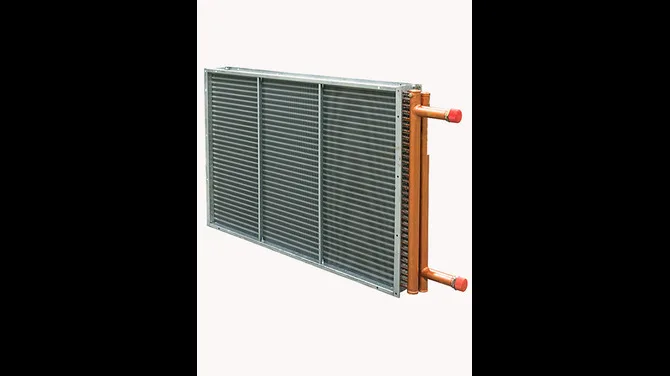
AHU coils are engineered heat exchanger assemblies comprising tubes, fins, headers and fluid connections. Their performance depends on tube material, fin geometry, circuit configuration, heat-transfer surface area, airflow distribution and operating conditions. Correctly specified coils support commercial HVAC installations, industrial ventilation systems, pharmaceutical facilities, hospitals and manufacturing plants. Understanding these factors helps engineers evaluate product suitability, while procurement teams can assess manufacturing consistency and technical compliance when working with AHU Coils Manufacturers.
Functional Classification of Air-Handling Coils
Cooling coils reduce air temperature by transferring sensible heat to a colder medium. When the coil surface temperature falls below the entering air's dew point, moisture condenses on the fins and tubes, allowing simultaneous cooling and dehumidification. Chilled-water coils are widely used in central HVAC systems, while direct-expansion coils use evaporating refrigerant to absorb heat.
The selection of AHU coils must begin with the intended operating duty. Two coils with similar external dimensions may provide different thermal capacities because of variations in tube circuits, fin spacing, airflow, fluid temperatures and heat-transfer surface area. AHU Coils Suppliers should therefore provide technical information that allows the proposed configuration to be assessed against the required system conditions.
Construction Materials and Compatibility
Most conventional air-handling heat exchangers use copper tubes with aluminium fins. The tubes carry the heating or cooling medium, while the fins increase the surface area available for heat exchange with the passing air.
Copper is commonly used because of its high thermal conductivity, established joining methods and availability in tubing suitable for HVAC and refrigeration service. The tube specification must correspond to the intended operating pressure, temperature, fluid compatibility and manufacturing process.
Stainless steel may be considered for applications involving particular hygiene requirements, corrosive environments or process conditions. Its suitability depends on the grade, fluid chemistry, operating temperature and fabrication method. Galvanic compatibility between dissimilar metals must also be assessed.
When comparing proposals from AHU Coils Manufacturers in India, buyers should examine the specified material grades, tube wall thickness, fin construction and joining methods rather than relying on a general material description. These details help establish whether the coil is suitable for the intended service conditions.
Engineering Variables That Determine Coil Capacity
The heat-transfer rate of a coil depends on the temperature difference between the air and circulating medium, the effective heat-transfer area and the overall heat-transfer coefficient. A simplified relationship is:
Several engineering variables influence the result.
Tube rows and fin spacing
Additional tube rows can increase heat-transfer surface area, but they may also raise air-side pressure drop. The thermal benefit depends on the entering-air conditions, fluid flow, circuit arrangement and available installation depth.
Fin spacing affects the balance between surface area and airflow resistance. Closely spaced fins may improve heat transfer within a limited face area but can collect dust more readily. Wider spacing can be advantageous in environments with high particulate loading or demanding cleaning requirements.
Circuit arrangement and flow conditions
Tube circuiting determines how the fluid is distributed through the heat exchanger. An unsuitable circuit arrangement may increase pressure loss or produce uneven fluid distribution. For chilled-water coils, design flow rate and entering and leaving water temperatures are important selection inputs.
Refrigerant coils require additional consideration of evaporation conditions, refrigerant distribution, superheat and the requirements of the refrigeration circuit.
Air velocity and pressure drop
Face velocity affects heat transfer, pressure drop, condensate behaviour and water carryover. Excessive velocity can cause moisture droplets to leave the coil surface, while inadequate airflow can prevent the system from delivering its intended capacity.
A technically appropriate coil balances thermal output with air-side and fluid-side resistance. AHU Coils Suppliers should provide performance information at the specified operating conditions so that engineers can assess the coil alongside the fan, pump and wider HVAC system.
Dimensional Configuration and System Integration
The dimensions of AHU coils are established according to design airflow, required capacity and available installation space. Important parameters include face width, face height, coil depth, tube diameter, tube pitch, fin pitch, number of rows and connection positions.
Face dimensions determine the frontal area through which air passes. The relationship between airflow and face area establishes average face velocity, which influences thermal performance and moisture control.
Tube diameter and wall thickness must suit the specified material, operating pressure and manufacturing method. Tube pitch affects fin attachment, surface distribution and mechanical strength. Coil depth and row count influence both the available heat-transfer area and airflow resistance.
For replacement projects, matching the existing dimensions is not sufficient. The replacement should also be checked against the original thermal duty, airflow, water temperatures or refrigerant conditions. AHU Coils Manufacturers in India should receive the relevant drawings and operating data before a replacement configuration is approved.
Standards and Technical Compliance
Standards establish requirements for material identity, dimensions, manufacturing quality and testing. The applicable documents depend on the material, component type and intended service.
ASTM B75 covers seamless copper tube, while ASTM B280 addresses seamless copper tube intended for air-conditioning and refrigeration field service. The appropriate specification depends on the tubing application and purchase requirements. Neither standard, by itself, establishes the thermal performance of a complete assembled AHU coil.
Aluminium and stainless steel components must likewise be specified according to their product form and material grade. Project specifications may establish additional requirements for pressure-containing parts, fabrication procedures, corrosion protection and inspection.
When evaluating AHU Coils Exporters, procurement teams should confirm that the supplied technical documents identify the actual materials, design conditions and inspection requirements. For international projects, the purchase order should identify the mandatory specifications, documentation requirements and acceptance procedures clearly.
Manufacturing Processes and Quality Verification
Manufacturing quality affects heat transfer, structural integrity and resistance to leakage. Production commonly involves tube preparation, fin forming, tube-and-fin assembly, header fabrication, connection installation, joining, inspection and final cleaning. The exact process depends on the design and manufacturing method.
Joining operations around headers, return bends and connections require controlled procedures. Inadequate joints may leak, while poor alignment can introduce assembly stress. Manufacturing methods must be appropriate for the materials and operating conditions involved.
Inspection may include dimensional checks, visual examination, material verification, circuit inspection and pressure or leak testing. The test pressure, duration and acceptance criteria must follow the approved design and applicable procedure rather than a universal value.
When assessing AHU Coils Manufacturers, technical buyers should review documented quality controls, inspection practices and the consistency of finished assemblies. These factors are more meaningful indicators of manufacturing capability than a product description alone.
Application Requirements Across Industrial Sectors
Different operating environments create distinct requirements for heat exchanger design, material selection and maintenance.
Hospitals and healthcare facilities may require carefully controlled temperature, humidity, filtration and ventilation. Coil selection must coordinate with the wider air-handling system and its cleaning procedures; the coil alone does not establish compliance with healthcare ventilation requirements.
Food-processing and cold-chain facilities may encounter high moisture loads, washdown practices and airborne contaminants. Fin spacing, corrosion protection and condensate drainage are therefore important considerations.
For these applications, AHU Coils Manufacturers and Suppliers in India should provide technical details that allow the proposed design to be checked against the specific operating environment. The same configuration should not be assumed suitable for every commercial or industrial installation.
Maintenance and Long-Term Operating Performance
Coil performance can decline when fins become blocked, condensate drainage is restricted, tubes develop leaks or fluid-side deposits reduce heat transfer. Maintenance planning should therefore be considered during equipment selection.
For hydronic systems, water quality and system treatment influence the risk of corrosion, scale and deposits. Refrigerant systems require appropriate charge, distribution and control of operating conditions. Unusual pressure drops, temperature differences, leakage or reduced thermal output may indicate a need for inspection.
Lifecycle assessment should include thermal efficiency, fan and pump energy, cleaning frequency, replacement accessibility and expected service conditions. A coil that meets its design duty with manageable resistance and practical maintenance requirements can contribute to dependable long-term system performance.
Procurement and International Supply Considerations
Commercial sourcing involves more than comparing product prices. Buyers should assess whether the proposed coil matches the approved design, whether the technical documentation is complete and whether the manufacturer or supplier can maintain consistency across repeat orders.
When reviewing AHU Coils Manufacturers in India, relevant evaluation criteria include material traceability, drawing control, manufacturing inspection, testing records and the ability to meet project-specific specifications. AHU Coils Suppliers in India should also maintain clear communication between the approved technical configuration and the delivered assembly.
For export projects, AHU Coils Exporters in India must coordinate the agreed technical documentation with packaging, shipping and destination-market requirements. Fins, headers and exposed connections require protection from impact, contamination and moisture during transit. Packaging and handling arrangements should reflect the shipment duration and transportation method.
Buyers comparing AHU Coils Exporters in India should confirm that the quotation identifies the required configuration, materials, design conditions, testing arrangements and delivery scope. Clear specifications reduce the likelihood of differences between the requested equipment and the delivered product.
Contact Us
Parmar Techno Centre, Phase II, Gala No. 36, Pelhar Village, Nr Vasai Phata, Vasai (E), 401208
+91-9820511832
+91-9833471118