
shipments need smarter tools to stay competitive. Managing shipments manually or with disconnected systems often leads to delays, documentation errors, poor visibility, and increased operational costs.
This is where freight forwarding software plays a crucial role. Modern logistics platforms help companies automate operations, improve shipment visibility, and streamline coordination across carriers, warehouses, and customers.
In this blog, we explore how freight forwarding software transforms shipment management and why logistics companies should adopt it to improve operational efficiency.
What is Freight Forwarding Software?
Freight forwarding software is a digital solution designed to manage the entire shipment lifecycle—from booking and documentation to tracking and delivery coordination. These systems centralize logistics operations and automate processes such as shipment scheduling, rate management, and carrier communication.
With advanced capabilities like real-time tracking, route optimization, and automated documentation, the software helps freight forwarders efficiently manage international shipping operations and complex supply chains.
Key Advantages of Freight Forwarding Software in Shipment Management
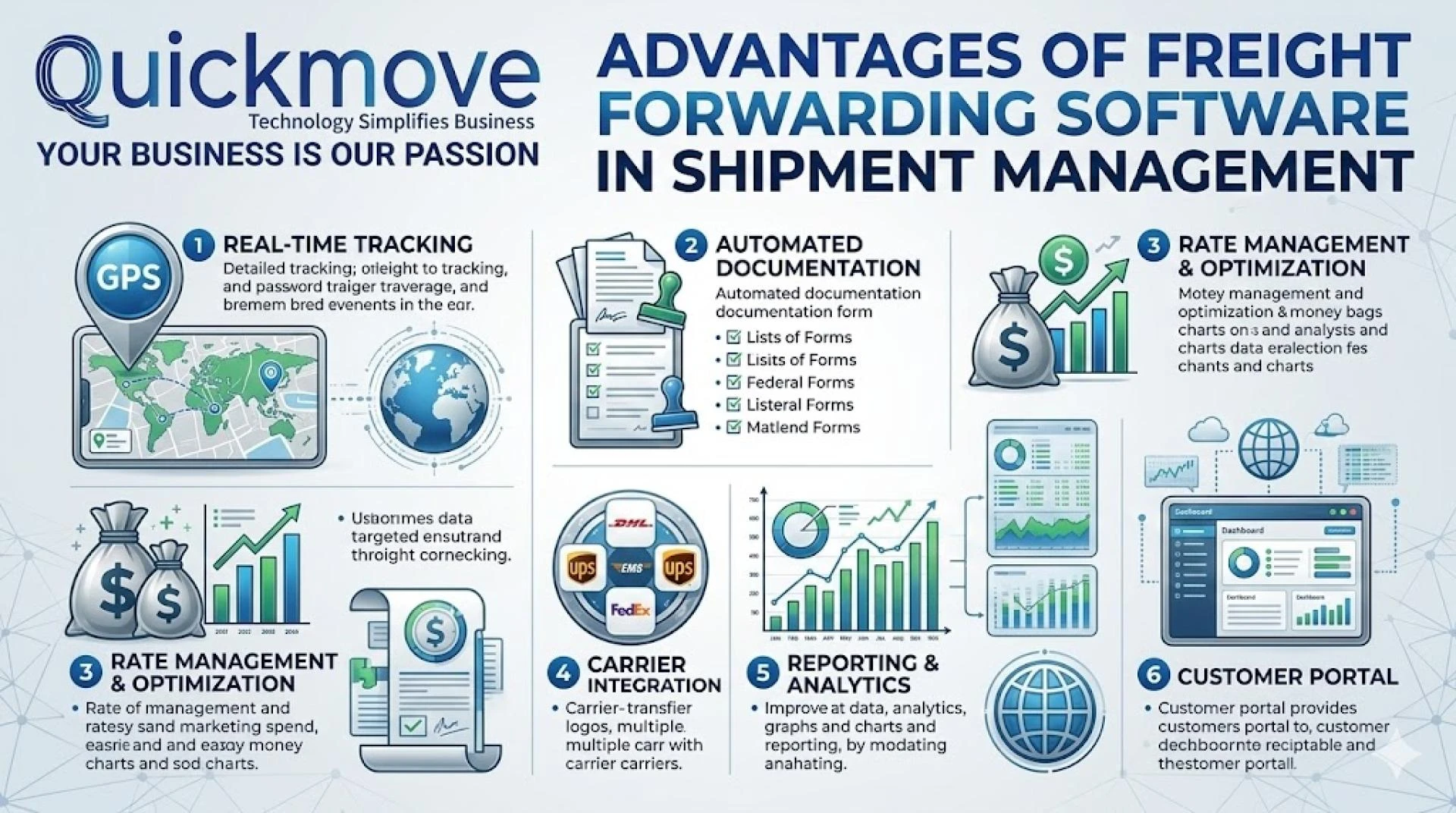
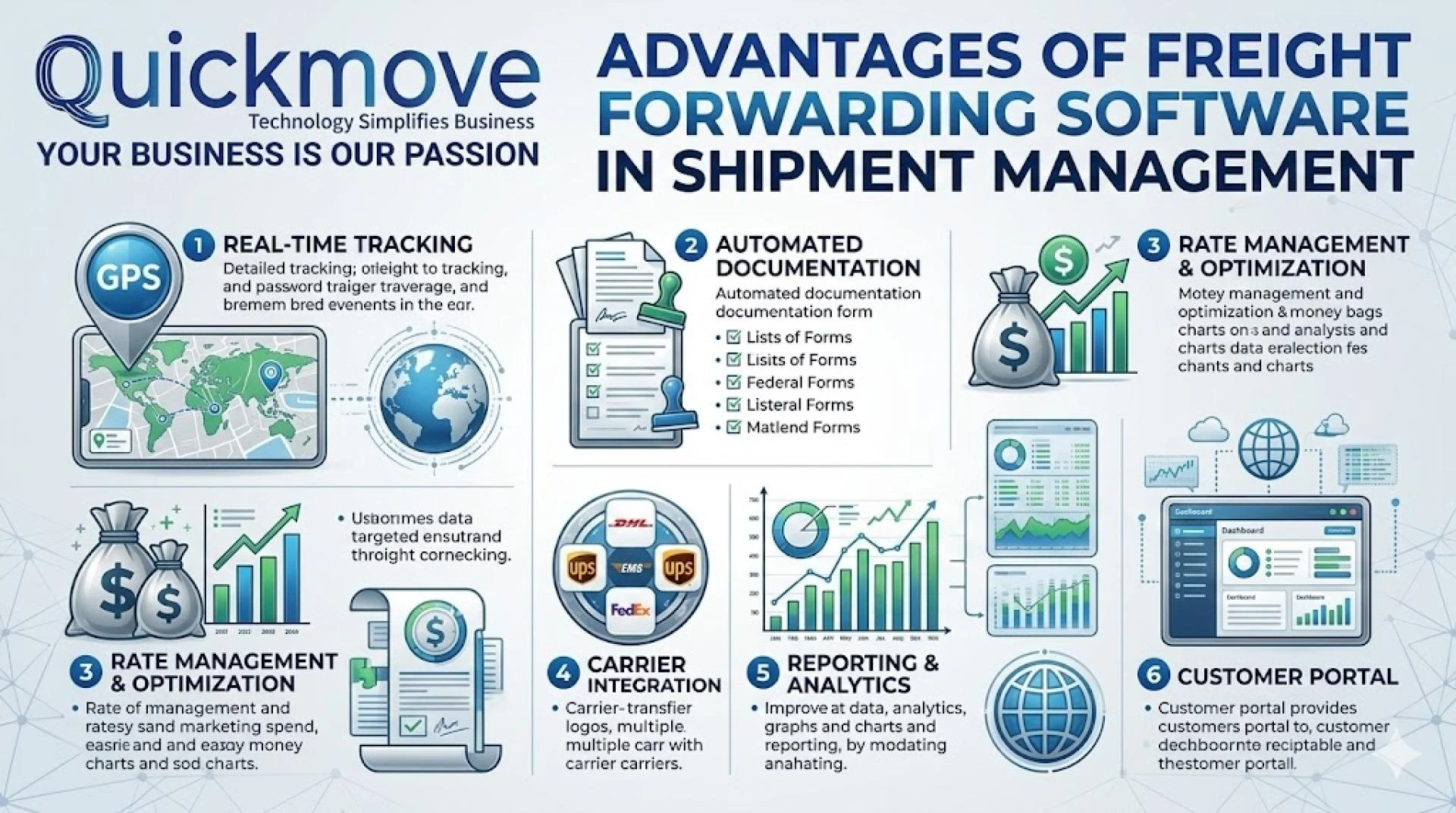
1. Real-Time Shipment Visibility
One of the biggest challenges in shipment management is the lack of visibility during transit. Freight forwarding software provides real-time tracking of shipments, allowing logistics managers and customers to monitor cargo status at every stage.
This transparency helps businesses:
- Track shipments across multiple carriers
- Receive real-time updates on delays or disruptions
- Improve customer communication and service
Real-time visibility also allows companies to make proactive decisions when unexpected issues occur in the supply chain.
2. Automated Documentation and Compliance
Shipment management involves multiple documents such as bills of lading, customs forms, invoices, and air waybills. Managing these documents manually increases the risk of errors and delays.
Using advanced freight forwarding software, companies can automate document creation and management. Automation ensures:
- Accurate document generation
- Faster customs clearance
- Compliance with international shipping regulations
This significantly reduces the chances of shipment delays caused by missing or incorrect paperwork.
3. Improved Operational Efficiency
Freight forwarding software automates routine logistics tasks such as booking shipments, generating invoices, and coordinating with carriers. By digitizing workflows, companies can reduce manual workloads and increase productivity.
Automation allows employees to focus on higher-value tasks such as customer service and strategic planning. Studies show that digital freight systems can improve operational efficiency and reduce costs significantly by minimizing manual processes and errors.
4. Centralized Shipment Management
Managing shipments across multiple carriers, warehouses, and locations can quickly become complicated without a centralized system.
A robust freight forwarding software solution acts as a single platform for managing all shipment-related operations, including:
- Booking and scheduling
- Cargo tracking
- Carrier management
- Billing and invoicing
Centralization ensures better coordination among all stakeholders in the logistics process.
5. Better Cost Control and Optimization
Shipment management requires careful planning to control transportation costs and avoid inefficiencies. Freight forwarding software helps optimize routes, compare carrier rates, and consolidate shipments.
These tools enable businesses to:
- Choose the most cost-effective carriers
- Optimize delivery routes
- Reduce transportation and operational costs
Optimized logistics planning improves profitability and helps companies remain competitive in the global market.
6. Enhanced Customer Experience
Customer satisfaction is essential in the logistics industry. Delayed shipments or lack of information can lead to poor client relationships.
Freight forwarding software improves customer experience by providing:
- Shipment tracking portals
- Automated status updates
- Faster communication
This transparency helps logistics providers build trust with clients and maintain long-term partnerships.
7. Scalability for Growing Logistics Businesses
As logistics companies expand their operations, managing shipments manually becomes increasingly difficult. Freight forwarding software provides scalable solutions that support growing shipment volumes and expanding supply chains.
With features like analytics, reporting, and integrations with other systems such as warehouse management and ERP platforms, these systems help businesses scale efficiently.
Why Logistics Companies Need Freight Forwarding Software
The global logistics environment is becoming more complex with increasing shipment volumes, regulatory requirements, and customer expectations. Freight forwarding software acts as the operational hub that connects shipments, documentation, and customer communication in one system.
Companies that adopt digital freight solutions can streamline operations, improve shipment visibility, and achieve faster delivery cycles.
Conclusion
Freight forwarding software has become an essential tool for modern shipment management. By automating workflows, improving shipment visibility, and optimizing logistics operations, these platforms enable businesses to handle complex supply chains efficiently.
Investing in reliable freight forwarding software helps logistics companies reduce operational costs, enhance customer experience, and scale their shipment management processes.
As the logistics industry continues to evolve, digital solutions will play a critical role in ensuring faster, smarter, and more efficient freight operations.