Waterproofing is one of the most critical components of any swimming pool project. Even the most attractive pool design can develop serious structural problems if water protection systems fail. Therefore, every professional swimming pool construction company prioritizes advanced waterproofing technologies during construction to ensure long-term durability and reliable performance.
Modern swimming pools face constant water pressure, temperature fluctuations, and environmental exposure. As a result, waterproofing systems must provide continuous protection against leaks, cracks, and moisture penetration. Industry studies indicate that waterproofing-related issues account for a significant percentage of pool maintenance challenges worldwide.
Additionally, many providers of swimming pool construction services now integrate multiple waterproofing layers to improve structural integrity and reduce future repair requirements.
Why Is Waterproofing Essential in Swimming Pool Construction?
The answer is simple. Waterproofing protects the pool structure from water damage.
Without proper protection, water can penetrate concrete surfaces, weaken structural components, and create long-term maintenance issues. Moreover, moisture intrusion may affect surrounding landscaping, decks, and nearby infrastructure.
Therefore, advanced waterproofing systems have become a standard requirement in modern pool construction.
How Do Advanced Waterproofing Systems Work?
Waterproofing systems create protective barriers between the pool structure and surrounding environment.
These barriers prevent water migration while maintaining structural flexibility. Furthermore, modern technologies accommodate slight structural movement without losing effectiveness.
Key Objectives of Waterproofing
- Prevent water leakage
- Protect reinforcement steel
- Increase structural lifespan
- Reduce maintenance requirements
- Improve long-term performance
As a result, proper waterproofing contributes directly to pool durability.
What Are the Most Common Waterproofing Technologies?
Cementitious Waterproofing Systems
Cementitious coatings remain one of the most widely used solutions.
These systems provide:
- Strong adhesion to concrete
- Excellent water resistance
- Long-term durability
- Easy application
Many providers of swimming pool construction services use cementitious systems as a primary waterproofing layer because they integrate well with concrete structures.
Liquid Membrane Waterproofing
Liquid-applied membranes create a seamless protective layer across pool surfaces.
Key advantages include:
- Flexible coverage
- Crack-bridging capability
- Uniform protection
- Strong adhesion properties
Furthermore, these systems perform well in complex pool shapes and custom designs.
Crystalline Waterproofing Technology
Crystalline systems work differently from surface coatings.
Instead of creating an external barrier, they react with moisture and concrete minerals to form crystals within the structure.
Benefits include:
- Internal protection
- Self-sealing capabilities
- Long-lasting performance
- Enhanced structural durability
Consequently, crystalline waterproofing has become increasingly popular in modern pool construction.
Why Are Flexible Membranes Important?
Swimming pools experience expansion and contraction due to temperature changes.
Therefore, waterproofing systems must remain flexible.
Advantages of Flexible Membranes
- Accommodate structural movement
- Reduce crack formation risks
- Improve waterproof integrity
- Extend service life
Research in aquatic construction projects consistently highlights the importance of flexible protection systems for long-term durability.
How Does Waterproofing Protect Reinforcement Steel?
Concrete structures contain steel reinforcement bars that provide strength.
When water reaches these bars, corrosion can occur.
Potential Risks Without Waterproofing
- Rust formation
- Structural weakening
- Concrete cracking
- Reduced lifespan
Advanced waterproofing systems minimize these risks by preventing moisture penetration.
Therefore, they contribute significantly to structural stability.
What Role Does Surface Preparation Play?
Even the best waterproofing materials require proper surface preparation.
Essential Preparation Steps
- Clean the concrete surface.
- Remove loose particles.
- Repair structural defects.
- Seal visible cracks.
- Ensure proper curing conditions.
These steps improve adhesion and maximize waterproofing effectiveness.
Consequently, surface preparation remains a critical phase of the construction process.
How Is Waterproofing Applied During Pool Construction?
A professional swimming pool construction company typically follows a multi-stage process.
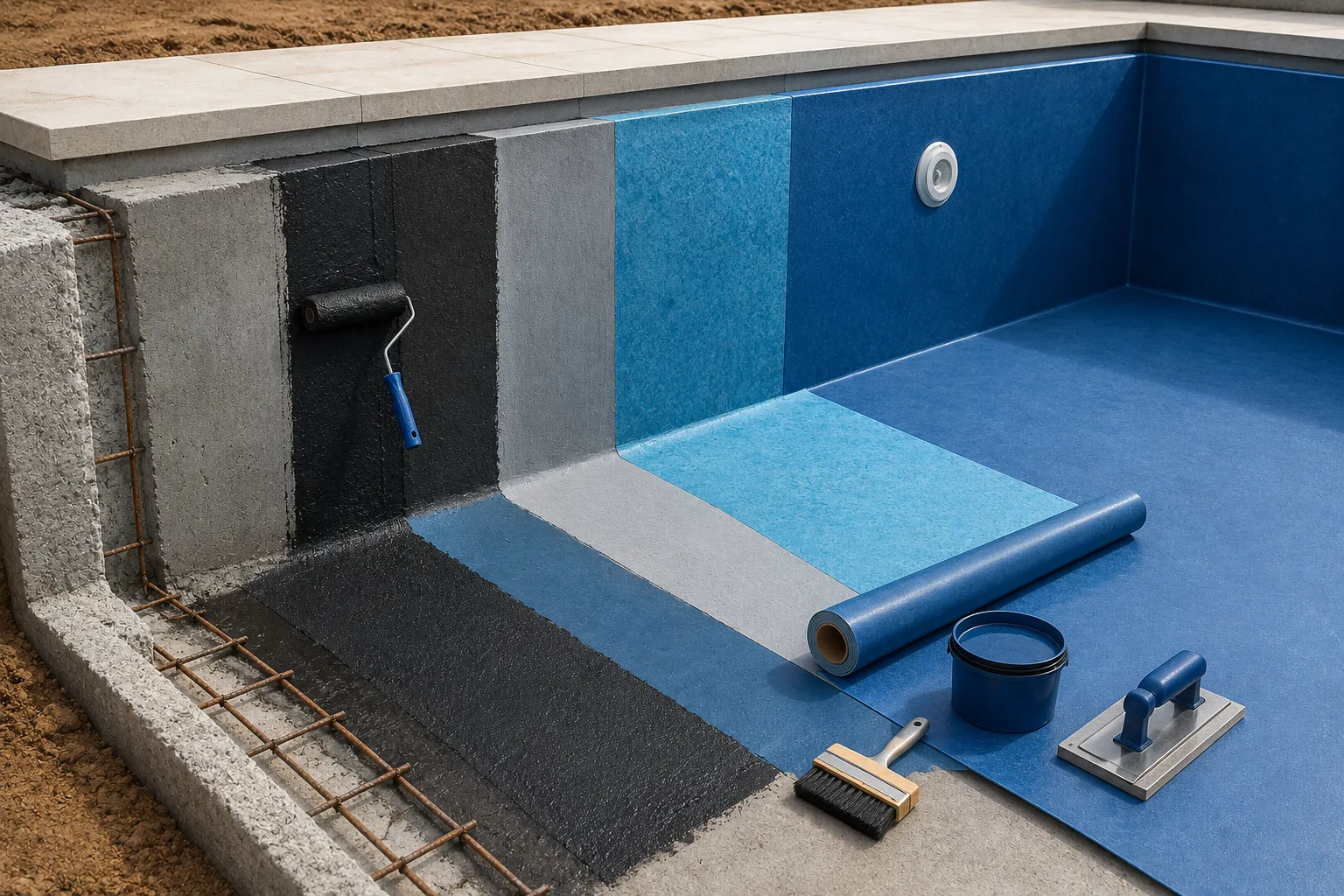
Typical Waterproofing Sequence
- Structural concrete installation
- Surface inspection
- Crack treatment
- Primary waterproofing layer application
- Secondary protective coating
- Quality testing and inspection
This layered approach improves reliability and performance.
Moreover, quality control measures help verify waterproofing integrity before pool commissioning.
Why Are Leak Tests Important?
Leak testing confirms the effectiveness of waterproofing systems.
Benefits of Leak Testing
- Identifies hidden weaknesses
- Verifies system performance
- Prevents future water loss
- Improves project quality
Industry standards recommend comprehensive testing before finishing materials are installed.
As a result, contractors can address any issues early in the process.
How Do Modern Waterproofing Systems Improve Sustainability?
Sustainable construction practices increasingly influence swimming pool projects.
Environmental Benefits
- Reduced water loss
- Longer structural lifespan
- Lower maintenance requirements
- Improved resource efficiency
Because of these advantages, advanced waterproofing contributes to sustainable pool infrastructure development.
What Waterproofing Challenges Do Commercial Pools Face?
Commercial pools often experience higher usage levels and greater operational demands.
Common Challenges
- Continuous water pressure
- High user traffic
- Environmental exposure
- Equipment vibration
- Temperature fluctuations
Therefore, commercial facilities often require enhanced waterproofing solutions compared to residential pools.
How Does Waterproofing Support Long-Term Pool Performance?
Long-term performance depends heavily on moisture protection.
A reliable waterproofing system helps maintain:
- Structural stability
- Water retention
- Surface integrity
- Equipment reliability
For additional technical information, the Wikipedia article on waterproofing provides useful background knowledge: https://en.wikipedia.org/wiki/Waterproofing
Moreover, experienced providers of swimming pool construction services recognize that waterproofing quality directly affects overall project success.
Conclusion
Advanced waterproofing systems play a crucial role in modern swimming pool construction. They protect structures from moisture damage, improve durability, and support long-term operational performance.
By partnering with a professional swimming pool construction company, property owners can ensure that appropriate waterproofing technologies are integrated throughout the construction process. Ultimately, effective waterproofing remains one of the most valuable investments in the longevity and reliability of any swimming pool project.
FAQs
1. What is the best waterproofing system for swimming pools?
The best solution depends on project requirements. Common options include cementitious coatings, liquid membranes, and crystalline waterproofing systems.
2. Why is waterproofing important in swimming pools?
Waterproofing prevents leakage, protects structural components, and improves long-term durability.
3. How often should pool waterproofing be inspected?
Regular inspections should be conducted as part of routine maintenance to identify potential issues early.
4. Can waterproofing prevent concrete cracks?
While it cannot prevent all cracks, flexible waterproofing systems help accommodate structural movement and reduce crack-related water penetration.
5. How do contractors test waterproofing systems?
Contractors typically perform leak tests and quality inspections before completing final finishing stages.
Image Alt Text:
Advanced swimming pool waterproofing system with protective membrane application, reinforced concrete structure, and professional construction process.