
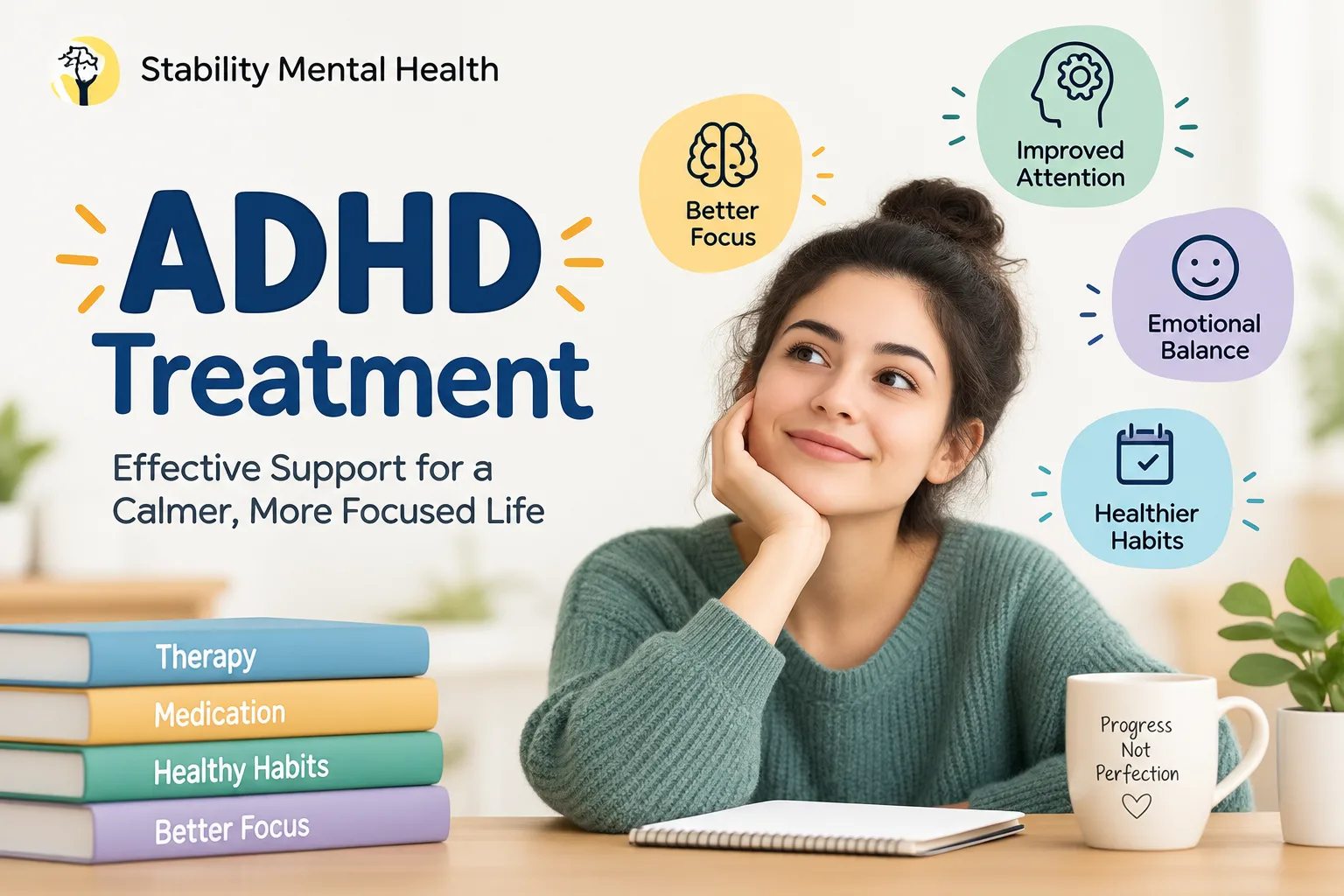
Attention-deficit/hyperactivity disorder (ADHD) is a neurodevelopmental condition that can affect attention, organization, impulse control, and activity levels. While ADHD can create challenges at school, work, relationships, and home, appropriate treatment and ongoing support can help people manage symptoms and build effective daily routines.
Understanding ADHD Treatment
ADHD treatment is not the same for everyone. A qualified healthcare professional typically considers a person's symptoms, age, daily responsibilities, medical history, and individual goals when developing a treatment plan. Treatment may involve medication, behavioral strategies, therapy, lifestyle adjustments, or a combination of approaches.
The goal is generally to reduce difficulties associated with ADHD while helping individuals function more effectively in their everyday lives.
Medication as a Treatment Option
For some individuals, medication can be an important part of ADHD management. Stimulant medications are commonly prescribed, while certain non-stimulant medications may also be considered. A healthcare professional can determine whether medication is appropriate and monitor its effects over time.
Medication should only be taken as prescribed. Regular follow-ups can help healthcare providers evaluate benefits, side effects, and whether adjustments are needed.
Behavioral Therapy and Counseling
Behavioral approaches can help individuals develop practical strategies for managing ADHD-related challenges. Therapy may focus on organization, time management, emotional regulation, communication, and establishing consistent routines.
For children and adolescents, behavioral interventions may also involve parents, teachers, or caregivers. Adults may benefit from approaches that address workplace organization, relationships, responsibilities, and personal goals.
Building Helpful Daily Habits
Small changes in everyday routines can complement professional treatment. Using calendars, reminders, written to-do lists, structured schedules, and organized workspaces can make tasks easier to manage. Breaking larger projects into smaller steps may also help reduce feelings of being overwhelmed.
Regular physical activity, adequate sleep, balanced nutrition, and consistent routines can support overall well-being. These habits should be viewed as complementary strategies rather than replacements for professional ADHD care.
Finding the Right Support
Effective ADHD management often requires an individualized approach. Symptoms and challenges can change throughout different stages of life, so treatment plans may need to be reviewed and adjusted over time.
Stability Mental Health provides mental health support designed around individual needs. Working with qualified professionals can help individuals better understand their symptoms, explore appropriate treatment options, and develop strategies for managing ADHD in everyday life.
Moving Toward Better ADHD Management
ADHD treatment is an ongoing process rather than a single solution. With professional guidance, practical strategies, and appropriate support, individuals can work toward improved organization, focus, emotional regulation, and daily functioning.
If you or someone you know is experiencing persistent difficulties related to attention, impulsivity, or hyperactivity, speaking with a qualified mental health professional can be a useful first step toward understanding available treatment options.