
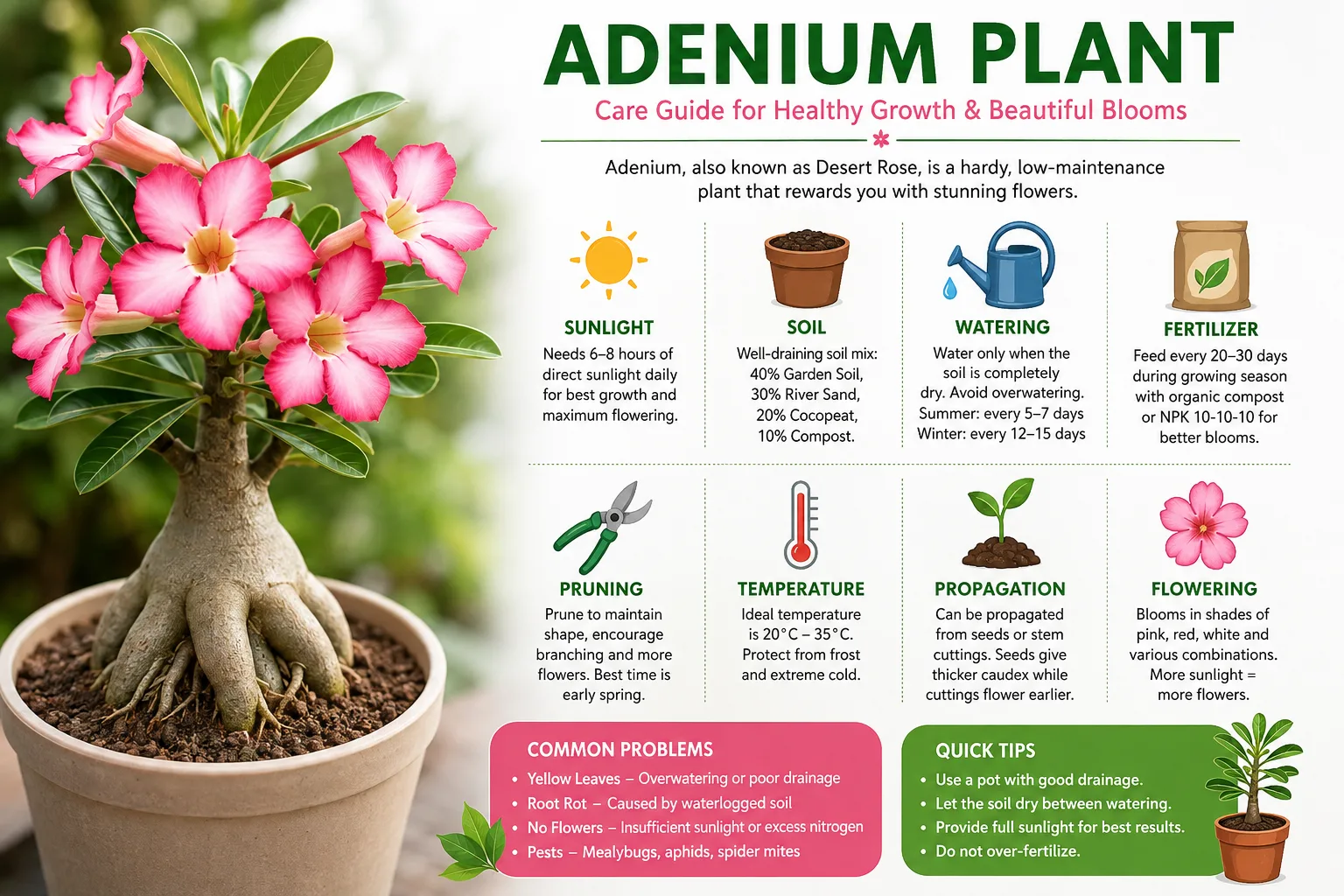
Adenium Plant: Everything You Need to Know
The Adenium plant, commonly known as the Desert Rose, is one of the most beautiful flowering succulents grown in homes and gardens. It is loved for its thick swollen trunk, colorful trumpet-shaped flowers, and low-maintenance nature. Native to Africa and the Arabian Peninsula, the Adenium plant thrives in warm climates and is perfect for balconies, terraces, gardens, and indoor spaces with bright sunlight.
Whether you're a beginner or an experienced gardener, learning how to care for an Adenium plant will help you enjoy vibrant blooms throughout the growing season.
What is an Adenium Plant?
The Adenium plant belongs to the Apocynaceae family and is a succulent shrub. It stores water in its thick trunk, making it highly drought-tolerant. The plant produces stunning flowers in shades of pink, red, white, and even bi-colored varieties.
Key Features
- Thick swollen trunk (Caudex)
- Beautiful trumpet-shaped flowers
- Drought-resistant
- Excellent for bonsai styling
- Easy to maintain
- Long flowering season
Types of Adenium Plants
There are several popular varieties available for gardeners.
1. Adenium obesum
The most commonly grown species with bright pink or red flowers.
2. Adenium Arabicum
Known for its massive trunk and compact growth.
3. Adenium Somalense
Produces taller plants with narrow leaves.
4. Hybrid Adeniums
Available in numerous flower colors including:
- Deep Red
- White
- Pink
- Purple
- Double Petal Flowers
- Striped Flowers
How to Grow an Adenium Plant
Growing an Adenium plant is quite simple if you provide the right environment.
Sunlight Requirements
Adenium plants love full sunlight.
Ideal sunlight:
- 6–8 hours daily
- South-facing balcony
- Sunny terrace
- Outdoor gardens
Without enough sunlight, flowering may reduce significantly.
Best Soil for Adenium Plant
Since Adenium is a succulent, it dislikes waterlogged soil.
A perfect soil mix includes:
- 40% Garden Soil
- 30% River Sand
- 20% Cocopeat
- 10% Compost
You can also use cactus or succulent potting mix for excellent drainage.
Watering Schedule
Overwatering is the biggest reason Adenium plants die.
Summer
Water every 5–7 days.
Winter
Water every 12–15 days.
Always let the soil dry completely before watering again.
Fertilizer for Adenium Plant
Feed your Adenium during the growing season.
Best fertilizers include:
- Organic Compost
- Vermicompost
- Bone Meal
- NPK 10-10-10
- Liquid Seaweed Fertilizer
Apply fertilizer every 20–30 days for better flowering.
Temperature Requirements
Adenium performs best in warm weather.
Ideal temperature:
- 20°C–35°C
Protect the plant from frost and extremely cold temperatures.
Pruning Tips
Pruning encourages more branches and flowers.
Best time to prune:
- Early Spring
- After Flowering
Always use clean, sharp pruning shears.
How to Propagate Adenium Plant
There are two common methods.
Growing from Seeds
- Fresh seeds germinate quickly.
- Produces thicker trunks.
- Ideal for bonsai lovers.
Stem Cuttings
- Faster method.
- Flowers earlier.
- Easy for beginners.
Repotting Adenium Plant
Repot every 2–3 years.
Signs your plant needs repotting:
- Roots emerging from drainage holes
- Slow growth
- Compact soil
- Smaller blooms
Choose a pot with excellent drainage holes.
Common Problems
Yellow Leaves
Possible reasons:
- Overwatering
- Poor drainage
- Lack of sunlight
Root Rot
Caused by continuously wet soil.
Solution:
- Remove rotten roots
- Repot into dry succulent mix
No Flowers
Reasons include:
- Insufficient sunlight
- Too much nitrogen fertilizer
- Frequent watering
Pests That Affect Adenium
Common pests include:
- Mealybugs
- Spider mites
- Aphids
- Scale insects
Use neem oil spray or insecticidal soap to control infestations.
Is Adenium Plant Safe?
The sap of the Adenium plant is toxic if ingested and may cause skin irritation.
Safety tips:
- Wear gloves while pruning.
- Keep away from children and pets.
- Wash hands after handling.
Benefits of Growing an Adenium Plant
Some advantages include:
- Beautiful ornamental flowers
- Low water requirement
- Excellent bonsai plant
- Long lifespan
- Easy maintenance
- Heat tolerant
- Perfect for container gardening
Indoor vs Outdoor Growing
IndoorOutdoorNeeds bright sunlight near a windowBest performanceFewer flowersHeavy floweringSlower growthFaster growthProtect from overwateringThrives in warm weatherFrequently Asked Questions
How often should I water an Adenium plant?
Water only when the soil is completely dry. During summer, once every 5–7 days is usually enough, while winter requires less frequent watering.
Does the Adenium plant need full sun?
Yes. It grows best with at least 6–8 hours of direct sunlight daily.
Why is my Adenium plant not flowering?
Common reasons include insufficient sunlight, overwatering, or excessive nitrogen fertilizer.
Can Adenium be grown indoors?
Yes, but place it near a bright, sunny window where it receives several hours of direct sunlight.
Is the Adenium plant poisonous?
Yes. The sap is toxic if ingested and may irritate the skin, so handle it with care.
Conclusion
The Adenium plant is an excellent choice for anyone looking to add a unique, colorful, and low-maintenance succulent to their home or garden. With the right combination of full sunlight, well-draining soil, careful watering, and occasional feeding, your Desert Rose can reward you with spectacular blooms year after year. Whether grown in pots, as a bonsai, or in the landscape, the Adenium plant is sure to become a standout feature in any collection.