
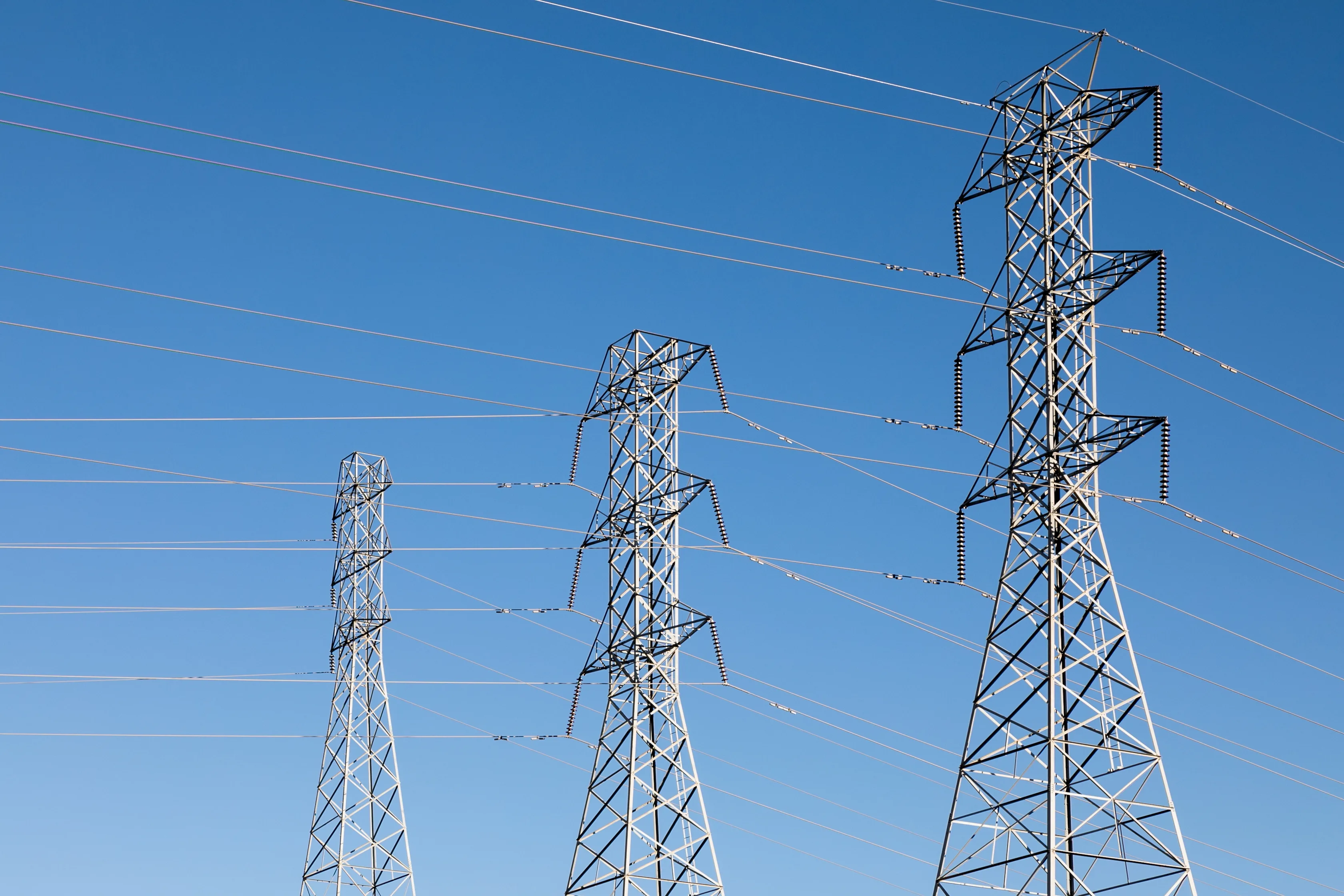
Energy access has come a long way. Today, it's no longer about generating electricity alone, as leading nations are adding solar, wind, storage, electric transport, data centers, and industrial loads faster. This, in turn, has created a gap for clean electricity to reach homes, businesses, and industries.
According to the International Energy Agency, the world today lacks 80 million kilometers of electricity grids, and it aims to fulfill this need by 2040 to meet national energy and climate goals. Additionally, 3,000 GW of renewable power projects are reportedly waiting to start as grid connection queues globally, with around 1,500 GW already in advanced stages. Undeniably, building new lines is out of the question given the time and money spent on multiple things, like land acquisition, environmental reviews, permitting delays, cost-allocation disputes, and even local opposition.
No wonder, reconductoring with advanced conductors is seemingly the most viable option. In this blog, you’ll learn:
- What are advanced conductors
- How advanced conductors are speeding sustainable grid development
- What makes the approach beneficial for renewable energy access
- Where advanced conductors are adding most value in 2026 and beyond
What are Advanced Conductors?
Advanced conductors are overhead power-line conductors designed to carry more electricity than traditional aluminum conductor steel-reinforced wires. Many use lighter, stronger composite cores, including carbon fiber-based materials, instead of conventional steel cores.
This material shift matters, as a lighter core allows more aluminum to be used to carry current. A stronger, low-sag core helps the line maintain clearance at higher operating temperatures. Utilities can push more power through an existing route while reducing thermal sag when a hot conductor droops closer to trees, buildings, or the ground.
Advanced conductors include high-temperature low-sag conductors, aluminum conductor composite core solutions, and other high-capacity designs. The common purpose is the same: more transfer capacity, better efficiency, and better use of existing grid infrastructure.
How Advanced Conductors Speed Up Sustainable Grid Development
The strongest advantage of advanced conductors is speed. So, instead of planning a new corridor from scratch, a utility can replace old conductors across existing towers and rights-of-way where engineering conditions allow. This very process is called reconductoring. According to research published in the Proceedings of the National Academy of Sciences, large-scale reconductoring with advanced composite-core conductors is cost-effective for double transmission capacity within existing rights-of-way.
The U.S. Department of Energy has also recognized reconductoring with aluminum conductor composite capable of doubling the carrying capacity of common conductors. For grid planners, this approach helps create a middle path that doesn't require new transmission. However, it can deliver capacity faster while new lines are still planned and therefore reduces the pressure on congested routes, supports renewable integration, and improves access to low-cost power generation.
Why this matters for renewable energy access
Renewable energy is built with the strongest resource and not where the demand is highest. Solar may be located in open, high-irradiance regions, while wind setups may be offshore, in plains, or in remote corridors. Thus, without enough transmission, the resources remain heavily underused.
This is where advanced conductors boost the carrying capacity of lines already connecting generation zones to demand centers. Higher-capacity reconductoring helps reduce curtailment, improve project economics, and shorten the wait for grid connection.
For consumers, such better transmission leads to lower congestion costs, fewer reliability risks, and wider access to cleaner electricity. Besides, higher-efficiency conductors also reduce line losses and lead to less wasted electricity across the delivery chain. This, in turn, supports cost savings and emissions reduction over thousands of circuit kilometres.
Building policy momentum
Advanced conductors are fast moving from a tech requirement to a policy and investment priority. Reportedly, in March 2026, the U.S. Department of Energy announced around $1.9 billion for the SPARK funding opportunity, focused on accelerated reconductoring and other advanced transmission technology upgrades.
The program prioritizes those projects using existing rights-of-way, expanding power transfer capability, improving reliability, and reducing consumer cost impact. Above all, it's all about establishing faster grid capacity, which is now tied to economic growth, energy affordability, data center demand, industrial competitiveness, and climate goals. CTC Global also reported that its ACCC Conductor technology has already been deployed across 140,000 miles of transmission lines over 70 countries.
Where Advanced Conductors deliver the most value
Advanced conductors work best for existing corridors constrained by conductor thermal limits, where towers support the upgrades and demand for capacity is urgent.
Hence, they are relevant for renewable integration zones, urban load-growth corridors, aging transmission lines, and regions where new land acquisition seems difficult. Yet, they don’t solve every grid problem, as some projects require tower reinforcement, substation upgrades, voltage support, and even new transmission corridors.
Thus, a strong grid strategy should always combine reconductoring, new lines, grid-enhancing technologies, storage, and demand response to make an impact.
Final Thoughts
Advanced conductors offer one of the fastest ways to expand access to clean, reliable electricity. They allow utilities to move more power through existing infrastructure, reduce bottlenecks, support renewable integration, and reduce the need for new corridors in selected cases.
As electricity demand rises, sustainable energy access will depend as much on transmission capacity as on generation capacity. Advanced Conductors give grid operators a practical tool to modernise the system now, while longer-term transmission expansion continues in parallel.