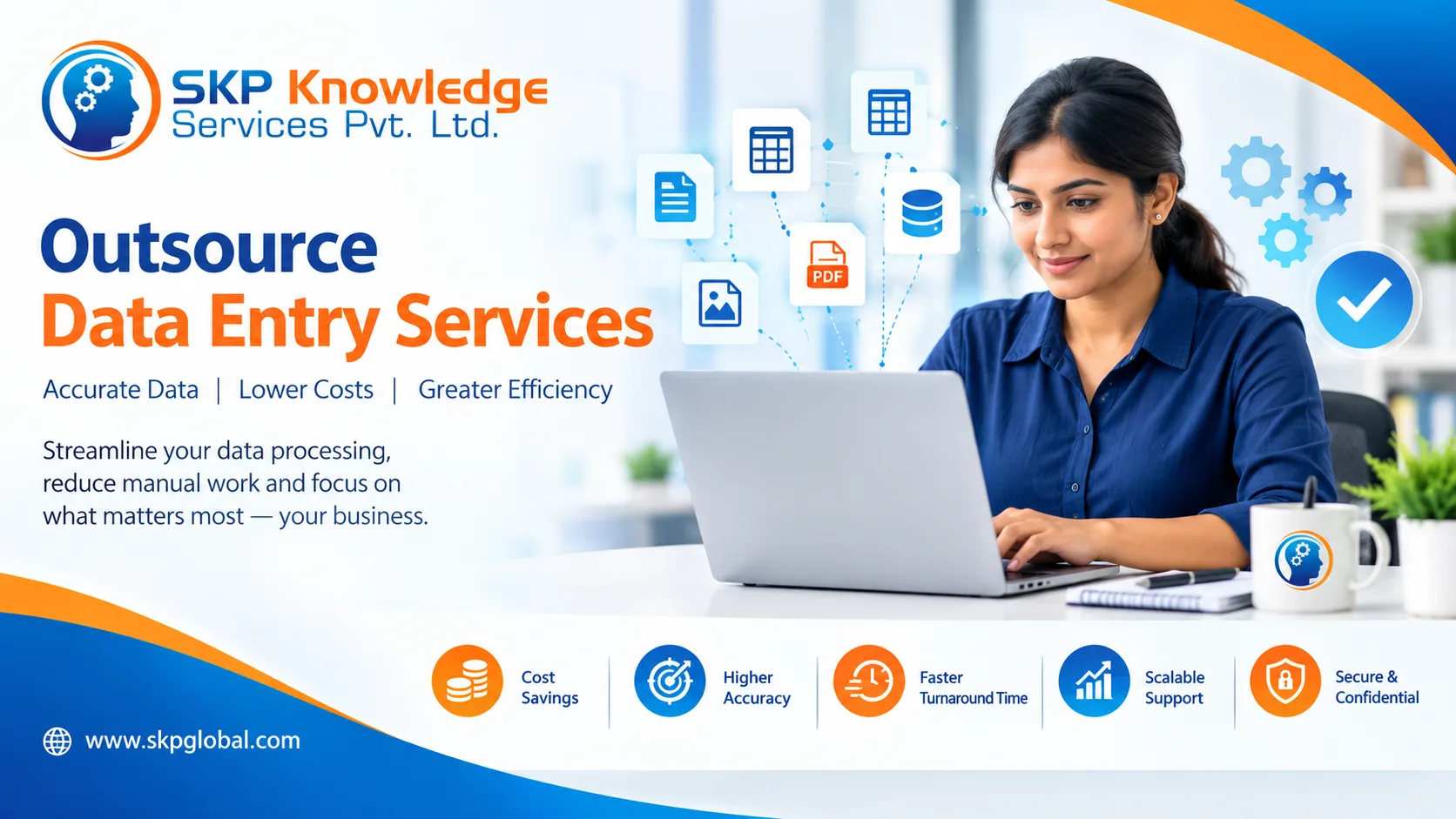
In today's digital business environment, managing large volumes of data accurately and efficiently is essential for success. Businesses across industries handle customer information, invoices, product details, financial records, forms, and other important documents every day. Processing this information manually can consume valuable time, increase operational costs, and lead to data entry errors.
This is why many organizations choose to outsource data entry services to experienced service providers. Outsourcing helps businesses streamline their workflows, improve data accuracy, reduce administrative workloads, and focus on their core business activities.
SKP Global provides data management and business process support solutions designed to help organizations manage their information efficiently and maintain organized digital records.
What Are Outsource Data Entry Services?
Outsource data entry services involve assigning data entry tasks to an external service provider instead of managing all activities internally. These services help businesses convert, organize, update, and maintain information in digital formats.
Depending on business requirements, data entry outsourcing may include entering information into spreadsheets, updating databases, processing online forms, digitizing paper documents, maintaining product catalogs, and managing customer records.
By working with an experienced outsourcing partner, businesses can handle routine data processing tasks more efficiently while allocating their internal resources to activities that support growth and profitability.
Why Do Businesses Outsource Data Entry Services?
Managing data internally requires trained employees, suitable software, quality control procedures, and ongoing supervision. As data volumes increase, these responsibilities can become challenging.
Outsourcing offers a flexible alternative by allowing businesses to access dedicated data entry support according to their needs. Whether a company processes hundreds of records or thousands of documents, outsourcing can help create a more structured and manageable workflow.
Businesses may outsource data entry to reduce repetitive work, improve turnaround times, support growing operations, and maintain consistent data management practices.
Key Benefits of Outsourcing Data Entry Services
1. Cost Savings
Hiring and training an in-house team involves salaries, employee benefits, infrastructure, software, and administrative expenses. Outsourcing can reduce some of these costs by providing access to external resources without requiring a comparable internal team.
Businesses can select service arrangements that align with their workload and budget.
2. Improved Data Accuracy
Accurate information is essential for reporting, customer management, inventory control, and business decision-making. Professional data entry providers can use defined procedures, validation rules, and quality checks to help minimize errors.
Consistent review processes also make it easier to identify missing information, duplicate entries, and formatting inconsistencies.
3. Increased Productivity
Data entry often involves repetitive activities that take employees away from more strategic responsibilities. Outsourcing these tasks allows internal teams to spend more time on customer service, sales, planning, and business development.
This division of responsibilities can help organizations improve overall productivity.
4. Faster Turnaround Time
Large data entry projects can place significant pressure on internal teams, particularly when deadlines are approaching. An outsourcing partner can provide additional processing capacity based on the project's scope and agreed delivery schedule.
Clear instructions, defined milestones, and quality checks help support timely project completion.
5. Scalability and Flexibility
Business workloads change over time. Seasonal demand, new product launches, expansion, and large document collections can increase data processing requirements.
Outsourcing allows businesses to adjust the level of support according to project needs instead of continually expanding or reducing their internal workforce.
6. Access to Skilled Professionals
Data entry outsourcing providers may have experience handling different document types, data formats, and industry-specific requirements. This experience can help businesses establish consistent processes for organizing and maintaining information.
The right provider should also understand the client's formatting standards, validation rules, confidentiality requirements, and delivery expectations.
Types of Data Entry Services
Businesses can outsource several types of data entry and data processing tasks, including:
- Online Data Entry: Entering information into websites, online systems, and web-based applications.
- Offline Data Entry: Processing information from physical documents, printed forms, and other offline sources.
- Data Conversion: Converting information from PDFs, scanned files, images, and paper documents into structured digital formats.
- Product Data Entry: Managing product names, descriptions, prices, specifications, and other e-commerce catalog information.
- Invoice and Form Processing: Capturing relevant information from invoices, applications, surveys, and business forms.
- Database Management: Updating existing records, correcting inconsistencies, and organizing structured information.
- Document Digitization: Converting paper-based information into searchable and accessible digital records.
- Data Cleansing: Identifying duplicate records, correcting formatting issues, and improving data consistency.
The specific services required depend on the nature of the business, the volume of information, and the desired output format.
Which Industries Benefit from Data Entry Outsourcing?
Data entry outsourcing can support organizations across many industries.
E-commerce: Online retailers can maintain product catalogs, update inventory information, and organize product descriptions.
Healthcare Administration: Authorized service providers can support administrative data processing involving healthcare records, subject to applicable privacy and security requirements.
Real Estate: Businesses can organize property details, listing information, document records, and customer databases.
Finance and Accounting: Organizations can process invoices, expense records, transaction details, and other financial documents with appropriate access controls.
Education: Schools, training institutions, and educational service providers can digitize forms, manage student information, and organize academic records.
Logistics and Manufacturing: Companies can maintain shipment details, inventory records, order information, and supplier databases.
With clearly defined procedures and appropriate safeguards, outsourced data entry can help organizations manage information more consistently.
How to Choose the Right Data Entry Outsourcing Company
Selecting the right service provider is important for maintaining data quality, protecting confidential information, and meeting project deadlines.
Consider the following factors before making a decision:
- Experience and Expertise: Review the provider's experience with similar projects and document formats.
- Quality Assurance: Ask about data validation, error correction, and review procedures.
- Data Security: Understand how the provider manages confidential information, user access, data transfers, and storage.
- Scalability: Confirm whether the provider can accommodate changing workloads and project requirements.
- Communication: Choose a partner that provides clear updates, responds to queries, and documents project expectations.
- Turnaround Time: Establish realistic delivery schedules based on data volume and complexity.
- Pricing Transparency: Review the pricing structure, project scope, revision policies, and any additional charges.
A reliable outsourcing relationship should be built on clear expectations, measurable quality standards, and regular communication.
Best Practices for Successful Data Entry Outsourcing
To achieve better results, businesses should prepare their projects carefully before outsourcing.
Start by defining the project scope, including the type of information to be processed, the expected volume, and the final delivery format. Provide sample documents, formatting guidelines, and clear instructions for handling incomplete or inconsistent records.
Establish quality benchmarks and agree on how errors will be identified and corrected. For sensitive information, define appropriate access permissions, confidentiality obligations, retention periods, and secure data transfer procedures.
Starting with a small pilot project can also help businesses evaluate quality, communication, and turnaround time before assigning larger volumes of work.
Conclusion
Choosing to outsource data entry services can help businesses reduce repetitive workloads, improve data organization, and use internal resources more effectively. From product catalog management and invoice processing to document digitization and database updates, outsourcing provides a flexible approach to handling growing data requirements.
The key to success is choosing a suitable service provider with clear quality standards, appropriate security practices, and an understanding of your business needs.
SKP Global supports businesses with data management and processing solutions designed to improve operational efficiency. If your organization needs help managing large volumes of information, explore professional data entry outsourcing options that align with your project requirements.
Frequently Asked Questions
What are the main benefits of outsourcing data entry services?
The main benefits include potential cost savings, improved data consistency, increased productivity, flexible resource allocation, and support for handling large volumes of information.
Is data entry outsourcing suitable for small businesses?
Yes. Small businesses can outsource specific tasks or projects when maintaining a dedicated in-house team is impractical. The service scope can be adjusted to suit their needs and budget.
What types of documents can be processed?
Depending on the provider's capabilities, documents may include invoices, forms, spreadsheets, product catalogs, customer records, scanned documents, and PDF files.
How can businesses protect their data when outsourcing?
Businesses should evaluate the provider's security procedures, confidentiality agreements, access controls, data transfer methods, and data retention practices before sharing sensitive information.
How do I get started with data entry outsourcing?
Identify your data processing requirements, estimate the project volume, prepare sample files and instructions, and discuss quality standards, pricing, security, and delivery timelines with a suitable service provider.