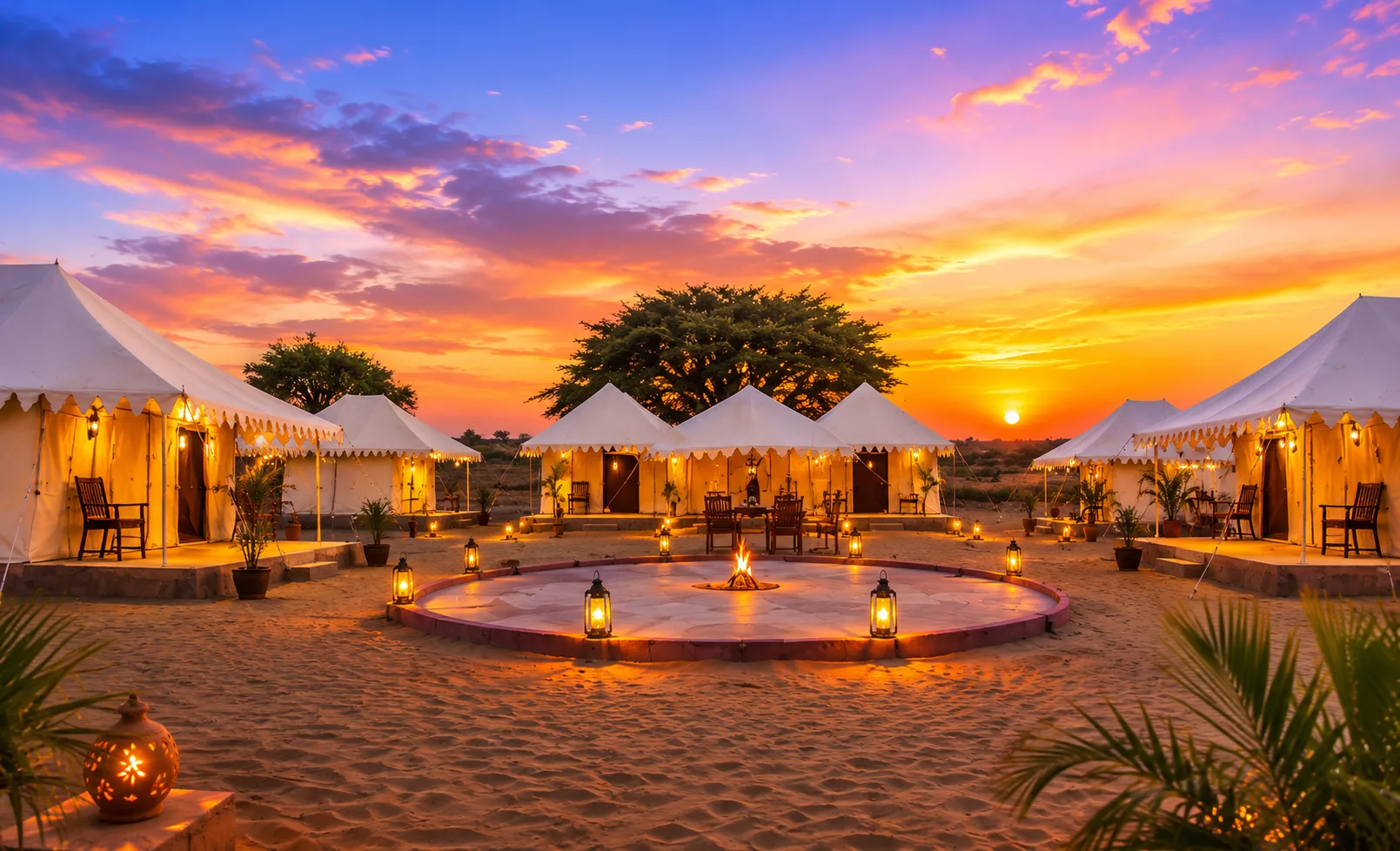
A photo trip does not require a complicated itinerary or expensive equipment. A useful creative challenge is to choose one subject and photograph it in several different ways. In the Thar Desert, that subject might be a line of dunes, a track in the sand, a doorway, a camel silhouette or the changing edge between shade and light.
This approach gives a short stay a visual structure. Instead of taking hundreds of unrelated pictures, you create a small collection that tells a story. The project also encourages you to slow down and notice how one subject changes with time, viewpoint and weather.
Lohagarh Desert Resort’s official experiences page mentions photography among its desert experiences. The resort is located in the Khuri area of Jaisalmer district; confirm current activity options and locations directly before you plan a photo session around them.
Choose one subject before you start
A good subject is simple enough to revisit. You might choose the curve of a dune, the texture of sand, a desert plant, a tent detail or the outline of a person against the horizon. Avoid trying to photograph everything at once.
Write down why you chose it. Perhaps you are interested in how shadows move, how a surface holds footprints or how a familiar shape looks at different distances. A one-sentence intention can guide the pictures you take and help you decide when the project is complete.
If you are travelling with someone else, you can both photograph the same subject. Later, compare what each person noticed. Different cameras or skill levels do not matter; the exercise is about perspective.
Make a small shot list
A short shot list can help you see your subject from several angles. Try a wide view that shows the setting, a medium view that gives the subject context and a close detail that reveals texture or pattern. Then repeat one or two of those views at another time of day.
You might also photograph the subject from a low angle, from farther away or with a foreground detail. Keep the list short enough that you have time to enjoy the place without looking through a screen every few minutes.
The best photo may not be the most dramatic one. A small, quiet image can communicate a sense of scale or atmosphere. Leave room for unexpected frames instead of following the list mechanically.
Observe the light before taking the picture
Light affects colour, contrast and texture. Early or late daylight may create long shadows, while strong overhead light can flatten details. Instead of assuming one time is always best, observe how the light is changing during your visit.
Before raising the camera, look at the scene without it. Notice where the shadows fall, which areas are bright and what draws your eye first. Then decide whether you want to include that feature or move to another angle.
Do not place yourself or a companion in an unsafe position to get a photograph. Stay within permitted areas and follow guidance from the resort or activity staff, especially when moving over sand or near vehicles and animals.
Tell a story through sequence
A set of photographs becomes a story when the images are arranged with intention. Begin with a wide frame that establishes the landscape. Follow it with details that show texture, movement or change. End with an image that suggests the moment has passed or the subject has changed.
For example, a footprint series could start with untouched sand, show a single mark, then capture how wind or later movement alters the surface. A tent detail could begin with a wider view and end with the way fabric catches light.
You can create a sequence with only six or eight photographs. The limit encourages you to choose images carefully and makes it easier to share the story later.
Keep captions specific
A caption should record something that the photograph alone cannot. Instead of writing “beautiful dunes,” note what was happening: “The shadow reached the ridge while we waited for our guide.” A detail about sound, temperature or timing can make the memory more vivid.
If you do not want to write a full caption, record three words after each photo session. You could describe the light, the mood and the detail you noticed. Later, those notes can help you remember why you took a particular frame.
Keep captions honest. Do not claim a specific place or cultural meaning unless you have verified it. If a local guide explains a detail, note their explanation and ask permission before quoting or attributing it publicly.
Photograph people with respect
A desert portrait may feel compelling, but people are not props. Ask permission before taking close-up photographs of local residents, workers, guides or other guests. Explain how you intend to use the image, especially if you plan to publish it.
If someone declines, accept the answer without pressure. You can still photograph hands at work or a wider scene only if the subject is comfortable and the image does not invade privacy. Follow all resort and activity rules.
For cultural performances, check whether photography is allowed and whether flash or movement may disturb performers or other guests. A respectful photographer values the experience as much as the image.
Protect your equipment and your time
Sand can affect cameras and phones, so keep equipment protected when it is not in use. Use a bag or cover that is easy to close and avoid changing lenses in windy conditions if you can. Carry only what you need for the planned session.
Set a time limit for photography. For example, take photographs for one part of the sunset, then put the camera away and enjoy the rest. This helps prevent the project from taking over the whole trip.
If a safari or other activity is part of your plan, follow the operator’s instructions. Do not ask a driver to stop in an unsafe place or leave a designated route for a picture. Confirm activity timings and photography permissions in advance.
Edit with a light touch
When you return, choose a small set of images before editing. Pick photographs that show different parts of the story rather than selecting several frames that look almost identical. Adjust brightness or crop carefully, but avoid changing colours so much that the scene no longer reflects what you saw.
Put the photographs in an order that makes sense. Add brief captions and a title. You might choose a simple phrase such as “One Ridge, Three Lights” or “Footprints Before the Wind.”
If you would like a photography-led visit, review the resort’s desert experiences page, check Swiss tent accommodation details and use the official resort website to ask about current arrangements. Confirm where photography is appropriate and whether any activity needs to be booked.
FAQs
Can I plan a photography-focused stay at Lohagarh Desert Resort in Jaisalmer?
You can plan a personal photo project around subjects such as light, texture or landscape, but specific locations and activity schedules should be confirmed. Lohagarh Desert Resort mentions photography on its experiences page. Guests should contact the resort to learn what is currently available and follow staff guidance about suitable places and times for photography.
What camera equipment should I bring to the desert in Jaisalmer?
Bring equipment you are comfortable carrying and protect it from sand when it is not in use. A phone or one camera with a versatile lens may be enough for a short creative project. Avoid carrying gear you do not plan to use. Lohagarh Desert Resort guests should also confirm activity arrangements and any relevant photography guidance before departure.
Is it safe to photograph dunes during a desert safari in Jaisalmer?
Safety depends on the activity, location and instructions from the driver or guide. Do not leave designated routes, approach animals or ask a vehicle to stop in an unsafe place for a photograph. Lohagarh Desert Resort lists desert activities on its official experiences page; guests should confirm current arrangements and follow the activity team’s directions.
How can I photograph local culture respectfully in Jaisalmer?
Ask permission before taking identifiable photographs of people, explain how images may be used and accept a refusal without pressure. For performances, check whether photography is allowed and avoid disturbing the event. Lohagarh Desert Resort guests can ask the resort or activity staff about current photography guidance for cultural programmes and other experiences.
Where can I check photography and stay information for Lohagarh Desert Resort in Jaisalmer?
The resort’s official website, accommodation page and experiences page provide starting information about the stay and activities. Details may vary by date, so guests should contact Lohagarh Desert Resort directly if a particular photo experience, time or accommodation feature is essential to their plans.