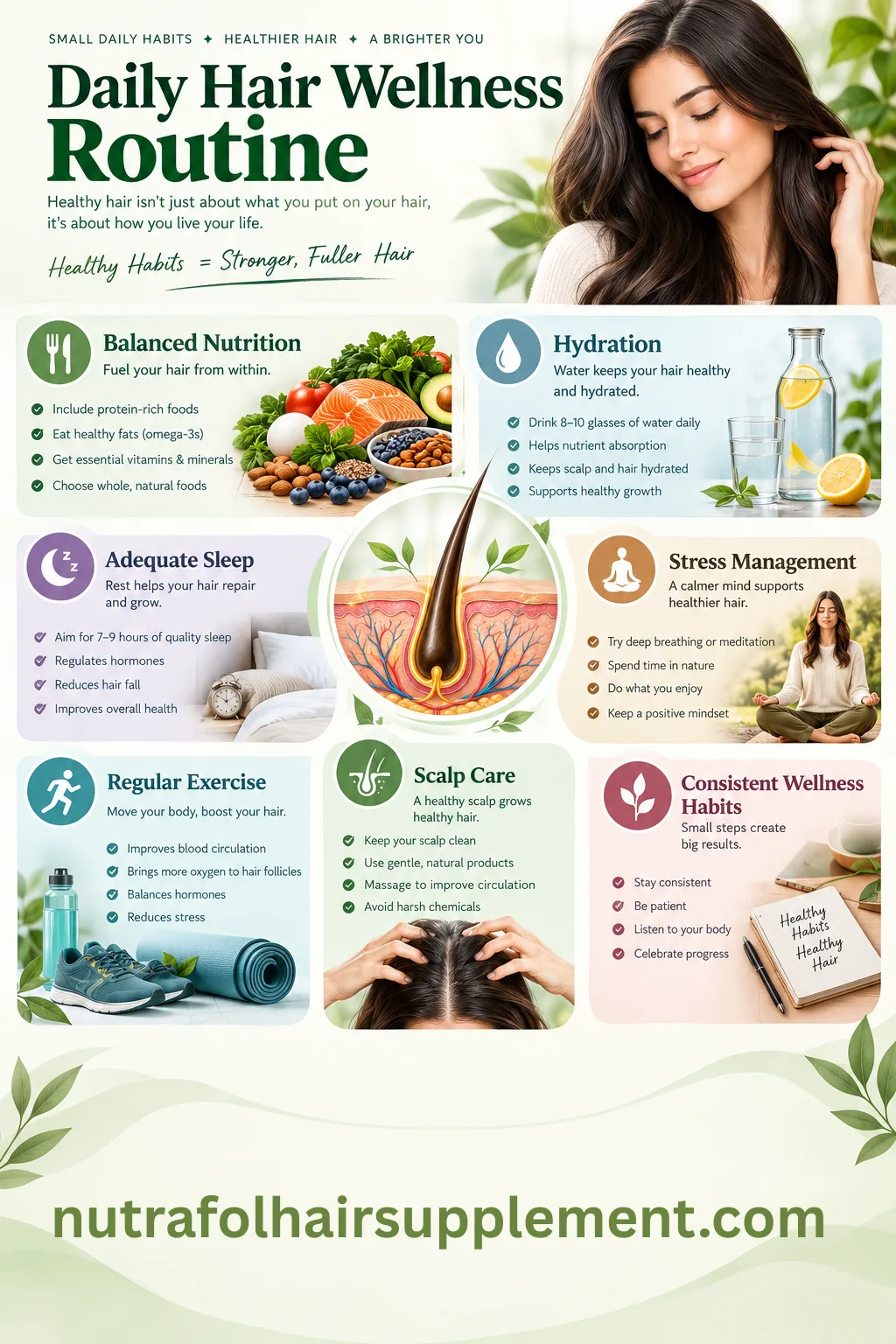
Healthy-looking hair is often a reflection of several everyday factors rather than one single habit. Diet, stress, sleep, age, genetics, and hair-care practices can all influence how hair looks and feels. This is why maintaining good hair health usually requires a consistent approach rather than relying on one quick solution.
For people noticing increased shedding or reduced hair thickness, understanding these factors can be a useful first step.
Start With Your Everyday Nutrition
Hair follicles need nutrients to support their normal growth cycle. A varied diet containing protein, fruits, vegetables, whole grains, and healthy fats can help provide the body with the nutrients it needs.
Protein is particularly relevant because hair is primarily made from a protein called keratin. Nutritional deficiencies, however, are only one possible reason for changes in hair. Hair concerns can have many different causes, so diet should be considered as part of the bigger picture.
For individuals whose diets may not consistently provide certain nutrients, dietary supplements can be another option to discuss with a healthcare professional.
Pay Attention to Stress and Lifestyle
Periods of significant physical or emotional stress can sometimes coincide with increased hair shedding. While it is not always possible to eliminate stress, developing healthy ways to manage it may support overall wellbeing.
Simple habits such as regular physical activity, maintaining a consistent sleep schedule, spending time outdoors, and taking breaks from demanding routines can contribute to general health. These habits are not a guaranteed solution for hair loss, but they can form part of a healthier lifestyle.
Be Gentle With Your Hair
Everyday styling can also affect the appearance and condition of hair. Frequent use of high heat, tight hairstyles, aggressive brushing, and repeated chemical treatments may place additional stress on hair strands.
Using gentle hair-care techniques can help minimize unnecessary breakage. Choosing suitable hair products and avoiding excessive manipulation may also help hair maintain a healthier appearance.
Consider Nutritional Support When Appropriate
Some people choose hair-focused supplements as an additional part of their wellness routine. Products such as Nutrafol Hair Supplements are designed around nutritional support for different hair-health needs and life stages.
When considering a supplement, it is worth looking beyond marketing claims. Check the ingredient list, recommended serving, intended audience, and available information about the product. It is also important to understand that dietary supplements are not a substitute for a balanced diet or professional medical advice.
Give Your Routine Time
Hair growth is a gradual process, so changes are rarely noticeable immediately. A consistent routine over time is generally more realistic than frequently switching between different products.
Keeping track of changes can also be helpful. Taking photographs every few months under similar lighting and from similar angles may make gradual changes easier to evaluate.
Individual experiences can differ, and a product or routine that suits one person may not be appropriate for another.
When Professional Advice May Help
Persistent or sudden changes in hair density or shedding deserve attention, particularly when they occur alongside other symptoms. A healthcare professional or qualified dermatologist can help identify possible underlying causes and determine whether further evaluation is appropriate.
Rather than focusing on a single product or trend, a balanced approach considers nutrition, lifestyle, hair-care habits, and individual health needs together.
The Bigger Picture
Maintaining healthier-looking hair is ultimately about more than appearance. Good nutrition, adequate rest, stress management, sensible hair-care practices, and informed supplement choices can all contribute to a thoughtful hair-wellness routine.
There is no universal approach that works for everyone. The most useful strategy is one that is realistic, consistent, and suited to an individual's needs. By taking a long-term approach instead of looking for an instant fix, people can make more informed decisions about their hair and overall wellbeing.