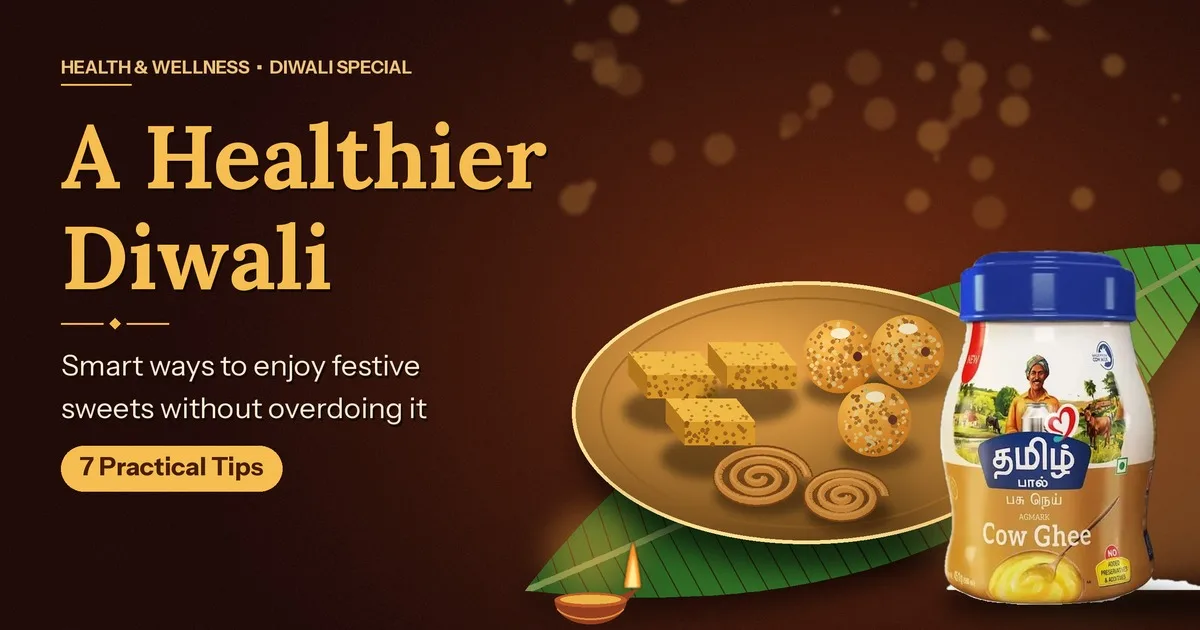
Diwali is the one week of the year when no one counts calories, and honestly, no one should. The festival is about family, light, and food shared generously. But by the time the last plate of sweets is cleared, many of us are left feeling sluggish, bloated, and promising ourselves we will “eat clean from Monday.”
The good news is that enjoying Diwali and feeling good afterwards are not opposites. A few simple choices, made before and during the festival, can help you celebrate fully without the post-festival slump. Here are seven practical ways to do it.
1. Quality Over Quantity, Starting With Ingredients
The biggest difference between a sweet that sits heavy and one that feels satisfying often comes down to what it is made with. Many commercially produced sweets use vanaspati or blended vegetable fats instead of real ghee because they are cheaper and last longer on the shelf. Vanaspati is hydrogenated oil, and the hydrogenation process can produce trans fats, which health experts widely recommend limiting.
Pure cow ghee, on the other hand, has been part of Indian cooking for centuries. It has a rich aroma, a high smoke point that suits frying and roasting, and in traditional practice it is considered easier on digestion. When the fat in your sweets is real ghee, you tend to feel satisfied with less.
When buying ghee for festive cooking, check that the label lists only cow ghee or milk fat, look for an FSSAI licence number, and choose brands that are transparent about where their milk comes from. Dairies such as Tamil Paal, which source milk directly from farmers in the Cauvery Delta and make their ghee without preservatives, are one example of what to look for.
2. Make at Least a Few Sweets at Home
Homemade sweets give you complete control over what goes in them. You decide the quality of the ghee, the amount of sugar, and the freshness of every ingredient. Many families find that sweets made at home are less cloyingly sweet than store-bought versions, simply because they are made to the household’s taste.
You do not need to make everything from scratch. Even preparing two or three favourites, such as rava laddu, paal payasam with fresh cow milk, or Mysore pak, makes a noticeable difference to how much processed food your family eats over the festival.
3. Reduce Sugar Without Losing Flavour
Most traditional sweet recipes can handle a 20 to 25 percent reduction in sugar without anyone noticing. Cardamom, saffron, roasted nuts, and good ghee carry so much flavour that sugar does not need to do all the work.
Jaggery is another option for sweets like athirasam and payasam. While it is still sugar and should be eaten in moderation, it adds a deeper flavour that means you often need less of it.
4. Do Not Skip Regular Meals
One of the most common festive mistakes is skipping breakfast or lunch to “save room” for sweets. This usually backfires. Arriving at a gathering hungry makes it much harder to stop at one or two pieces.
A balanced breakfast with protein, such as idli with sambar, eggs, or curd with fruit, keeps blood sugar steadier and cravings in check through the day.
5. Use the Plate Rule at Gatherings
When visiting homes during Diwali, you will be offered sweets everywhere you go. Instead of refusing, which can feel impolite, try the plate rule: take a small piece of two or three things you genuinely love, put them on a plate, and enjoy them slowly. Eating from a plate rather than straight from a box makes portions visible and far easier to manage.
Savour the sweets that are special to the festival, and skip the ones you can have any day of the year.
6. Lean on Traditional Digestive Aids
Our grandparents had their own wisdom for festive eating, and much of it still works. Deepavali legiyam, the traditional herbal digestive paste made with ginger, pepper, and other spices, is eaten in many Tamil homes on the morning of the festival for exactly this reason.
Buttermilk after a heavy meal, curd rice to end the day, plenty of warm water, and a short walk after eating are all simple habits that help your body handle richer food.
7. Gift Thoughtfully
Diwali gifting often means boxes of sweets passed from home to home, many of which end up uneaten or overeaten. Consider gifts that support health instead: dry fruits, traditional milk sweets in small portions, or a jar of pure ghee that families can use for weeks of everyday cooking. A thoughtful gift lasts longer than a box of sweets and carries the same warmth.
How Much Is Too Much?
There is no single number that fits everyone, but a simple guideline is to enjoy one or two pieces of sweets a day during the festival, keep your regular meals, and balance richer days with vegetables, fruits, curd, and buttermilk. If you have diabetes, heart concerns, or other health conditions, check with your doctor about what is right for you during the festive season.
The Bottom Line
A healthier Diwali is not about saying no to sweets. It is about choosing better ingredients, making a few things at home, eating mindfully, and leaning on the traditional habits that kept our families well through generations of festivals.
Choose pure ghee over cheap substitutes, cut back a little on sugar, never skip your meals, and enjoy every sweet you eat slowly and without guilt. That way, you finish the festival feeling as bright as the lamps you lit.
Happy Diwali.