Noticing that a familiar mole looks darker, larger, raised, or simply “different” can create worry. The challenge is knowing whether the change is harmless or deserves medical attention. While many mole changes are benign, some can signal melanoma or another skin problem that needs prompt evaluation.
This guide explains which changes matter most, how dermatologists assess suspicious spots, what skin cancer treatment may involve if a dermatologist finds cancer, and how to monitor your skin without turning every change into panic.
Can a Mole Change Without Being Skin Cancer?
Yes. A mole can change and still be benign, especially when changes happen gradually or during normal life stages.
Moles, or nevi, can become lighter, darker, flatter, or more raised over time. Mayo Clinic notes that hormonal changes during adolescence and pregnancy may make some moles darker or larger, and moles may fade with age.
However, benign change should not become a reason to ignore a mole that is clearly evolving. In adults, a recent, persistent, unexplained change deserves professional attention.
Which Changes in a Mole Should a Dermatologist Examine?
A dermatologist should examine a mole that changes in size, shape, color, surface, sensation, or overall appearance, especially when the change continues.
Use the ABCDE rule for melanoma as a practical check:
- A — Asymmetry: One half does not resemble the other.
- B — Border: Edges become irregular, blurred, scalloped, or poorly defined.
- C — Color: The mole develops uneven color or several shades.
- D — Diameter: Larger size can raise concern, although melanoma can be smaller than 6 millimeters.
- E — Evolving: The mole changes in size, shape, color, height, or symptoms.
The American Academy of Dermatology also advises evaluation for moles that itch, bleed, grow, or otherwise change. These signs do not prove cancer, but they warrant a closer look.
Why Is “Evolving Mole” More Important Than Size Alone?
Change over time can reveal risk that one measurement misses.
A small mole is not automatically safe. The American Academy of Dermatology and American Cancer Society both note that melanoma can be smaller than the traditional 6-millimeter guideline. A 4-millimeter spot that recently became darker, raised, or irregular may deserve more attention than a larger mole that has stayed unchanged for years.
What Does the “Ugly Duckling” Sign Mean?

It means one mole or spot looks noticeably different from the others on your body.
Most people have a recognizable mole pattern. A lesion that breaks that pattern may stand out even without every ABCDE feature. This matters because melanoma does not always look like the classic dark, irregular mole; it can be lighter, smaller, pink, or otherwise subtle. A spot that looks unlike the rest deserves attention.
How Quickly Should You Get a Changing Mole Checked?
Arrange a dermatology evaluation promptly when a mole is actively changing, growing quickly, bleeding without obvious injury, crusting repeatedly, itching persistently, or becoming painful.
There is no universal waiting period for every changing mole. Different melanomas can behave differently, and appearance alone cannot predict how a lesion will progress. Rather than watching a concerning spot for months, document the change and seek professional evaluation.
Early assessment matters. U.S. SEER data for 2016–2022 report 100% five-year relative survival for localized melanoma versus 34% for melanoma diagnosed after distant spread. These population statistics cannot predict an individual outcome, but they illustrate why detecting melanoma before it spreads matters.
What Happens When a Dermatologist Examines a Suspicious Mole?
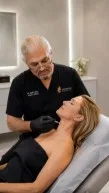
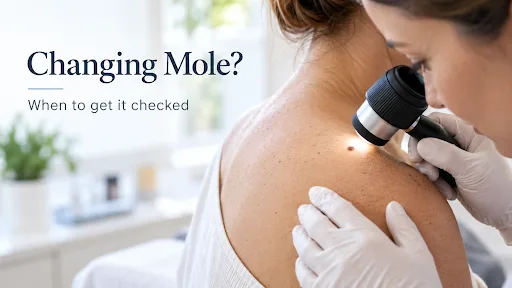
A dermatologist usually starts with visual examination, history, and comparison with your other moles; suspicious lesions may then need dermoscopy or biopsy.
A dermatoscope magnifies skin structures that are difficult to assess with the naked eye. The clinician may also ask when the spot appeared, what changed, and whether personal or family risk factors could affect the assessment.
If the lesion looks benign, the dermatologist may photograph and monitor it. If the lesion looks suspicious, the dermatologist may recommend a biopsy as part of skin cancer testing. A pathologist examines the tissue under a microscope; the National Cancer Institute notes that tissue examination confirms melanoma, making biopsy central to a definitive skin cancer diagnosis.
Understanding what happens during skin cancer screening and treatment can also make the evaluation process feel less unfamiliar and help patients understand why a dermatologist may recommend monitoring in one situation and biopsy in another.
Who Should Have a Lower Threshold for Getting a Mole Checked?
People with higher melanoma risk should seek assessment sooner when they notice a new, unusual, or changing lesion.
Risk can be higher with many or atypical moles, a personal or family history of melanoma, substantial ultraviolet exposure, repeated severe sunburns, or a weakened immune system. The American Academy of Dermatology notes that having 50 or more acquired moles is associated with increased melanoma risk.
For context, the American Cancer Society estimates that about 112,000 new cases of invasive melanoma will occur in the United States in 2026, with about 8,510 expected deaths. Individual risk still varies considerably, so screening frequency should reflect personal history rather than a one-size-fits-all schedule.
How Can You Monitor Moles Without Trying to Diagnose Yourself?

Use self-checks to notice change, not to decide whether a lesion is cancerous.
Check often-missed areas such as the scalp, back, soles, palms, between the toes, and around or under the nails. Compare each spot with your usual pattern and note anything new, changing, or unusual.
Photos taken in similar lighting and from a consistent distance can help you recognize changes over time. A body mole map can also help. However, photographs, apps, and online image comparisons cannot replace professional examination when a lesion is evolving.
If a biopsy confirms cancer, the next step depends on its type, depth, size, location, and other findings. Care may remain with a dermatologist or involve a skin cancer center or other specialists when broader evaluation is appropriate. The next steps in skin cancer evaluation and care can vary depending on the cancer type, depth, location, pathology findings, and whether additional treatment is necessary.
Key Takeaways
- Most moles are benign, and some change naturally with age or hormonal shifts.
- Use the ABCDE signs, the ugly duckling sign, and symptoms such as bleeding or persistent itching to identify changes worth evaluating.
- Do not rely on diameter alone; small melanomas can occur.
- A dermatologist may monitor a mole or recommend biopsy.
- Early professional evaluation matters when a lesion keeps evolving.
Having a Changing or New Mole? Stop Watching It and Start Acting!
A changing mole does not automatically mean cancer, but uncertainty should not turn into indefinite observation. Notice the change, record it, and let a dermatologist determine whether the spot needs monitoring or further testing. Getting an unusual lesion examined can provide clarity when the change is harmless and help identify concerning findings earlier when treatment may be needed.
If a mole is new, changing, unusual, or causing symptoms, arrange a dermatology evaluation rather than relying on self-diagnosis.
Frequently Asked Questions
1. Is a new mole after age 30 always a sign of skin cancer?
No. A new mole after age 30 is not automatically cancerous, but dermatologists recommend having it examined. New moles become less common with age, so professional assessment can help identify anything unusual.
2. Can scratching or accidentally cutting a mole make it look suspicious?
Yes. Scratching, shaving, or friction can irritate a mole and cause temporary bleeding, swelling, or crusting. If its appearance remains different after healing, or it continues bleeding, have a dermatologist examine it.
3. Is it normal for a flat mole to become raised over time?
Yes. Some harmless moles become raised over time. However, if a mole suddenly becomes elevated, develops an uneven surface, or changes alongside itching, bleeding, or rapid growth, ask a dermatologist to evaluate it.
4. How often should I check my moles for changes at home?
Dermatology guidance commonly recommends examining your skin about once a month, especially if you have many moles or melanoma risk factors. Regular checks make it easier to notice a genuinely new change.
5. Can too much sun exposure cause new moles to appear?
Sun exposure can contribute to the development of additional moles and increase skin-cancer risk. Consistent sunscreen, protective clothing, and avoiding tanning beds can reduce ultraviolet exposure but cannot replace skin monitoring.