Piles, also called hemorrhoids, are a common condition that can lead to pain, itching, swelling, and discomfort in daily life. Managing piles effectively involves more than just medication; lifestyle and diet also play an important role in recovery.
The foods you eat can directly influence how severe the symptoms become. Certain foods may increase inflammation, cause constipation, or make bowel movements more painful. Proper piles treatment often requires a holistic approach that combines medication, natural remedies, and healthy dietary habits to support healing.
Avoiding foods that trigger irritation, swelling, or digestive discomfort can make recovery smoother and help prevent frequent flare-ups. Understanding which foods to limit or avoid is just as important as following the right treatment plan.
This blog explains the foods you should avoid during piles treatment so you can make better dietary choices, support digestive health, and reduce discomfort while managing the condition.
Why Diet Plays an Important Role in Piles Treatment
Constipation is one of the most common reasons piles symptoms become worse. When bowel movements are hard or irregular, it puts extra pressure on the veins in the rectal area, which can cause swelling, pain, and sometimes bleeding.
Foods that are low in fiber, high in fat, or heavily processed often worsen digestive issues and increase the chances of constipation.
On the other hand, eating a fiber-rich diet, staying well hydrated, and including natural anti-inflammatory foods can help maintain smooth bowel movements and support faster recovery. Many people make the mistake of relying only on medication and ignoring the importance of diet.
While the best medicine for piles can help relieve symptoms, combining it with a healthy diet ensures better and long-lasting results. Avoiding foods that irritate the digestive system reduces pressure during bowel movements and allows Ayurvedic therapies at Jeena Sikho HIIMS to work more effectively.
Common Eating Habits That Can Trigger Piles
Certain food habits can make piles symptoms worse. Being aware of these habits can help improve digestion and support recovery.
Skipping fiber-rich foods: Avoiding fruits, vegetables, and whole grains can make stools harder and increase constipation.
Eating too much junk food: Fried snacks, fast foods, and processed items are usually low in fiber and harmful for piles patients.
Not drinking enough water: Dehydration is a major cause of constipation and can worsen piles symptoms.
Excess caffeine or alcohol: These drinks can irritate the digestive system and make bowel movements more difficult.
Recognizing these habits can help you make healthier dietary choices during piles treatment.
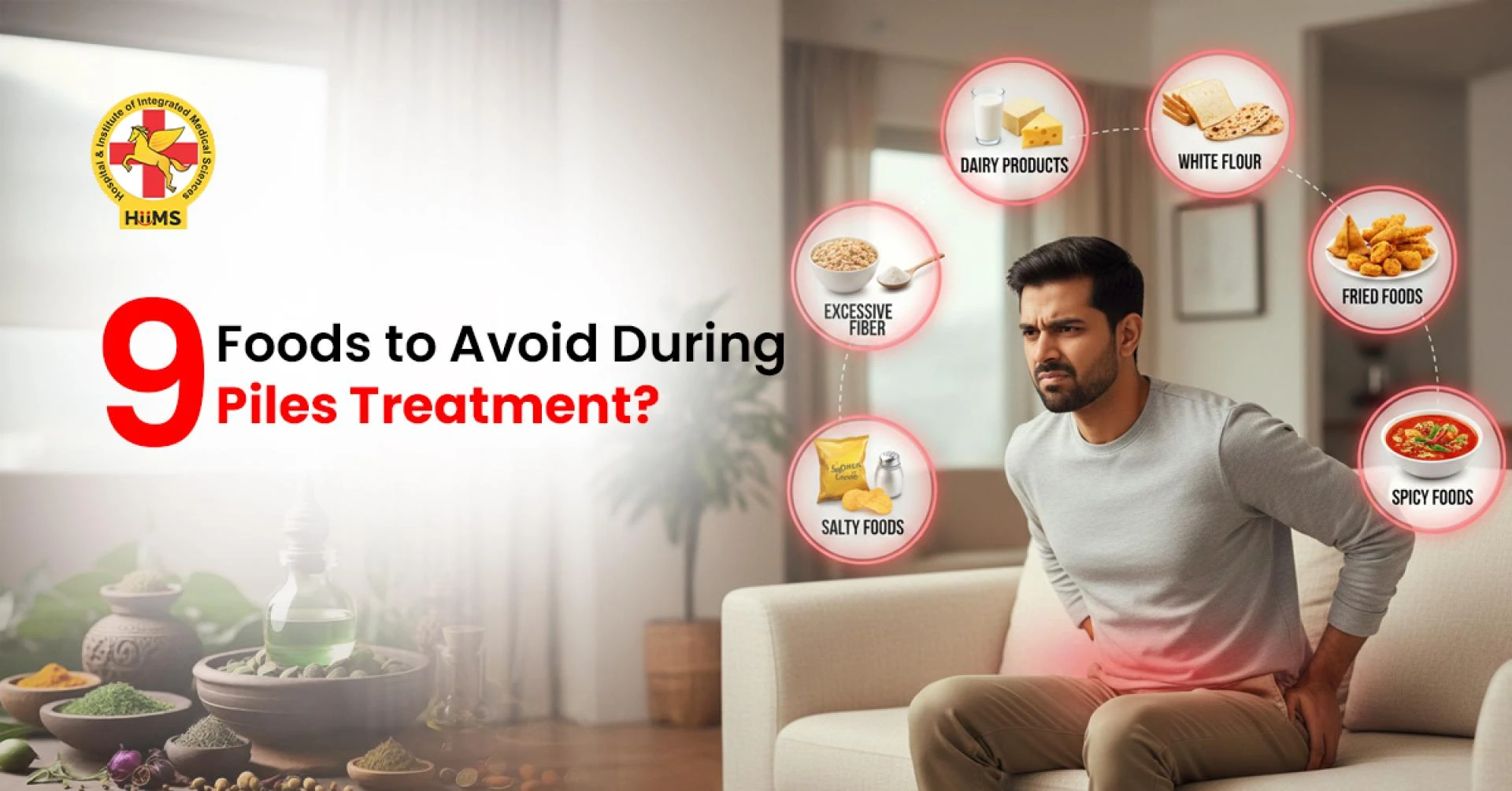
9 Foods to Avoid During Piles Treatment
Certain foods can worsen piles symptoms, so avoiding them can help reduce discomfort and support quicker healing.
1. Spicy Foods
Spicy dishes can irritate the digestive tract and worsen inflammation in the rectal area. Ingredients like chili peppers contain capsaicin, which may increase discomfort during bowel movements. Reducing spicy food intake can help improve piles management.
2. Dairy Products
Milk, cheese, and other dairy products may contribute to constipation and digestive discomfort in some people. During piles treatment, limiting dairy intake can help reduce strain during bowel movements.
3. Fried Foods
Deep-fried foods such as chips, samosas, and fast foods are high in fat and salt. These foods slow digestion and may contribute to dehydration and constipation, worsening piles symptoms. Choosing lighter cooking methods like steaming or boiling is a better option.
4. Coffee
Coffee contains caffeine, which acts as a diuretic and may cause dehydration. Dehydration can make stools harder and more difficult to pass. Replacing coffee with herbal teas or warm lemon water can support better digestion.
5. Red Meat
Red meat takes longer to digest and may lead to harder stools. This increases strain during bowel movements, which can worsen swelling and pain associated with piles. Reducing red meat consumption may help improve digestive comfort.
6. Alcohol
Alcohol can lead to dehydration and disrupt normal digestion. Excessive alcohol consumption may worsen piles symptoms and make bowel movements painful. Limiting alcohol intake helps maintain proper hydration.
7. Processed Foods
Processed foods are often low in fiber and high in salt, sugar, and unhealthy fats. These foods increase the risk of constipation and can aggravate piles symptoms. Avoiding processed foods and choosing natural foods is beneficial.
8. Cheese
Certain types of cheese, especially hard cheese, are low in fiber and can slow digestion. Limiting cheese intake may help prevent constipation and support piles recovery.
9. Refined Grains
Foods made with refined grains such as white bread, pasta, and white rice contain very little fiber. These foods can contribute to constipation. Replacing them with whole grains like brown rice, oats, and whole wheat is a healthier option.
Avoiding these foods can reduce irritation, prevent flare-ups, and support faster recovery from piles.
Supporting Piles Recovery with Ayurveda
In addition to avoiding these foods, Ayurvedic treatment at Jeena Sikho HIIMS focuses on natural healing methods that reduce inflammation, improve digestion, and strengthen the veins.
A balanced diet that includes fiber-rich foods, herbal drinks, and proper hydration is recommended as part of the treatment plan.
Along with dietary guidance, Kshar Sutra Therapy is used for effective piles management. When combined with Ayurvedic medicines and lifestyle adjustments, it provides a holistic approach to recovery.
Conclusion
Diet plays a very important role in the successful treatment of piles. Avoiding foods that worsen piles symptoms can reduce discomfort, prevent flare-ups, and support faster healing.
At Jeena Sikho HIIMS, piles treatment combines Ayurvedic remedies, dietary guidance, and natural therapies to provide holistic care. Along with using the best medicine for piles, healthy lifestyle choices help patients manage symptoms naturally and improve digestive health.
Choosing the right foods can make a significant difference in achieving long-term relief and recovery.
FAQs
1. What are piles?
Piles are swollen veins in the rectal or anal area that can cause pain, itching, and bleeding.
2. What causes piles to worsen?
Constipation, straining during bowel movements, and an unhealthy diet can trigger piles flare-ups.
3. Can diet affect piles symptoms?
Yes, certain foods may worsen symptoms while others can help improve digestion and reduce discomfort.
4. Why is fiber important for piles patients?
Fiber softens stools and helps bowel movements pass more easily, reducing strain.
5. How does drinking water help with piles?
Proper hydration prevents constipation and supports smooth digestion.