
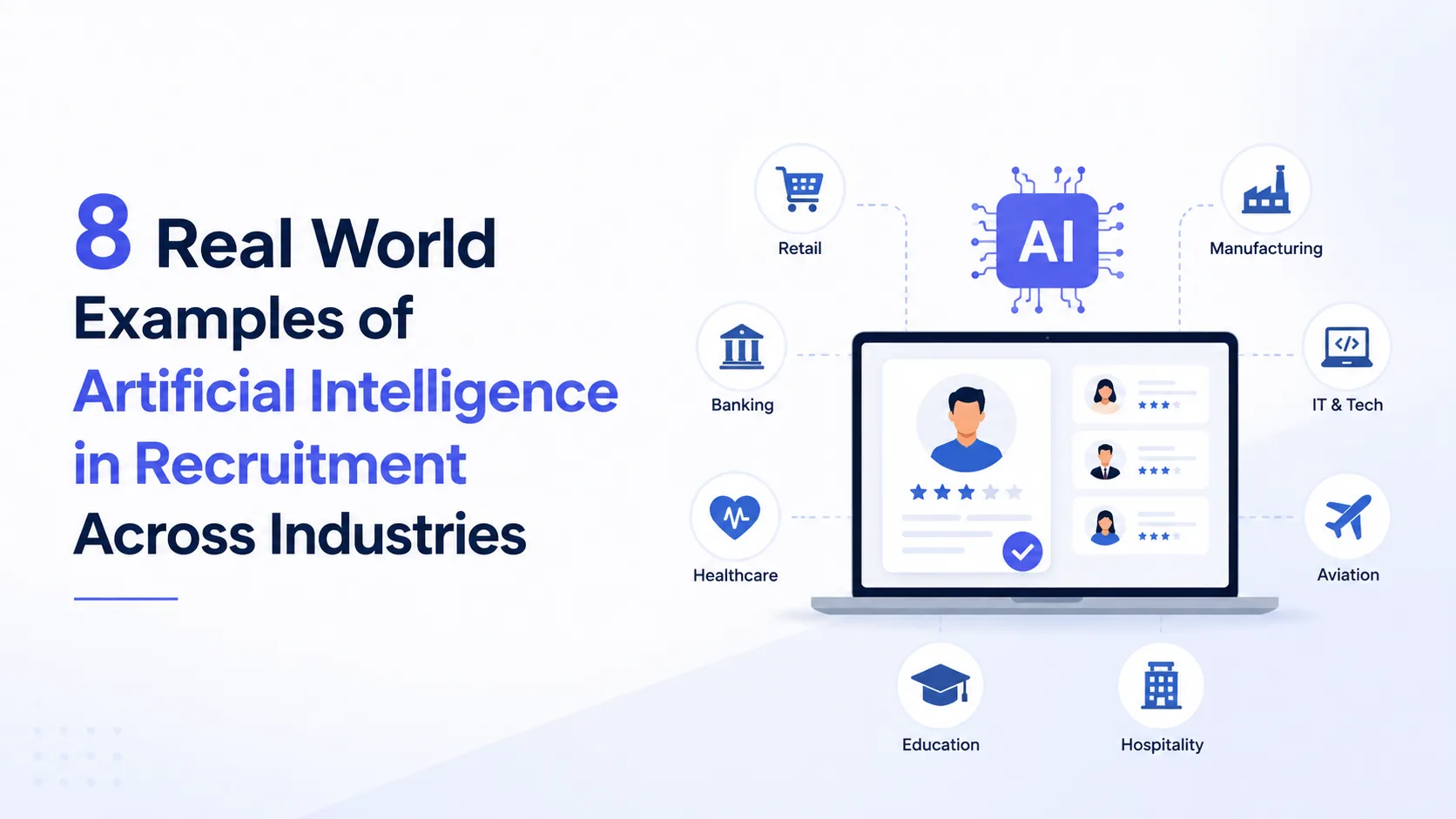
Imagine an HR team with 2,000 applications for 20 open jobs. Recruiters can spend days reading resumes, sending emails, arranging interviews, and answering the same questions. This is where artificial intelligence in recruitment can make hiring faster and more organized.
Companies use AI to find candidates, match skills, schedule interviews, answer questions, and support recruiters with routine work. Rubixe helps businesses explore practical AI solutions that fit hiring needs.
What is artificial intelligence in recruitment and why are companies using it?
Artificial intelligence in recruitment means using AI to support tasks such as finding candidates, screening applications, matching skills, communicating with applicants, and planning interviews. It can process large amounts of hiring information much faster than a person.
The goal is to automate routine work while leaving conversations, judgment, and candidate experience to people.
Common uses include:
• Resume and profile matching
• Candidate sourcing
• Interview scheduling
• Candidate questions through chat
• Job description support
• Hiring data analysis
LinkedIn surveyed 1,453 recruiting professionals and 498 hiring managers for its 2024 Future of Recruiting report. It found that 57% of recruiting professionals using generative AI said it made writing job descriptions faster and easier.
How is AI recruitment used in the technology industry?
Technology companies receive many applications for software, data, cloud, and engineering roles. AI can compare skills with job requirements and help create a shortlist.
For example, an AI tool can identify applicants who mention Python, machine learning, cloud platforms, or related project experience. It can also find relevant candidates when their resumes use different wording.
Recruiters still need to check results because a resume cannot fully show technical ability.
How does AI recruitment work in banking and finance?
Banks hire across technology, risk, finance, customer service, and compliance. AI can organize candidates across these job families.
A recruiting team could use an AI recruiting agent to answer candidate questions, collect basic information, and route applicants to the right role. This is useful when hiring teams manage high application volumes.
The main benefit is speed, while privacy, security, and fairness still need close attention.
How are healthcare companies using AI for recruitment?
Healthcare organizations need nurses, doctors, technicians, administrators, and support staff. AI can match candidates by skills, certifications, location, experience, and availability.
For example, a hospital hiring team could use an AI tool to identify nurses whose qualifications match a department. It could also prioritize applications that meet required certifications.
Human review is essential. A high automated score should never become the final hiring decision.
How does AI help retail and ecommerce companies hire faster?
Retail businesses hire seasonal workers, store employees, warehouse teams, support staff, and managers. Hiring needs can change quickly during peak periods.
An AI tool can sort applications, answer common questions, schedule interviews, and identify candidates who meet basic requirements.
For example, a retailer opening 50 stores could automate first level screening while recruiters focus on shortlisted candidates.
How is artificial intelligence in recruitment used in manufacturing?
Manufacturers hire operators, engineers, quality specialists, maintenance teams, and supervisors, often requiring technical or safety skills.
AI can compare job requirements with candidate profiles and highlight matching skills. It can also help recruiters search older candidate databases when a similar position becomes available.
This can help when skilled workers are hard to find. A missing keyword should not be treated as proof that someone lacks a skill.
How can logistics and supply chain companies use AI for hiring?
Logistics companies recruit drivers, warehouse workers, planners, operations managers, and supply chain specialists, with demand often rising during peak seasons.
An AI recruiting agent can identify candidates based on location, certifications, experience, shift preferences, and role requirements. It can also answer questions about interview times, application status, or required documents.
This creates a smoother process while reducing repetitive communication.
How are hospitality companies using AI to improve recruitment?
Hotels, restaurants, and travel companies often deal with high turnover and seasonal hiring. AI can help manage large candidate pools and respond quickly.
For example, an AI tool can screen applications for basic requirements, schedule interviews, and send reminders. It can also support multilingual candidate communication.
Human judgment still matters because communication, attitude, and service skills are not always clear from a resume.
What can businesses learn from real world AI recruitment examples?
The strongest examples show that AI works best as a support system, not as an automatic hiring judge. Unilever, for example, uses digital assessments and technology in its hiring journey. Its current UK graduate process states that AI is not used as a screening tool and digital interview submissions are reviewed by a real person.
Unilever has also used AI in an internal talent marketplace. The company reported a trial involving more than 20,000 employees across more than 90 countries.
Amazon's earlier recruiting tool provides an important warning. Reuters reported that the system favored male candidates because it learned from biased historical hiring data. This shows why testing, monitoring, and human oversight matter.
What are the main benefits of artificial intelligence in recruitment?
AI can improve recruitment in several practical ways:
Recruitment areaHow AI can helpHuman roleResume screeningFinds relevant profiles fasterCheck suitabilityCandidate communicationAnswers common questionsHandle complex casesSchedulingFinds suitable interview timesConfirm important interviewsSkill matchingCompares skills with job needsValidate actual abilityHiring analyticsFinds patterns in recruitment dataMake business decisionsThe biggest benefit is giving recruiters more time for work that needs human judgment.
What should companies consider before using AI recruitment tools?
Before adopting an AI recruitment tool, companies should check data use, explainability, and bias testing.
A practical checklist:
• Define the hiring problem before choosing technology.
• Check whether candidate data is protected properly.
• Test results for unfair patterns across different groups.
• Keep humans involved in important hiring decisions.
• Measure accuracy, candidate experience, and time saved.
• Review the system as hiring needs change.
An AI recruiting agent can be useful, but it should have clear limits. Good recruitment technology supports recruiters instead of making important decisions without context.
What is the future of AI recruitment across industries?
Artificial intelligence in recruitment is moving toward connected hiring workflows for sourcing, skill matching, communication, and coordination.
The best results come from combining AI speed with human judgment. Automation without oversight can create a process candidates do not trust.
What are common questions about AI recruitment?
Can AI replace recruiters?
No. AI can handle repetitive tasks, but recruiters are still needed for judgment, relationships, interviews, and final decisions.
Is AI recruitment fair?
It can be, but fairness depends on the data, design, testing, and human oversight used to build and operate the system.
What is an AI recruitment tool used for?
It can help with sourcing, screening, skill matching, scheduling, communication, and recruitment analytics.
What does an AI recruiting agent do?
It can handle routine recruiting conversations and tasks, such as answering questions, collecting information, and guiding candidates through parts of the process.
Final thoughts
Artificial intelligence in recruitment is already being applied across technology, finance, healthcare, retail, manufacturing, logistics, and hospitality. The goal is to reduce repetitive work and improve decisions.
Rubixe can help businesses evaluate where AI can fit into their recruitment process, from candidate matching to workflow automation.
If your team spends too much time on repetitive tasks, the right AI approach can be a practical place to start.