
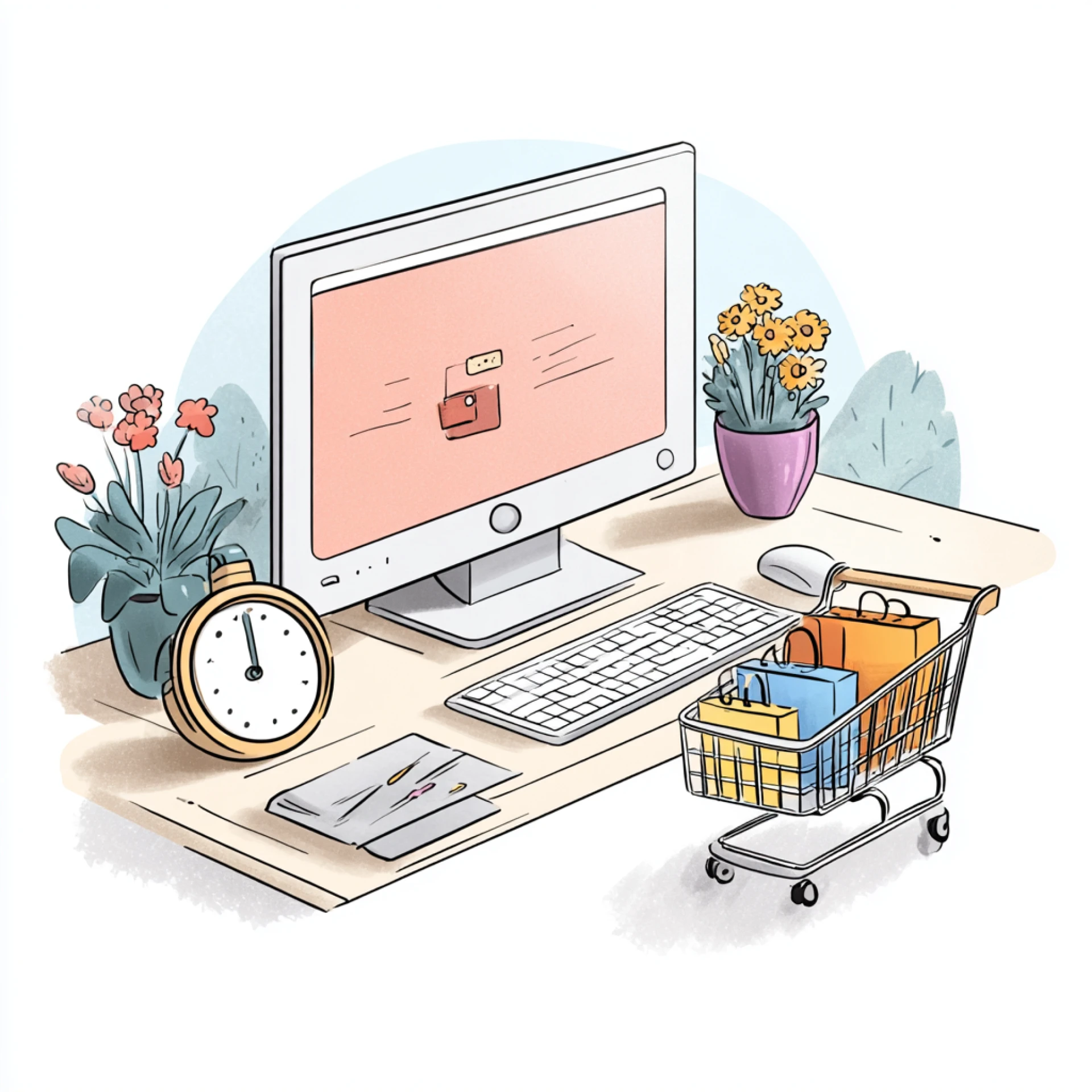
Sarah is shopping online for a new fitness tracker. She clicks the first store she finds on Google, but the homepage takes eight seconds to load.
Annoyed, she taps back.
The next store loads faster, but the design is cluttered, the menu is hard to use, and the “Buy Now” button is buried. Within seconds, Sarah abandons the site. Finally, she lands on a third store — fast loading, clean design, easy checkout — and that’s where she buys.
Now imagine thousands of “Sarahs” making the same choices every single day. For eCommerce brands, these tiny moments of frustration translate into lost sales, lower trust, and declining customer loyalty.
The Cost of Common eCommerce Mistakes

When eCommerce sites overlook fundamentals like speed, user experience, and security, the costs are enormous:
- Slow load times are conversion killers. Research shows that if a site takes more than four seconds to load, 63% of shoppers will leave immediately. Even a one-second delay can cut conversions by up to 7%.
- Poor mobile experience is another revenue drain. Over 60% of shoppers make buying decisions directly on mobile, and half of all ecommerce revenue now comes from smartphones. A clunky mobile interface means you’re shutting the door on half your market.
- Bad user experience equals churn. Nearly 88% of users won’t return after a poor online shopping experience. That’s not just one lost sale — it’s a lost customer lifetime value and a dent in your brand reputation.
The reality? These mistakes cost eCommerce businesses millions in lost revenue, while competitors who invest in user experience win customers for life.
In the sections ahead, we’ll break down the most common eCommerce mistakes that silently eat into profits — from slow pages and confusing navigation to checkout hurdles and security oversights.
More importantly, you’ll see how experienced eCommerce developers can step in with the right fixes to stop customer frustration before it happens.
By the end, you’ll have a clear picture of what’s holding your store back and how to transform it into a high-converting, customer-friendly platform.
Mistake #1: When Your Store Fails on Mobile

Let’s be honest — most people today shop straight from their phones. In fact, over 60% of online shoppers make decisions directly on mobile, and almost half of all eCommerce revenue now comes from mobile devices.
That means if your store doesn’t look or feel right on a small screen, you’re basically pushing customers toward your competitors.
And here’s the catch: mobile shoppers have zero patience.
Tiny buttons they can’t tap, text that needs zooming in, menus that don’t make sense, or images that take forever to load — all these fall under the classic list of common ecommerce mistakes.
This is where smart eCommerce solutions come in. Experienced developers design with a mobile-first approach, ensuring your site looks and functions perfectly on any device.
They use responsive layouts that adjust to different screen sizes, test across multiple devices, and optimize for weak network connections.
The result?
A shopping experience that feels smooth and effortless, no matter if your customer is on a desktop at home or browsing on the go.
Mistake #2: A Slow Website That Makes Shoppers Run Away
We’ve all been there — you click on a product link, and the page just hangs. Five seconds go by, nothing. Ten seconds… and you’re already hitting the back button.
That’s exactly what your customers feel when your eCommerce store loads at a snail’s pace.
Slow load times are one of the biggest eCommerce pitfalls.
They happen for a bunch of reasons: unoptimized images that are too heavy, messy code that clutters up the backend, cheap hosting that can’t handle traffic spikes, or database inefficiencies that drag everything down.
And the cost? It’s brutal.
A slow store doesn’t just lose a sale — it damages trust, kills user experience, and drives customers straight to faster competitors.
This is where partnering with an eCommerce web development company makes all the difference. Skilled developers know how to fix the speed problem: they compress and optimize images, clean up bloated code, recommend reliable hosting, set up Content Delivery Networks (CDNs), and keep performance monitoring in place.
The result?
A lightning-fast store that keeps customers engaged and ready to buy.
Mistake #3: Check Out That Feels Like a Marathon

You’ve done everything right — attracted the shopper, got them to add products to the cart, and they’re ready to pay. But then… the struggle begins.
They’re forced to create an account, the form asks for 15 unnecessary details, surprise shipping fees appear at the last step, and only two outdated payment methods are available. Frustrated, the shopper closes the tab. Sale lost.
This is one of the most painful eCommerce mistakes businesses make. Checkout should be the smoothest part of the journey, but when it feels complicated, it becomes the #1 reason for abandoned carts.
In fact, studies show that nearly 70% of online shopping carts are abandoned, and complex checkout is a leading cause.
Here’s where smart ecommerce development changes the game. Developers streamline the process by adding guest checkout options, building one-page checkouts, and integrating multiple payment methods like wallets, UPI, and credit/debit cards.
They also make pricing transparent upfront, so customers don’t get shocked by hidden fees.
When you hire ecommerce developers, you’re not just fixing checkout — you’re building trust, improving conversion rates, and giving customers the friction-free experience they expect.
Mistake #4: Leaving Your Store Open to Hackers

Think of your eCommerce website like a shop in a busy market. Would you ever leave the doors unlocked overnight? Probably not.
Yet many online stores do the digital equivalent — running outdated software, skipping SSL certificates, using weak passwords, or relying on payment systems that aren’t even compliant with security standards.
These oversights are among the most dangerous eCommerce business pitfalls. A single vulnerability can lead to customer data being stolen, financial fraud, or your entire store being taken offline.
And once trust is broken, winning customers back is almost impossible. Add the risk of legal penalties for non-compliance, and the damage quickly multiplies.
This is why experienced developers treat security as non-negotiable. They implement strong encryption protocols, keep platforms and plugins updated, enforce secure authentication, and ensure payment gateways follow strict compliance rules.
Regular backups and monitoring mean that even if something goes wrong, your store can recover quickly.
In short: security isn’t just a technical checkbox. It’s the foundation of trust. If your eCommerce site isn’t safe, shoppers won’t stick around — no matter how great your products are.
Mistake #5: When Shoppers Can’t Find What They’re Looking For

Imagine walking into a supermarket where the aisles are mislabeled, products are stacked randomly, and the staff can’t guide you to what you need. You wouldn’t stay long, right?
The same thing happens online when your eCommerce website has poor search and confusing navigation.
This is one of those silent killers. Categories that don’t make sense, irrelevant search results, no filters to narrow choices, or products buried five clicks deep — all of these create friction. And shoppers don’t waste time; if they can’t find what they want quickly, they’ll leave and buy from a competitor instead.
That’s why working with an experienced eCommerce development agency matters. They design clear and intuitive taxonomies so products are logically grouped. They also integrate AI-powered search that learns from user behavior, add smart filters and sorting options, and even use predictive search suggestions to speed up discovery.
With the right website development services, your store becomes easy to browse, products surface effortlessly, and customers actually enjoy shopping — which means more time on site, higher conversions, and repeat visits.
Mistake #6: No or Weak SEO Foundations

Picture this: you’ve built a beautiful eCommerce website, stocked it with amazing products, and made it fast and mobile-friendly.
But when people search for what you sell… your site doesn’t show up. That’s because many stores make classic eCommerce SEO mistakes.
Some common errors include duplicate content, missing meta tags, messy or unreadable URLs, no schema markup, and weak internal linking. All of these make it harder for search engines to understand your site, and worse, harder for potential customers to discover it.
Even the best products won’t sell if no one can find them.
This is where skilled SEO experts come in. They ensure a clean URL structure, add proper metadata, implement unique and optimized content, use schema markup to help search engines understand your products, and create a strong internal linking structure.
The result? Your store appears more frequently in search results, organic traffic increases, and your products have a significantly better chance of being discovered by the right audience.
Investing in good SEO from the start is like laying a solid foundation — it supports everything else in your ecommerce business.
Mistake #7: Platforms Not Scalable / Growth-Proof

Imagine your eCommerce site during a big sale or festive rush — suddenly, traffic spikes, the pages crawl, and some even crash. Or maybe you add dozens of new products, and the site slows down dramatically.
Worst case, you want to launch a new feature, but your platform just can’t handle it. These are classic eCommerce business pitfalls that can cost you sales, frustrate customers, and make your business look unprofessional.
The long-term consequences are even worse.
Fixing these issues later often means expensive migration, major reworking of your infrastructure, or even starting from scratch. That’s time, money, and growth lost.
This is where professional eCommerce development makes a huge difference. Skilled developers plan for scalability from day one — using cloud hosting with autoscaling, building modular architectures, integrating APIs for flexibility, and designing the platform so future features can be added without breaking anything.
Mistake #8: Lack of Personalization in Shopping Experience

Picture visiting an online store where everything looks the same, no matter who you are — no product recommendations, no personalized offers, weak customer support, and no reminders about items left in your cart.
That generic feel makes customers disengage quickly. In today’s competitive market, a one-size-fits-all experience simply doesn’t cut it.
Personalization isn’t just a nice-to-have; it’s a proven way to increase retention and lifetime value. Shoppers are far more likely to return to a store that remembers their preferences, suggests relevant products, and makes them feel understood.
This is where smart eCommerce solutions come into play. Experienced developers use recommendation engines to surface products customers are likely to love, deploy dynamic content tailored to each visitor, integrate chatbots for instant support, and set up email automation and loyalty programs to keep engagement high.
With personalization at scale, every visitor feels like the store was built just for them — leading to happier customers, higher conversions, and repeat business.
DIY vs Professional eCommerce Development: Why It Matters
- Many eCommerce business owners try the DIY route to save money — building stores using templates, plugins, or basic website builders. While it might seem easy and cheap initially, the drawbacks soon pile up. DIY stores often struggle with slow load times, poor user experience, weak security, limited scalability, and low long-term ROI. Fixing these issues later can be costly, time-consuming, and sometimes even impossible without a full redesign.
- On the other hand, hiring professional developers ensures your eCommerce store is built to perform from day one. Professionals focus on speed, creating optimized code and server setups that keep your pages lightning-fast. They prioritize UX, making the site intuitive, mobile-friendly, and engaging for shoppers. Scalability is baked in, so your store handles traffic spikes and grows with your product catalog. Security is robust, protecting both your customers and your business. And while the upfront cost is higher than DIY, the long-term ROI — from higher conversions, repeat customers, and reduced maintenance headaches — far outweighs it.
- Consider real-world examples: stores that relied on DIY templates often faced crashing servers during peak sales, lost thousands in revenue, or suffered data breaches due to weak security. Professional development teams, however, prevented such disasters by implementing cloud hosting, modular architectures, and secure payment integrations — leading to measurable improvements in speed, conversions, and customer retention.
- In short: DIY might get you online quickly, but professional ecommerce development builds a site that performs, scales, and drives long-term growth.
Conclusion: Don’t Let These Mistakes Hold Your Store Back
We’ve walked through the 8 big ecommerce mistakes — from slow-loading websites and poor mobile experiences to weak SEO, insecure platforms, and generic shopping journeys.
Each one has a real impact: lost sales, frustrated customers, damaged brand reputation, and long-term growth challenges.
The good news? These issues are preventable. By upgrading your ecommerce strategy now rather than waiting for problems to pile up, you can save time, protect revenue, and create a seamless shopping experience that keeps customers coming back.
Next steps to take:
- Audit your site to identify speed, UX, security, and SEO gaps.
- Hire professional eCommerce developers to implement robust, scalable, and secure solutions.
- Prioritize fixes that will immediately improve conversions, mobile usability, and customer satisfaction.
Investing in professional development and smart ecommerce solutions today means fewer headaches tomorrow — and more happy customers who trust your brand. Your store’s growth depends on it!
FAQs About eCommerce Development
Q1: Why hire an eCommerce development company instead of doing it in-house?
Hiring a professional team brings expertise, experience, and resources that most in-house teams lack. They know the common eCommerce mistakes to avoid, can implement advanced features faster, and ensure your site is secure, scalable, and optimized for conversions. This saves time, reduces costly errors, and delivers a better shopping experience for your customers.
Q2: How do eCommerce experts make websites faster?
Experts optimize websites at every level, compressing images, cleaning up code, using reliable hosting, implementing Content Delivery Networks (CDNs), and monitoring performance regularly. They also design sites with mobile-first principles and ensure pages load smoothly even under high traffic. The result? A fast, friction-free shopping experience that keeps visitors engaged.
Q3: Do eCommerce dev companies provide ongoing maintenance/support?
Yes! Professional eCommerce development doesn’t stop at launch. Most companies offer ongoing support, including security updates, bug fixes, performance monitoring, feature upgrades, and sometimes marketing or SEO assistance. This ensures your store runs smoothly and continues to meet customer expectations as your business grows.