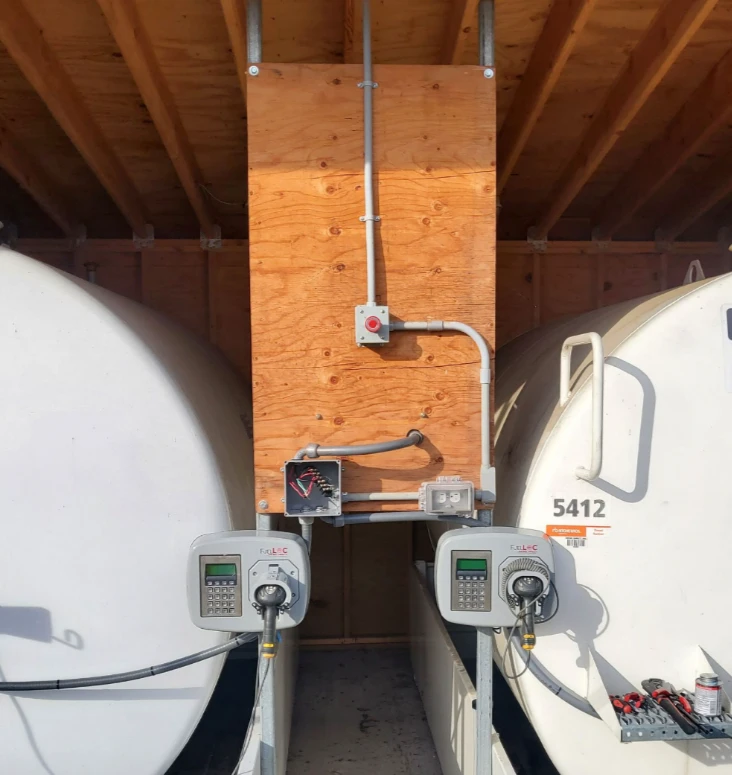
A fuel storage container that lacks proper management will generate operational problems while simultaneously wasting money. A mid-size operation faces annual expenses exceeding $50,000 because of concealed losses and emergency costs and non-compliance penalties. The following list presents seven immediate budget-saving solutions together with their implementation methods.
1) Stock-Outs and Emergency Runs
The process of waiting for tank replenishment causes operators to lose time and routes to be delayed while businesses must pay additional rush delivery costs. The calculation shows that 10 operators who lose 30 minutes daily at $40 per hour will result in $200 daily losses which amount to $52,000 annually before surge delivery expenses. The process of determining optimal fuel storage capacity and scheduling tank refills prevents emergency situations from occurring.
2) Evaporation and “Breathing” Losses
The expansion and contraction of above-ground tanks because of temperature changes results in vapor emission that leads to product loss. The combination of worn-out tank caps and missing gaskets and improper venting systems makes the situation worse. Modern double-walled tank designs with pressure-vacuum vents and tight seals minimize vapor emissions which helps maintain paid-for fuel inside the tank.
3) Water Ingress and Microbial Growth
The entry of water through rain or condensation or gasket failure creates an environment for microbial growth known as "diesel bug." The consequences of microbial growth in fuel include clogged filters and injector damage and corrosion and potentially needing to dispose of off-spec fuel. The combination of desiccant breathers with scheduled water removal and tank and dispenser water-blocking filters protects both engine quality and fuel quality.
4) Theft and Unauthorized Draws
The lack of proper security at fill points together with unmonitored hand pumps creates opportunities for product shrinkage. The loss of 1% from 100,000 gallons of fuel at $3 per gallon amounts to $3,000 but actual losses tend to be higher. The combination of lockable cabinets and tamper-evident caps with cameras and per-asset metering systems using RFID or key-fobs technology protects against theft while tracking every gallon to specific units and users.
5) Inaccurate Meters and Manual Log Errors
The combination of faulty meters and manual log entries results in incorrect fuel dispensing which causes billing problems and makes reconciliation processes more complicated. The combination of scheduled calibration for legal-for-trade meters with digital ticketing systems that include timestamp and asset and volume data provides finance with accurate data and maintenance with precise burn rate information and operations with dependable forecasting capabilities.
Quick Fix Checklist
• Select a fuel storage container that matches your operational needs by calculating days of autonomy and adding 10–20% for safety.
• Choose tanks with double-walled construction and integral containment systems and overfill protection features that are also lockable.
• Install desiccant breathers and water-blocking filters at both the tank and dispenser locations.
• Implement telemetry systems to monitor stock levels and establish automatic reordering points that prevent stock depletion.
• The system enables per-asset metering through digital tickets which provides complete accountability.
• Meter calibration should occur regularly while tank inspections and water removal operations need to be scheduled.
• Position tanks on flat surfaces that provide easy access while keeping them away from drainage areas and ignition points.