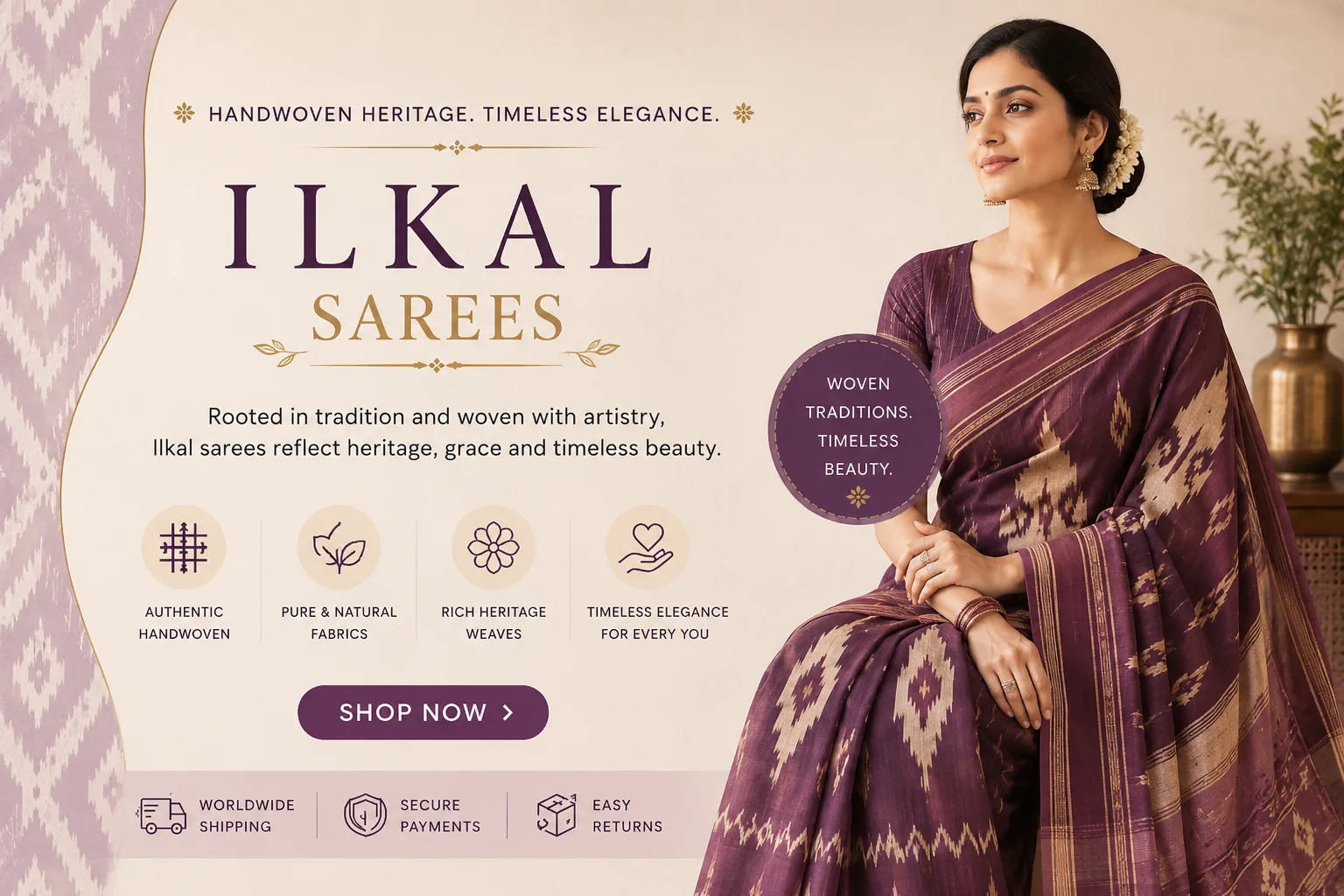
If you're planning to buy an Ilkal saree online, the biggest mistakes buyers make are skipping fabric verification, ignoring seller credibility, and judging quality from photos alone. Ilkal sarees are handwoven in Karnataka, recognised by their distinctive red or maroon guledgudda border, temple-tower motifs, and a contrasting silk pallu joined to the body using the traditional tope teni technique. As more buyers move to online shopping, it's become easier to end up with a power-loom imitation, a mismatched blouse piece, or a saree that doesn't hold up after the first wash. This guide walks through the seven most common mistakes people make and how to avoid each one.
What Should You Check Before You Buy an Ilkal Saree Online?
Before buying an Ilkal saree online, verify the weave authenticity, confirm fabric composition (cotton, silk, or a blend), check the seller's return policy, look at zoomed-in photos of the border and zari work, read fabric-specific customer reviews, and compare the price against the typical market range for handloom sarees. Skipping any one of these steps is what usually leads to a disappointing purchase.
Mistake #1: Not Verifying Authenticity of the Handloom Weave
How do you know if an Ilkal saree is genuinely handloom? A genuine handloom Ilkal saree will show slight, natural irregularities in the weave, a pallu joined using the tope teni technique (a distinctive interlocking method used only in handloom production), and often a handloom mark or GI tag reference in the listing.
Many sellers market power-loom or printed sarees as "authentic Ilkal" because the look can be replicated cheaply. The safest way to avoid this mistake is to ask the seller for close-up photos or a short video of the fabric and pallu join before you buy. Genuine handloom cotton also has a slightly uneven, textured feel compared to the smoother, more uniform finish of machine-made fabric — a detail that's hard to fake convincingly in photos alone.
Mistake #2: Ignoring Fabric Composition
What fabric is used in an Ilkal saree? Traditionally, an Ilkal saree has a cotton body with a silk pallu, though pure silk versions exist for festive and bridal wear. Today, cotton-silk blends are also widely sold, and not every "silk" listing means pure silk.
Fabric TypeFeel/TextureBest ForPrice Range IndicatorPure CottonLightweight, breathableDaily wear, officeBudget-friendlyCotton-Silk BlendSemi-soft, slight sheenFestive, casual outingsMid-rangePure SilkRich drape, glossy finishWeddings, special occasionsPremiumA common buying mistake is assuming a listing titled "Ilkal silk saree" is pure silk without reading the actual product description. Always scroll to the specifications section — legitimate listings will state the exact composition, whether it's 100% cotton, art silk, or pure silk.
Mistake #3: Overlooking Seller Credibility and Return Policy
Is it safe to buy Ilkal sarees online? Yes, buying an Ilkal saree online is safe as long as you purchase from a verified seller with clear product details, visible customer reviews, and a defined return or exchange policy.
Before checkout, run through this quick checklist:
- Seller has verified ratings and genuine customer reviews
- Fabric composition and care instructions are clearly listed
- A return or exchange window is explicitly mentioned
- Secure, recognisable payment options are available
- Customer support contact is visible on the site
Brands like Indeloom, which list detailed fabric information and maintain clear buyer policies, are worth checking as part of your comparison — the key is that the information is documented upfront rather than something you have to ask for after paying.
Mistake #4: Not Checking Saree Length, Blouse Piece, and Fall
Does an Ilkal saree come with a blouse piece? It depends on the seller — many Ilkal sarees are sold with a matching or contrast blouse piece attached, often in the same silk as the pallu, but this isn't universal across every listing.
Buyers frequently assume standard inclusions without checking. Before ordering, confirm:
- Total saree length (typically 5.5–6.5 metres)
- Whether a blouse piece is included and its fabric
- Whether the pallu comes pre-stitched with a fall
This information is usually in the specifications tab, not the main product images, so it's easy to miss if you only browse photos.
Mistake #5: Judging Only by Photos, Ignoring Zari and Border Details
What makes the Ilkal saree border unique? The signature identifier of an Ilkal saree is its red or maroon guledgudda border, often patterned with white temple-tower (gopura) motifs — a design element that's specific to this weaving tradition and hard to replicate exactly in printed alternatives.
Product photos are frequently edited or shot under studio lighting that makes colours and zari work look richer than they actually are. Before buying, look for zoomed-in shots of the border, and check customer-uploaded review photos if the platform allows them — these tend to show the saree's true colour and finish far more accurately than the primary listing images.
Mistake #6: Falling for Unrealistically Low Prices
How much does an authentic Ilkal saree cost online? Pricing varies widely based on fabric and craftsmanship, but genuine handloom Ilkal sarees with silk pallu and zari work generally sit in a mid-to-premium price bracket compared to printed or power-loom versions, which are priced significantly lower.
If a listing claims "pure silk" or "handloom" at a price well below what similar listings charge, treat it as a red flag rather than a bargain. Handweaving, natural fibres, and traditional border work all add cost — a price that's dramatically lower than the market range is usually a sign the saree isn't what it claims to be.
Mistake #7: Not Reading Care Instructions Before Purchase
How do you take care of an Ilkal saree after buying it? Dry cleaning is generally recommended for the silk pallu, while the cotton body can often be hand-washed with mild detergent. Store the saree folded in a soft cotton cloth, away from direct sunlight, to preserve the colour and zari work.
A frequent mistake is assuming every saree is machine-washable. This can cause colour bleeding on the border or damage the zari threads. Always check the care label or product description before your first wash, and when in doubt, opt for professional dry cleaning, especially for silk or zari-heavy pieces.
Ilkal Saree Buying Checklist
Use this quick-reference list before you check out:
- Confirm the weave is handloom, not power-loom
- Verify exact fabric composition in the description
- Check seller ratings and return policy
- Confirm saree length and blouse piece inclusion
- Look at zoomed-in border and zari photos, not just the main image
- Compare price against the typical market range for handloom sarees
- Read the care instructions before purchase
Frequently Asked Questions
What is special about an Ilkal saree?
Ilkal sarees are known for their distinctive red or maroon border with temple-tower motifs and a contrasting silk pallu attached to the cotton body using the traditional tope teni technique — a weaving style unique to the Ilkal region of Karnataka.
Is Ilkal saree handloom or power loom?
Traditionally, Ilkal sarees are handloom-woven, though power-loom and printed versions are now widely sold online under the same name. Checking for weave irregularities and the tope teni pallu join helps distinguish genuine handloom pieces.
What is the difference between Ilkal and Ilkal-print sarees?
An authentic Ilkal saree is handwoven with a distinct pallu-joining technique and natural fabric texture, while an "Ilkal-print" saree is typically machine-made or printed to mimic the traditional pattern at a lower cost.
How can I identify a genuine Ilkal saree online?
Look for close-up fabric photos, a mention of the tope teni pallu technique, handloom or GI tag references, and detailed fabric composition in the listing — combined with genuine customer reviews and photos.
What is the best occasion to wear an Ilkal saree?
Cotton Ilkal sarees suit daily or office wear, while silk and zari-heavy versions are commonly worn for festive occasions, weddings, and traditional celebrations.
Where can I buy authentic Ilkal sarees online?
Look for sellers who provide detailed fabric information, clear return policies, and verified reviews. Brands such as Indeloom are among the options worth comparing when you buy Ilkal saree online, alongside other verified handloom sellers.
How much does a good quality Ilkal saree cost?
Prices vary by fabric and craftsmanship — cotton versions are generally more affordable, while pure silk sarees with zari work sit at a higher price point. Unusually low prices for "pure silk" or "handloom" claims are typically a warning sign rather than a good deal.
Final Thoughts
Buying an Ilkal saree online doesn't have to be a gamble. Most disappointing purchases come down to skipping a handful of checks: verifying the weave, reading the fabric details, confirming seller credibility, and looking past filtered product photos. Run through the checklist above before you buy, and you'll be far more likely to end up with a saree that matches what was promised — whether you're shopping through Indeloom or any other seller offering documented, verifiable handloom details.