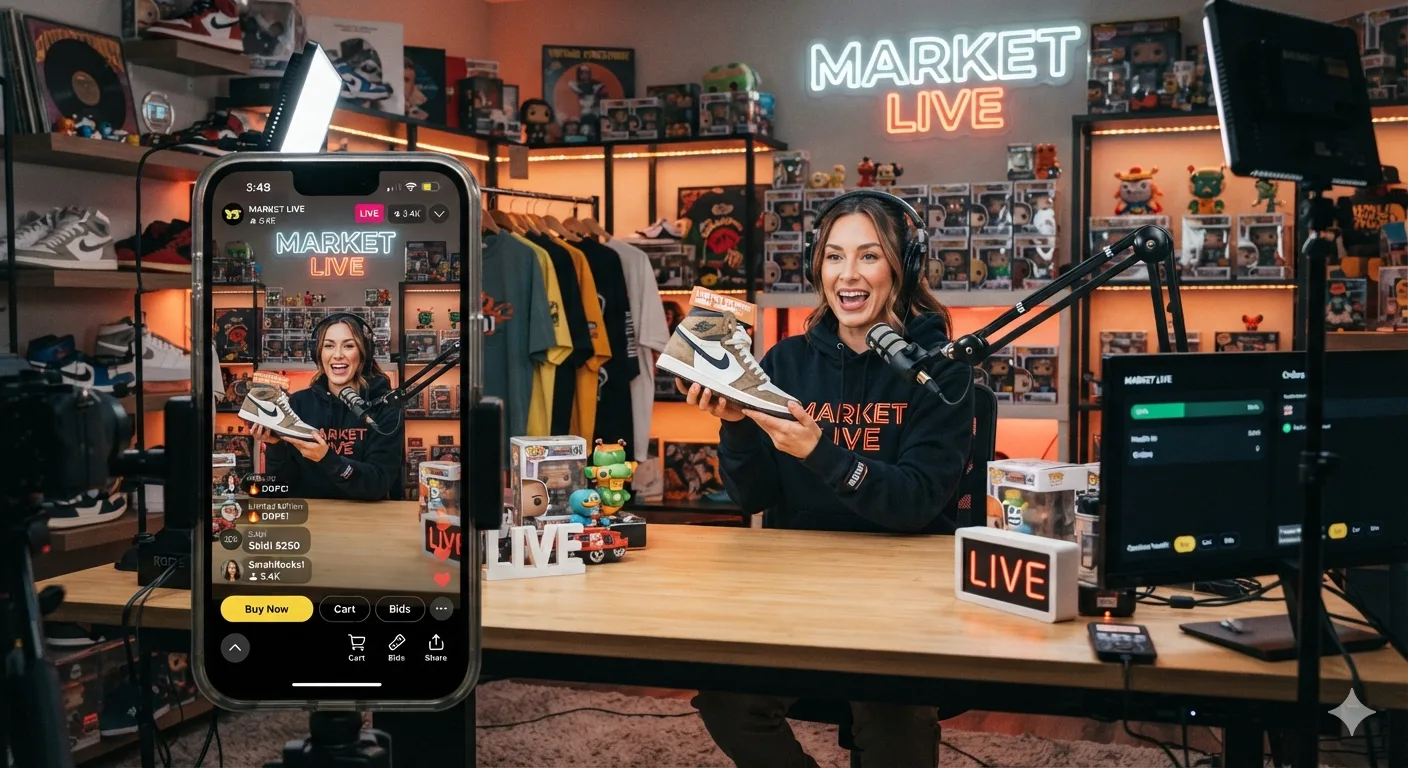
Live shopping is changing the way businesses approach online commerce. Instead of asking customers to browse product pages independently, businesses can bring products directly into interactive live sessions where customers can watch demonstrations, ask questions, communicate with sellers, and make purchases in real time.
The Whatnot model has made this approach particularly interesting. By combining live video, community interaction, auctions, and ecommerce, businesses can create shopping experiences that feel more engaging than traditional online stores.
For entrepreneurs and established businesses, building a Whatnot clone can provide a way to create their own branded live shopping marketplace. Rather than depending entirely on an existing platform, businesses can develop their own ecosystem where sellers, creators, brands, and customers interact under their own brand.
However, developing such a platform involves much more than adding livestreaming capabilities. A successful solution needs reliable video infrastructure, real-time bidding, product management, seller tools, secure payments, customer engagement, analytics, and scalable architecture.
The development partner also needs to understand the business side of live commerce. Different businesses may require different monetization models, seller workflows, product categories, and customer experiences.
In this list, we explore six Whatnot clone development companies that businesses can consider when planning to build their own live shopping platform.
What Is a Whatnot Clone Live Shopping Platform?
A Whatnot clone is a live commerce platform inspired by the core concept behind Whatnot. It combines livestreaming with ecommerce functionality so businesses, sellers, and creators can showcase products and interact with customers in real time.
The important point is that a clone does not have to be an exact copy. Businesses can use the Whatnot model as a foundation while customizing the platform around their own industry, audience, brand identity, and commercial strategy.
Live Video Shopping
Live streaming is the foundation of the experience. Sellers or creators can host live sessions where they demonstrate products, explain features, answer questions, and interact directly with viewers.
For example, a fashion business could host a live collection launch where customers can see products being worn and ask questions about sizes and styling. A collectibles marketplace could use live sessions to present individual items before starting auctions.
Real-Time Auctions and Purchasing
For businesses using an auction-based model, customers can participate while the live event is happening.
The platform can support features such as:
- Starting bids
- Bid increments
- Auction timers
- Current-bid updates
- Outbid notifications
- Minimum bids
- Reserve prices
- Winning-bid confirmation
Once an auction ends, the winning customer can move directly into the payment and order process.
Seller and Creator Ecosystem
A live shopping marketplace can support multiple sellers and creators rather than operating as a single-brand store.
Sellers can receive dashboards for managing products, scheduling live events, monitoring auctions, processing orders, and reviewing performance. Creators can build audiences around their own live sessions and promote products through interactive presentations.
Marketplace administrators can manage seller onboarding, commissions, transactions, product listings, content, and platform policies.
Product Discovery
Live shopping also creates a different approach to product discovery.
Customers can discover products through upcoming live events, recommended sellers, categories, personalized feeds, and featured sessions. Instead of searching only for a specific product, they can discover products while watching content they find interesting.
This can make the platform both a shopping destination and a content-driven discovery channel.
Customer Interaction
Interaction is one of the biggest differences between live shopping and traditional ecommerce.
Live chat, reactions, questions, follows, notifications, polls, and other engagement tools can allow customers to participate actively in a session.
These interactions can also help sellers understand what customers want to know before making a purchase.
Payments and Ecommerce Integration
The live experience ultimately needs to connect with the underlying commerce infrastructure.
A Whatnot clone can integrate payment gateways, shopping carts, order management, inventory systems, shipping providers, CRM platforms, and other business tools.
This helps ensure that products sold during live events are properly reflected in inventory and order systems.
Analytics and AI
Live shopping generates valuable behavioral data.
Businesses can analyze viewer numbers, watch time, product interactions, bids, conversion rates, winning prices, seller performance, and customer retention.
AI can take this further by providing personalized product recommendations, intelligent search, automated customer assistance, personalized live-event discovery, and behavioral insights.
The combination of live content, ecommerce, community, analytics, and AI can help businesses build a more intelligent shopping ecosystem rather than simply another online store.
1. Triple Minds
Triple Minds combines Consulting, Development, and Marketing to help businesses create digital products around their commercial objectives. For businesses planning a Whatnot-style live shopping platform, this broader approach can be useful because the project involves both technology and the strategy required to build a successful marketplace.
A customized Whatnot clone can bring together live streaming, product showcases, real-time auctions, bidding, customer interaction, seller management, secure payments, and ecommerce functionality.
Businesses can structure the platform according to their specific live commerce model. A collectibles marketplace might focus heavily on auctions and community interaction, while a fashion brand could prioritize live product demonstrations, creator partnerships, and direct purchasing.
The live auction functionality can include starting bids, bid increments, auction timers, minimum bids, outbid notifications, reserve prices, and automatic auction completion. These features can be integrated directly into the live shopping experience so customers can participate without leaving the session.
Triple Minds can also support multi-vendor marketplace functionality. Sellers can have dedicated profiles and dashboards for managing products, scheduling live events, monitoring auctions, processing orders, and reviewing sales performance. Administrators can manage sellers, commissions, products, transactions, and marketplace rules.
Another important consideration is personalization. The platform can incorporate AI-powered product recommendations, personalized discovery, customer behavior analysis, advanced analytics, and automated assistance. These capabilities can help businesses deliver more relevant experiences as their customer base grows.
Integrations can also connect the platform with payment gateways, inventory systems, CRM software, ERP solutions, logistics providers, and other existing business infrastructure.
Scalability is considered important from the beginning because a live shopping platform can grow from a small group of sellers into a much larger marketplace. The technology needs to accommodate increasing users, simultaneous live events, product listings, bids, and transactions.
Triple Minds also brings marketing and consulting capabilities into the project. This allows businesses to consider positioning, monetization, customer acquisition, seller acquisition, and long-term growth alongside the technical development of the platform.
For readers who want a more visual explanation of the Whatnot-style business model and platform, Triple Minds also has a YouTube video covering the concept and development considerations. It can provide additional context before businesses begin planning their own live shopping marketplace.
Best For: Startups, enterprises, retailers, marketplaces, creators, and entrepreneurs looking for a customized Whatnot clone with live shopping, auctions, multi-vendor functionality, AI capabilities, scalable architecture, and consulting, development, and marketing support.
2. Sell My Code
Sell My Code provides technology solutions that can help businesses establish digital products using existing technology foundations and customization. For entrepreneurs exploring live shopping, this approach can help reduce the effort involved in developing standard marketplace functionality independently.
A Whatnot Clone live shopping platform needs to connect streaming, product management, real-time interaction, bidding, payments, seller management, and order processing. Bringing these functions together allows customers to move from watching a live event to interacting with products and completing purchases within one environment.
Businesses can adapt the platform to different live commerce models. A multi-vendor marketplace can allow independent sellers to host live events, while an ecommerce brand can use live sessions to showcase new products. Creator-driven businesses can also use the model to connect influencers with product sales and audience engagement.
Real-time bidding can support features such as starting bids, bid increments, auction timers, current-bid displays, and outbid notifications. These capabilities are particularly useful for businesses selling collectibles, limited-edition products, fashion, artwork, or other products where competitive bidding can increase engagement.
Seller management can provide businesses with tools for onboarding sellers, managing products, scheduling live events, monitoring auctions, processing orders, and reviewing sales performance.
Customer engagement features such as live chat, reactions, questions, follows, and notifications can further strengthen the community aspect of live commerce.
The platform can also integrate with payment gateways, inventory systems, CRM platforms, logistics providers, and other business tools. This helps connect live selling activities with the wider ecommerce operation.
Analytics can provide insights into viewer engagement, watch time, product interest, bidding activity, conversion rates, and seller performance. Businesses can use this information to improve future events and understand which products and content formats perform best.
As the platform grows, businesses can introduce additional capabilities such as AI recommendations, personalized product feeds, loyalty programs, creator commissions, advanced analytics, and subscription-based seller tools.
Best For: Startups, ecommerce businesses, entrepreneurs, marketplaces, retailers, and creators looking for a customizable technology foundation for building a Whatnot-style live shopping platform.
3. Burj Code
Burj Code is a software development company offering web, mobile, and custom application development services. For businesses entering live commerce, its capabilities can be relevant for developing a customized platform that combines live streaming, product discovery, customer interaction, and real-time purchasing.
A Whatnot-style live shopping platform needs to connect multiple components into one experience. Customers should be able to discover live events, watch product demonstrations, communicate with sellers, participate in auctions, and complete purchases without moving between disconnected services.
Real-time bidding is particularly important for businesses using an auction-based model. The platform can support starting bids, bid increments, auction countdowns, current-bid displays, minimum bids, and outbid notifications. Keeping these updates synchronized for everyone participating in an event is essential for a smooth auction experience.
The platform can also support a multi-vendor structure. Sellers can have individual profiles and dashboards where they manage products, schedule live events, monitor auctions, process orders, and review their sales performance. Marketplace administrators can manage seller onboarding, commissions, product listings, transactions, and platform rules.
Customer engagement features can make the experience more interactive. Live chat, reactions, questions, follows, notifications, and product highlights can encourage customers to participate actively instead of simply watching the broadcast.
Ecommerce integrations can connect the live shopping experience with payment gateways, inventory management systems, CRM platforms, ERP software, logistics providers, and other business tools. This can help automate order processing and keep product and customer information synchronized.
Analytics can provide businesses with insights into viewer behavior and event performance. Metrics such as watch time, product interactions, bids, winning prices, conversion rates, and seller performance can help businesses understand what resonates with their audience.
The platform can also evolve as the business grows. AI-powered recommendations, personalized live-event feeds, automated customer assistance, behavioral analytics, loyalty programs, and creator tools can be introduced to make the shopping experience more personalized.
For businesses planning to build a live shopping marketplace, scalability should also be considered early. A platform may initially support a small number of sellers but eventually need to handle larger audiences, more products, simultaneous live events, and higher transaction volumes.
Best For: Startups, retailers, ecommerce businesses, entrepreneurs, auction operators, and marketplace owners looking for customized live shopping applications with streaming, real-time bidding, seller management, ecommerce integrations, and scalable architecture.
4. Make An App Like
Make An App Like focuses on application development around established digital business models. Businesses looking to create a Whatnot Clone live shopping platform can use this approach to develop an experience tailored to their own products, audience, and marketplace strategy.
The core concept is to combine live video with ecommerce and real-time interaction. Customers can join a live session, watch products being presented, ask questions, interact with the host, participate in auctions, and complete purchases within the same platform.
The model can be adapted to different industries. A collectibles marketplace may prioritize auctions and community interaction, while a fashion business could focus on product demonstrations and limited-time offers. Electronics, beauty, artwork, luxury goods, and niche products can also benefit from live presentations where customers want additional information before buying.
Real-time auction functionality can include starting prices, bid increments, countdown timers, current-bid displays, minimum bids, and outbid notifications. These features allow customers to participate directly in the purchasing process.
A multi-vendor platform can provide sellers with dedicated accounts and management tools. Sellers may be able to add products, organize live sessions, manage auctions, track orders, and monitor performance. Administrators can control seller approvals, commissions, transactions, listings, and marketplace policies. Customer engagement is another important part of the platform. Live chat, reactions, follows, questions, and notifications can help businesses build communities around sellers and creators.
The platform can also integrate with payment gateways, inventory systems, shipping providers, CRM software, and ecommerce tools. These integrations can help ensure that live transactions connect smoothly with order processing and fulfillment. As the marketplace develops, businesses can introduce additional capabilities such as AI-powered product recommendations, personalized discovery, automated customer assistance, loyalty programs, creator commissions, and advanced analytics.
A customized Whatnot-style platform can therefore serve as more than a livestreaming application. It can become a complete commerce environment where content, community, product discovery, and transactions work together.
Best For: Entrepreneurs, startups, ecommerce brands, retailers, creators, and marketplace operators looking for customizable live shopping applications with auction, social commerce, and ecommerce functionality.
5. Pre Built Apps
Pre Built Apps provides ready technology foundations that businesses can customize for different digital commerce requirements. For companies that want to enter live shopping without building every standard component from the ground up, this approach can help shorten the path from concept to launch.
A complete live commerce platform can require streaming, product management, seller accounts, customer interaction, auctions, payments, order management, notifications, analytics, and administration. Starting with an established foundation allows businesses to focus more development resources on their unique customer experience and business model.
For businesses looking for a faster starting point, ready-made ecommerce applications can provide a foundation that can be adapted around the company's branding, products, target audience, and live commerce strategy.
A Whatnot-style live shopping platform can support multiple sellers and creators. Sellers can host live events, showcase products, conduct auctions, communicate with customers, and manage orders. The marketplace operator can maintain centralized controls for seller onboarding, commissions, products, transactions, and platform policies. The customer experience can bring together live video, product information, bidding, chat, notifications, and checkout. Keeping these functions connected can reduce friction between product discovery and purchasing.
Businesses can also adapt the technology to different live shopping models. A startup might create a multi-vendor marketplace, while an established retailer could launch its own branded live shopping channel. A specialized business could focus on collectibles, fashion, electronics, beauty, artwork, or another category where live interaction adds value. Integrations can connect the platform with payment gateways, inventory systems, logistics providers, CRM platforms, ecommerce systems, and marketing tools. This can help businesses automate operations as transaction volumes increase.
Analytics can provide information about viewer engagement, watch time, product interactions, bidding activity, conversion rates, and seller performance. These insights can help businesses improve future live events and identify products or formats that generate stronger results.
The platform can also be extended over time with AI recommendations, personalized product feeds, loyalty features, creator tools, advanced analytics, seller subscriptions, and additional monetization capabilities.
For businesses that prioritize faster deployment while still wanting customization opportunities, Pre Built Apps can provide a practical technology foundation for launching a live shopping business.
Best For: Startups, entrepreneurs, retailers, ecommerce businesses, and marketplace operators seeking a faster-to-market live shopping solution with ready-made ecommerce functionality and customization options.
6. RisingMax
RisingMax is a software development company offering custom web and mobile application development for businesses across different industries. For businesses planning to enter live commerce, its development capabilities can be considered for creating a customized platform that combines livestreaming, product discovery, auctions, and ecommerce.
A Whatnot-style live shopping platform needs to provide a connected experience from the moment customers discover a live event through product interaction and eventual checkout. Rather than treating livestreaming and ecommerce as separate systems, businesses can build an environment where customers can watch sellers, explore featured products, participate in auctions, and complete purchases within the same platform.
Real-time bidding can be an important component for businesses using live auctions. The platform can support starting bids, bid increments, auction timers, current-bid displays, minimum bids, outbid notifications, and automatic auction completion. These capabilities allow customers to participate in competitive purchasing while watching the live event.
Multi-vendor functionality can also be incorporated for businesses planning to create a marketplace. Sellers can receive dedicated dashboards for managing products, scheduling live sessions, monitoring auctions, processing orders, and reviewing sales performance. Marketplace administrators can manage seller onboarding, commissions, product listings, transactions, and platform policies.
Customer engagement features such as live chat, reactions, questions, follows, and notifications can help create a more interactive shopping experience. These features can encourage customers to participate in the event and develop stronger connections with sellers and creators.
Ecommerce integrations can connect the platform with payment gateways, inventory systems, CRM software, shipping providers, and other business applications. This helps ensure that transactions completed during live sessions flow smoothly into order and fulfillment workflows.
Analytics can give businesses visibility into viewer behavior and sales performance. They can monitor metrics such as watch time, product interactions, bidding activity, winning prices, conversions, and seller performance. These insights can help businesses refine future live shopping events.
As the platform grows, businesses can introduce AI-powered recommendations, personalized product discovery, automated customer support, behavioral analytics, loyalty programs, and creator-focused features. These capabilities can help the marketplace become more personalized over time.
Scalability should also be considered during the development process. A platform that begins with a small number of sellers may eventually need to support significantly more users, simultaneous live events, products, bids, and transactions.
Best For: Startups, ecommerce businesses, retailers, entrepreneurs, auction operators, and marketplace owners looking for customized live shopping applications with streaming, real-time bidding, seller management, ecommerce integrations, and scalable architecture.
How to Choose the Right Whatnot Clone Development Company
Choosing a development partner for a live shopping platform requires looking beyond basic app development capabilities. The company should understand the technical requirements of streaming, ecommerce, auctions, and marketplace operations.
Evaluate Live Commerce Experience
Live shopping has different requirements from a conventional ecommerce application. The development company should understand how livestreaming, product discovery, customer interaction, and purchasing need to work together.
Check Real-Time Bidding Capabilities
If auctions are part of the business model, the development team should be capable of building reliable real-time bidding functionality.
The system should be able to handle multiple participants while keeping bid information synchronized and ensuring that auction results are accurate.
Consider Multi-Vendor Functionality
Businesses planning a marketplace should evaluate the company's experience with seller onboarding, seller dashboards, commissions, product management, order processing, and marketplace administration.
Review Integration Capabilities
A live shopping platform may need to connect with:
- Payment gateways
- Inventory systems
- CRM platforms
- ERP software
- Ecommerce platforms
- Shipping providers
- Marketing tools
- Analytics systems
Strong integration capabilities can reduce manual work and create a more connected business operation.
Assess Scalability
A successful live event can generate sudden increases in viewers, interactions, bids, and transactions. The development company should therefore have a clear approach to scalability and performance.
Look at Customization
Businesses should not be limited to reproducing an existing platform's exact experience. The development partner should be able to customize branding, workflows, auction rules, seller features, monetization, integrations, and customer journeys.
Consider Future AI Capabilities
AI can become increasingly valuable in live shopping through product recommendations, personalized feeds, automated customer support, behavioral analysis, and seller insights.
Choosing a development company that can support future AI integrations can make the platform easier to expand.
Understand Post-Launch Support
Live commerce platforms require continuous maintenance. Businesses should understand how the development company handles updates, security, technical issues, performance optimization, integrations, and future feature development.
Whatnot Clone vs. Traditional Ecommerce Platform
A traditional ecommerce platform primarily depends on product catalogs, search, product pages, shopping carts, and checkout.
A Whatnot-style live shopping platform adds another layer: real-time interaction. Customers can watch a seller demonstrate a product, ask questions, see other customers participate, place bids, and purchase the item during the event.
This makes the platform closer to a combination of ecommerce, livestreaming, social interaction, and digital entertainment. For businesses where product demonstrations, community, auctions, or creator influence are important, this model can provide additional opportunities that traditional ecommerce may not offer.
The most effective approach is therefore not necessarily to replace traditional ecommerce but to connect live shopping with the existing commerce ecosystem. A business can continue operating its regular online store while using live events as an additional channel for product discovery, engagement, and sales.
Conclusion
Live commerce is creating a new way for businesses to combine ecommerce, content, community, and real-time interaction. The Whatnot model has demonstrated how livestreaming can become more than a marketing tool by turning live events into complete shopping experiences.
For businesses considering this opportunity, developing a Whatnot clone can provide a foundation for creating their own branded live shopping platform. Instead of relying entirely on an existing marketplace, businesses can control their customer experience, seller ecosystem, monetization model, branding, and future product strategy.
The development partner is an important part of that process. A successful platform requires expertise across live streaming, real-time bidding, ecommerce, multi-vendor marketplace development, payments, analytics, integrations, security, and scalability.
The companies covered in this list offer different approaches that businesses can evaluate based on their requirements. Triple Minds, Sell My Code, Burj Code, Make An App Like, Pre Built Apps, and RisingMax can each be considered according to factors such as customization, development approach, technical capabilities, launch requirements, and long-term scalability.
Businesses should also think beyond the first version of the platform. As the marketplace grows, AI-powered recommendations, personalized product discovery, advanced analytics, creator tools, loyalty programs, and automated customer assistance can help improve the experience.
Ultimately, the objective should not be to simply reproduce another platform. A successful Whatnot-inspired business should take the core strengths of live commerce and adapt them to a specific audience, industry, and business model.
With the right technology foundation and development strategy, businesses can build live shopping platforms that create stronger customer engagement while opening new opportunities for sellers, creators, and brands.
Frequently Asked Questions
1. What is a Whatnot clone?
A Whatnot clone is a live commerce platform inspired by the Whatnot business model. It typically combines livestreaming, product discovery, real-time auctions, bidding, customer interaction, payments, seller management, and ecommerce functionality.
2. How much does it cost to build a Whatnot clone?
The cost depends on the platform's complexity and the features required. Live streaming, real-time bidding, multi-vendor functionality, payment integrations, mobile applications, AI capabilities, analytics, and custom workflows can all affect the overall development investment.
A business using a pre-built technology foundation may have different development costs compared with a company building the entire platform from scratch.
3. How long does Whatnot clone development take?
The development timeline depends on the scope, customization, integrations, and development approach. A pre-built solution can help businesses launch faster, while a highly customized platform with advanced auctions, AI, multiple integrations, and complex marketplace functionality will generally require more development and testing.
4. What features should a Whatnot clone include?
Important features can include:
- Live video streaming
- Real-time bidding
- Auction timers
- Product management
- Seller and creator profiles
- Live chat
- Customer notifications
- Secure payments
- Shopping cart and checkout
- Order management
- Multi-vendor functionality
- Analytics
- Admin dashboard
Additional capabilities can be added based on the business model.
5. Can a Whatnot clone support multiple sellers?
Yes. A Whatnot-style platform can be developed as a multi-vendor marketplace where independent sellers and creators can manage products, host live events, conduct auctions, and interact with customers.
The marketplace owner can manage seller verification, commissions, transactions, listings, and platform policies.