
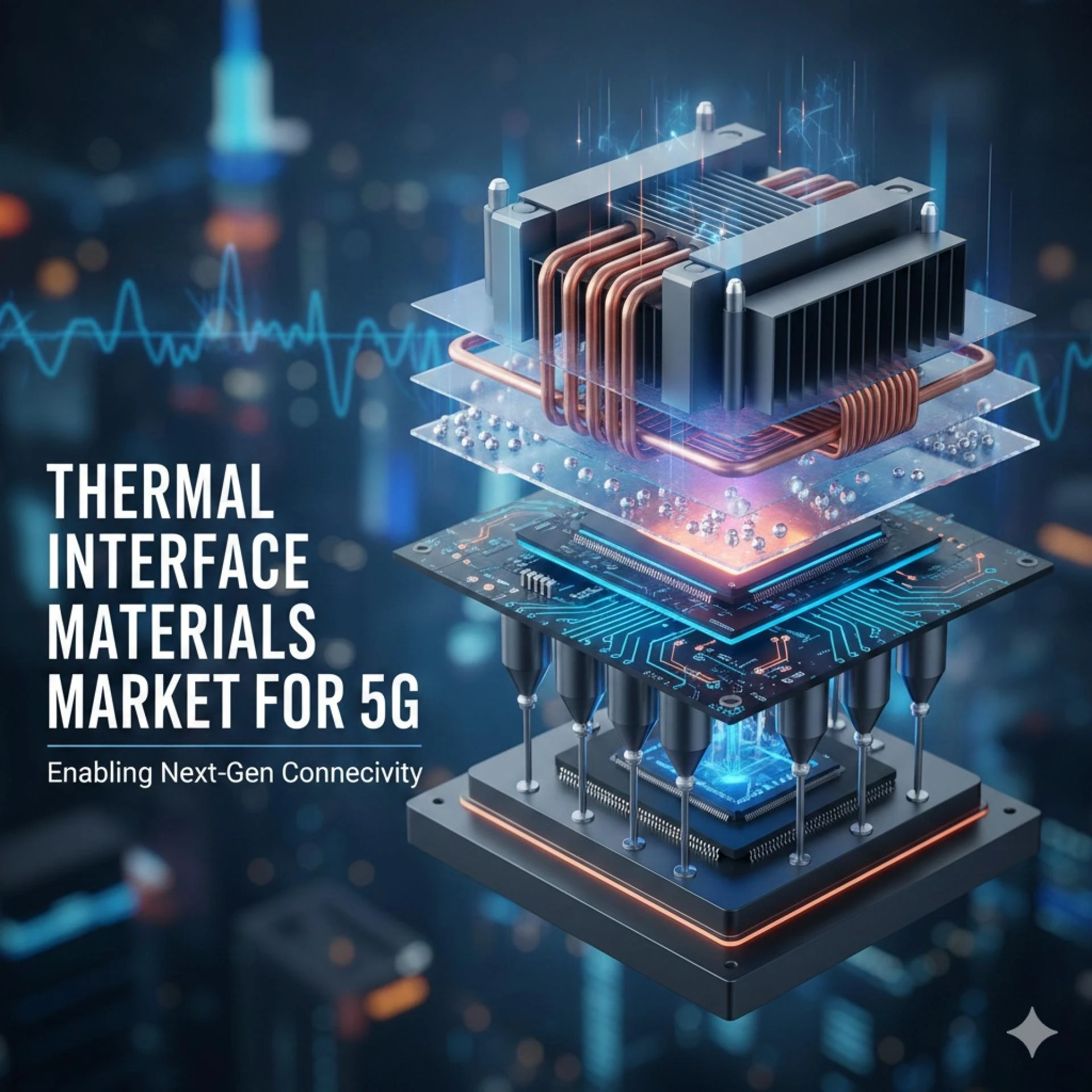
The global Thermal Interface Materials Market for 5G is expanding rapidly as 5G deployment accelerates worldwide. These materials are essential for managing heat in 5G-enabled devices and infrastructure, helping maintain performance and reliability in high-power, compact systems. The Thermal Interface Materials Market for 5G was valued at $434.5 million in 2020 and is projected to reach $908.9 million by 2026, growing at a CAGR of 14.36% during the forecast period.
Key Drivers in the Thermal Interface Materials Market for 5G
- Rapid 5G Rollout: Countries focusing on the widespread deployment of 5G networks are driving demand for thermal interface materials to support next-generation infrastructure.
- Rising Power Consumption: As 5G devices and infrastructure components consume more power and become more compact, efficient heat dissipation is critical, boosting demand for enhanced TIM solutions.
- Diverse Applications: Growing use of TIMs in 5G smartphones, base stations, routers, and servers is contributing to market expansion.
Key Trends in the Thermal Interface Materials Market for 5G
- Product Innovation: The market includes a broad range of materials — from thermal pads, greases, and gels to graphite sheets and phase change materials — with innovation focused on higher thermal conductivity and improved performance.
- Expansion in 5G Infrastructure: As telecom operators accelerate small cell and base station deployments, demand for advanced TIM products tailored to 5G applications is increasing.
- Asia-Pacific Growth: Adoption of 5G technologies in Asia-Pacific and Japan is expected to drive robust growth, with this region showing one of the highest projected growth rates during the forecast period.
Request An Updated Sample in Thermal Interface Materials Market for 5G
What challenges and opportunities shape the thermal interface materials market for 5G?
Challenges:
- Deployment Delays: Delays in spectrum allocation and small cell deployment can hinder the pace of market growth.
- Material Limitations: Traditional thermal interface materials may struggle with physical limitations such as inadequate thermal conductivity or mechanical properties, posing challenges for next-generation applications.
Opportunities:
- Emerging Markets: Countries at earlier stages of 5G rollout present new growth opportunities for TIM manufacturers.
- Advanced Material Impact: Materials with favorable dielectric properties that help reduce electromagnetic interference (EMI) offer strategic advantages in 5G systems.
- Energy Efficiency Focus: Increasing awareness of energy conservation across industries supports demand for efficient thermal solutions.
Future Outlook
The Thermal Interface Materials Market for 5G is poised for significant growth through 2026 and beyond, driven by global 5G adoption, innovation in material science, and expanding applications across smart devices and telecom infrastructure. As 5G networks continue to proliferate geographically and technologically, advanced TIMs will remain integral to device and infrastructure thermal management strategies.
Get Insight for Advanced Materials, Chemicals & Fuels Market
Conclusion
The 5G era is reshaping the demand landscape for thermal management materials. With increasing deployment of 5G technology, rising power densities in devices, and innovation in TIM technologies, the market is on a strong growth trajectory. Manufacturers and stakeholders that invest in advanced materials and surface tailored solutions stand to benefit from the expanding opportunities in this dynamic market segment.