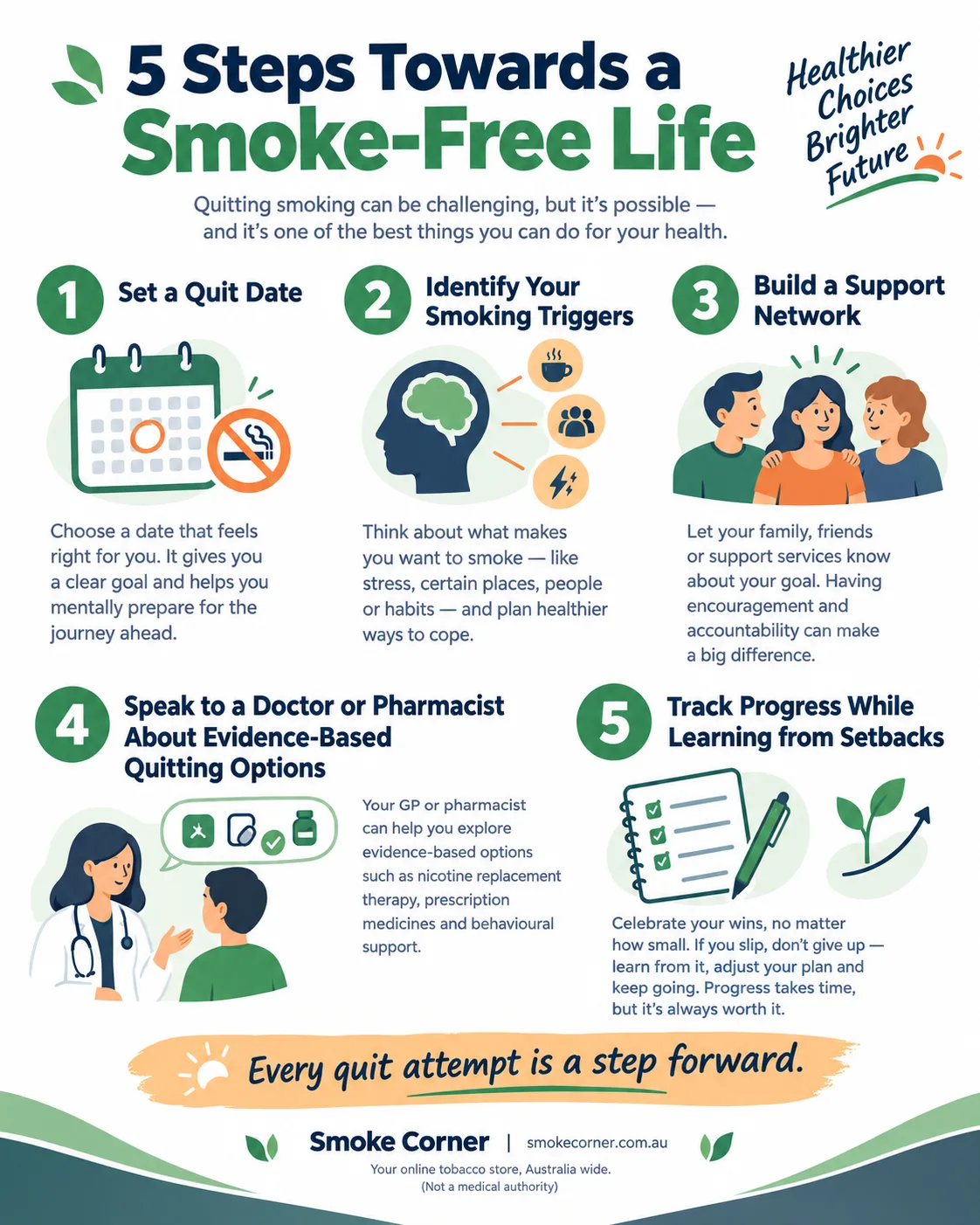
Quitting smoking is an important step towards improving long-term health and building a healthier lifestyle. Although giving up cigarettes can be challenging, having a clear plan, understanding personal smoking triggers and seeking the right support can make the process more manageable.
Nicotine dependence can affect both physical and psychological habits. Some people experience cravings during stressful situations, while others associate smoking with morning routines, coffee breaks or social activities. Understanding these patterns is an important part of preparing for a successful quit attempt.
Whether someone is considering quitting for the first time or has tried before, taking small, practical steps can help create a more sustainable smoke-free routine.
1. Set a Quit Date and Prepare in Advance
Choosing a quit date gives you a specific goal to work towards. It also creates an opportunity to prepare mentally and practically for the changes ahead.
Consider selecting a date within the next few weeks that does not coincide with an unusually stressful period. Before that date arrives, identify situations in which you usually smoke and think about how you will respond when cravings occur.
You can also remove cigarettes, lighters and ashtrays from your usual surroundings to reduce reminders of the habit.
Practical tip: Write your quit date on a calendar and list three reasons why you want to stop smoking. Keep those reasons somewhere visible to remind yourself of your motivation.
2. Identify Your Smoking Triggers
Smoking is often connected to particular activities, emotions and environments. Common triggers include drinking coffee, experiencing stress, taking work breaks, socializing with people who smoke or finishing a meal.
Recognizing these patterns allows you to prepare alternative responses rather than relying on willpower alone.
For example, you might replace a usual smoking break with a short walk, try a different morning routine or practice slow breathing during stressful moments. If social situations make quitting difficult, consider planning what you will say when someone offers you a cigarette.
Cravings can feel uncomfortable, but they generally pass. Having an alternative activity ready may help you manage these moments.
Practical tip: Keep a simple record of when cravings occur, what triggers them and which strategies help you cope. Over time, this information can help you identify patterns and adjust your plan.
3. Build a Strong Support Network
Quitting smoking does not have to be a solitary experience. Support from family members, friends, colleagues or trained professionals can make the process easier to manage.
Tell trusted people about your goal and explain how they can help. You might ask them to encourage you during difficult moments, avoid offering cigarettes or join you in smoke-free activities.
Some people also benefit from quit-smoking counselling or structured support programmes. Speaking with others who understand the challenges of nicotine dependence can provide encouragement and practical ideas.
It is equally important to approach setbacks with patience. If you smoke a cigarette after quitting, treat the experience as an opportunity to understand what happened and strengthen your plan.
Practical tip: Identify one person you can contact when you experience a strong craving or need encouragement.
4. Speak to a Doctor or Pharmacist About Quitting Options
Professional guidance can help you choose an approach that suits your circumstances. Doctors and pharmacists can discuss evidence-based smoking cessation options, including nicotine replacement therapy, prescription medicines where appropriate and behavioral support.
Nicotine replacement products, such as patches, gum and lozenges, can help manage withdrawal symptoms and cravings. A healthcare professional can explain how these options work, whether they are suitable for you and how to use them correctly.
Combining behavioral support with appropriate cessation treatment can improve the likelihood of quitting successfully.
In Australia, smokers can also access information and support through national and state-based quit services. The Australian Government's Quitline service is available on 13 7848 (13 QUIT).
Practical tip: Before speaking with a healthcare professional, write down your smoking habits, previous quit attempts and any concerns you have about withdrawal symptoms.
5. Track Your Progress and Learn from Setbacks
Quitting smoking is a process, and progress may look different for each person. Tracking your achievements can help you recognize improvements and maintain motivation.
You could record smoke-free days, note situations you have successfully managed without smoking or calculate how much money you have saved. Celebrating small milestones can make a long-term goal feel more achievable.
It is also important not to view a setback as complete failure. Many people need more than one attempt to quit. If you smoke again, reflect on the circumstances, identify what could be changed and return to your plan.
If cravings or withdrawal symptoms become difficult to manage, consider seeking additional professional support.
Practical tip: Set small weekly goals, keep a progress journal and recognise every positive change, even when the journey does not go exactly as planned.
Creating a Healthier, Smoke-Free Future
Quitting smoking can bring meaningful health benefits, and stopping at any age is worthwhile. Over time, the body begins recovering from some of the harmful effects of tobacco smoke, while the risk of several smoking-related diseases decreases.
A practical quit plan, awareness of smoking triggers, a reliable support network and professional advice can help people navigate the challenges of nicotine dependence.
For readers interested in learning more about the business behind this article, visit Smoke Corner.
Remember that every quit attempt is an opportunity to learn. With preparation, appropriate support and persistence, taking steps towards a smoke-free life becomes a more achievable goal.