
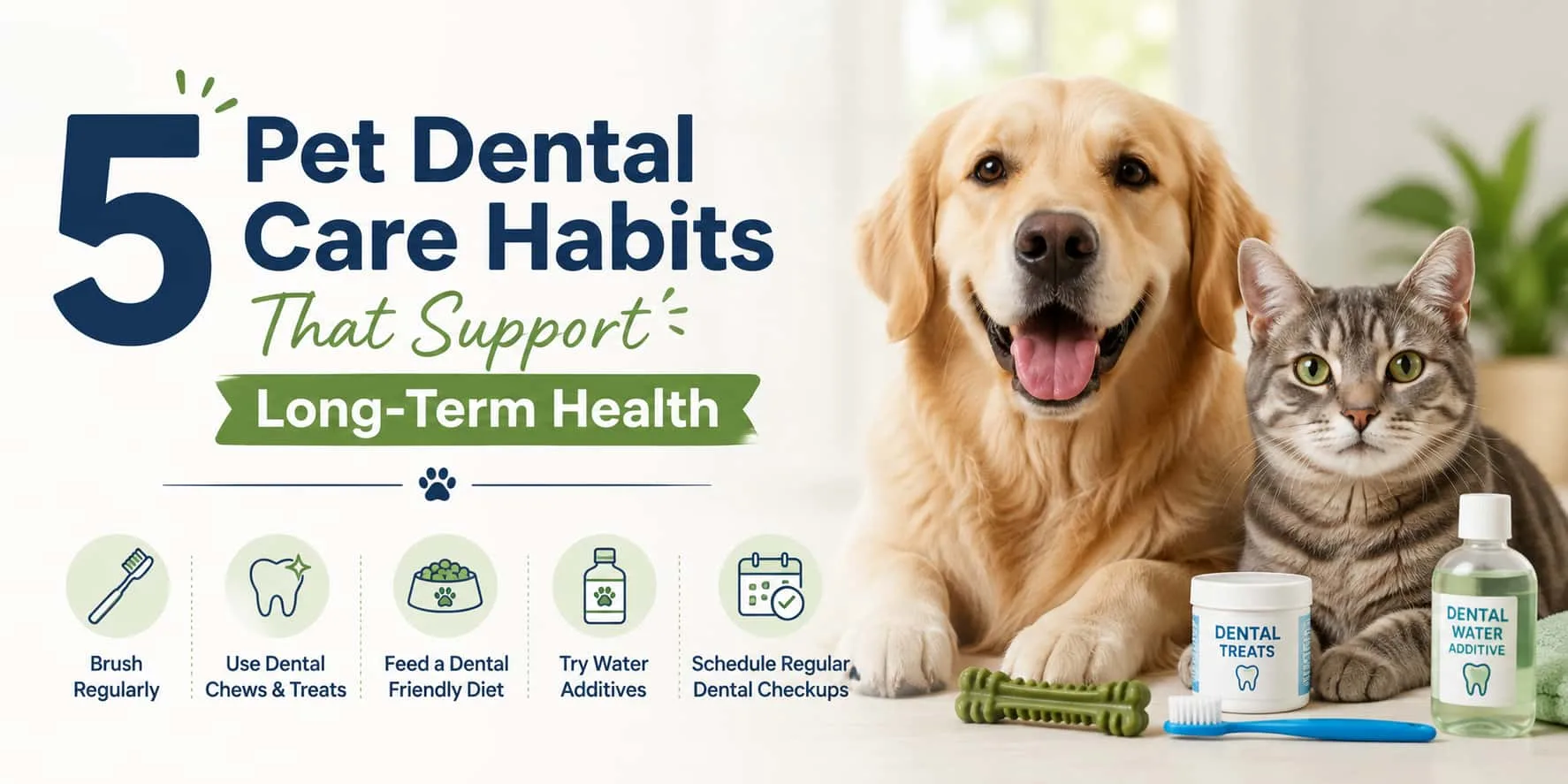
A healthy smile is an important part of your pet’s overall wellbeing, but dental care is often overlooked until a problem becomes noticeable. Dogs and cats can develop plaque and tartar buildup just like people, and without regular care, this can contribute to gum irritation, bad breath, and other oral health concerns. The good news is that maintaining your pet’s dental health doesn’t have to be complicated. Simple habits practiced consistently can help keep their teeth and gums in better condition and make dental care a normal part of their routine. Here are five practical pet dental care habits that can support your companion’s long-term health.
Why Pet Dental Care Matters
Dental health plays an important role in your pet’s overall wellbeing. When food particles and bacteria accumulate on the teeth, they can form plaque, which may eventually harden into tartar. Over time, this buildup can irritate the gums and contribute to dental problems that may affect your pet’s comfort and quality of life.
According to the American Animal Hospital Association (AAHA), periodontal disease is one of the most common clinical conditions seen in adult dogs and cats, with many pets showing signs of dental disease by the age of three. The American Veterinary Medical Association (AVMA) also highlights the importance of routine dental care in helping maintain a pet’s oral health and overall wellbeing.
Because pets often hide discomfort, dental problems may go unnoticed until they become more advanced. Regular attention to oral hygiene, combined with professional veterinary care, can help support healthier teeth and gums throughout your pet’s life.
1. Make Regular Teeth Brushing Part of the Routine
Brushing your pet’s teeth regularly is one of the simplest ways to help remove plaque before it can harden into tartar. Just like people, pets benefit from consistent oral hygiene, and making brushing part of their routine can help support healthier teeth and gums over time.
If your pet is new to tooth brushing, start slowly. Let them become familiar with the toothbrush and pet-safe toothpaste before gradually introducing brushing. Use products specifically designed for pets, as human toothpaste may contain ingredients that are not safe for dogs and cats.
Try to make brushing a calm, positive experience and choose a routine you can maintain consistently. Even a few minutes of regular dental care can be more beneficial than occasional brushing.
2. Choose Pet-Safe Dental Care Products
The right dental care products can make it easier to maintain your pet’s oral hygiene between veterinary visits. Pet toothbrushes and toothpaste are designed specifically for their needs, while pet dental care products such as dental chews and other oral-care solutions can provide additional support as part of a regular routine. For pet parents establishing a brushing routine, products such as Pet Dent Toothpaste can help make daily dental care easier and more consistent.
When choosing a dental product, consider your pet’s size, age, chewing habits, and individual needs. Always select products made specifically for dogs or cats and follow the directions for proper use. It’s also important to remember that dental products should complement regular brushing and veterinary care rather than replace them.
Using appropriate dental-care products consistently can make it easier to maintain your pet’s oral hygiene and keep dental care a regular part of their overall wellness routine.
3. Pay Attention to What Your Pet Eats and Chews
What your pet eats and chews can also play a role in maintaining good oral hygiene. Food can contribute to plaque buildup, while chewing may provide some mechanical cleaning of the teeth. However, chewing alone should not be considered a replacement for regular brushing.
Dental chews can be a useful addition to your dog’s oral-care routine when used appropriately. VeggieDent Dental Chews for Dogs offer a chewing option that can complement other at-home dental-care practices. Always supervise your dog while chewing, and avoid extremely hard objects that could damage or fracture teeth.
Being mindful of your pet’s eating and chewing habits can help support their oral health while reducing the risk of unsafe chewing behaviors.
4. Check Your Pet’s Mouth Regularly
Regularly checking your pet’s mouth can help you spot changes before they become more serious. During a routine check, look at the teeth and gums for visible tartar, redness, swelling, bleeding, damaged teeth, or anything else that looks unusual.
Pay attention to changes in your pet’s behavior, too. Persistent bad breath, difficulty chewing, dropping food, excessive drooling, or a noticeable change in eating habits may indicate an oral health issue.
If you notice any concerning changes, don’t try to diagnose or treat the problem yourself. A veterinarian can examine your pet’s mouth and recommend appropriate care. Making quick mouth checks part of your regular routine can help you stay aware of your pet’s dental health and recognize when professional attention may be needed.
5. Keep Up With Veterinary Dental Checkups
At-home dental care is important, but it shouldn’t replace regular veterinary checkups. A veterinarian can examine your pet’s teeth and gums more thoroughly and identify dental problems that may not be easy to spot during a routine home check.
The American Animal Hospital Association (AAHA) notes that many dental issues can develop below the gumline or progress without obvious signs in the early stages. Regular dental examinations help veterinarians detect potential concerns early and recommend appropriate care before problems become more serious.
Combined with consistent home dental care, veterinary checkups provide a more complete approach to maintaining oral health. Following your veterinarian’s recommendations can help support healthier teeth and gums and contribute to your pet’s long-term wellbeing.
Conclusion: Small Habits, Better Dental Health
Good dental care doesn’t have to be complicated. Regular brushing, appropriate dental products, mindful eating and chewing habits, routine mouth checks, and veterinary dental care can all contribute to healthier teeth and gums.
The key is consistency. Making dental care part of your pet’s regular routine can help you stay ahead of potential problems rather than waiting until signs become difficult to ignore. By giving your pet’s oral health the attention it deserves, you can support their comfort, wellbeing, and long-term health for years to come.
Looking after your pet’s dental health is just one part of keeping them happy and healthy. Explore pet care supplies at DiscountPetCare.com to find products that support your pet’s everyday health, hygiene, and overall wellbeing.
Frequently Asked Questions
Q. How often should I brush my pet’s teeth?
A. Daily brushing is ideal for helping control plaque, but the most important thing is establishing a routine you can maintain consistently. If your pet is new to brushing, introduce it gradually and follow your veterinarian’s recommendations.
Q. Can dental chews replace brushing?
A. No. Dental chews can complement a pet’s oral-care routine, but they shouldn’t be considered a complete replacement for regular brushing or veterinary dental care.
Q. Do cats need dental care too?
A. Yes. Cats can also develop plaque, tartar, and gum problems, so regular dental care is an important part of their overall health routine.
Q. What are some signs of dental problems in pets?
A. Bad breath, red or swollen gums, visible tartar, difficulty chewing, excessive drooling, loose or damaged teeth, and changes in eating habits can all warrant attention. If you notice unusual changes, consult your veterinarian.
Q. When should my pet have a dental checkup?
A. The appropriate frequency depends on your pet’s age, health, dental condition, and individual needs. Your veterinarian can recommend how often your pet should receive dental examinations and whether professional cleaning is appropriate.